Short answer: there is no universal “best” crypto law firm in Dubai. The right firm depends on the activity, asset, customers, jurisdictions and regulator involved. For tokenization, the comparison must also cover who owns the underlying asset, what legal rights the token represents, who may buy it and what the issuer or platform actually does. Shortlist firms using named experience, a closely matched matter, primary-source knowledge, a clear scope and evidence you can verify. A specialist may fit a focused tokenization or licensing mandate, while a broader transaction, dispute or cross-border project may require several firms working together.
This guide is published by Ape Law, a firm operating in the market it discusses. It is a selection framework, not an independent award, endorsement or league table. Apply the same tests to Ape Law and every other provider you consider.
What Should You Check Before Shortlisting a Firm?
Start with the decision you need to make, not a list of names.
| What you need to establish | First question to ask | Useful evidence |
|---|---|---|
| Regulatory perimeter | Which activity and rulebook should be analysed first? | A reasoned answer tied to current primary sources |
| Tokenization structure | What asset or right will the token represent, and who is responsible for it? | A rights, ownership and activity map before token development |
| Relevant people | Who will lead and perform the work? | Named biographies and a genuinely similar matter |
| Legal and technical fit | How will product, custody, token and transaction flows be tested? | A process that records technical facts and legal assumptions |
| Engagement scope | What is included, excluded or dependent on another adviser? | A staged scope with owners, handoffs and decision points |
| Independence | Are there conflicts, referral fees or commercial relationships? | Written conflict and referral disclosures |
A polished website is not evidence of relevant experience. Neither is a firm’s size, search position or use of the words “crypto,” “Web3” or “tokenization.”
What Does “Best” Mean for Your Matter?
Most crypto and digital-asset instructions fall into one or more of these groups:
- Regulatory perimeter and licensing: identifying the regulated activity, regulator and permission before an entity is formed or an application begins.
- RWA and asset tokenization: defining the asset, ownership chain, issuer, investor rights, platform roles, custody, transfers and target markets.
- Token, protocol and product structuring: analysing token functions, flows of funds, governance and technology alongside the legal structure.
- Funds and transactions: forming or investing through a fund, completing due diligence, negotiating financing or acquiring a digital-asset business.
- Commercial and employment work: contracts, intellectual property, employment, privacy and day-to-day corporate support.
- Disputes and investigations: tracing assets, preserving evidence, responding to regulators, litigation or arbitration.
A firm may be well suited to one category and poorly suited to another. Ask who will perform each workstream and which other specialists may be needed.
Why Does Tokenization Need a Different Legal Test?
“Tokenization” describes a method, not the legal nature of the thing being offered. A token might represent a contractual claim, a security, a fund interest, access to a platform or no enforceable interest in the underlying asset at all. The legal analysis therefore should not start and end with the smart contract.
A credible tokenization law firm in Dubai or the UAE should help the project answer at least four questions:
- What is being tokenized? Identify the asset and the legal rights the buyer is intended to receive.
- Who owns and owes what? Map the asset owner, issuing entity, contractual obligations, insolvency exposure and any ring-fencing.
- Who can buy, and how? Define target investors, offering and distribution routes, marketing restrictions, transfer rules and relevant jurisdictions.
- What does the operating model do? Analyse issuance, arranging, custody, administration, exchange, redemption and any secondary market separately.
This is why our RWA tokenization legal strategy starts with the asset, issuer, investor rights and platform activity. In one published matter, an asset manager had several possible routes, so the work compared costs, obligations and technology requirements before poor fits were ruled out. In another, a private-markets sponsor began with the token; the review began instead with the asset, its owner and what investors would receive. You can read the RWA regulatory-strategy case study, the structure-before-token case study and our guide to issuing an asset or operating a tokenization platform.
Those examples explain Ape Law’s method. They do not prove that the same route or result will apply to another project.
Which Type of Provider Fits the Work?
| Provider | Often useful for | Limitation to test |
|---|---|---|
| Company-formation provider | Incorporation, visas and administration after the activity is classified | Independent regulatory or token analysis may not be included |
| General commercial firm | Corporate, contracts, employment and broad disputes | Digital-asset depth varies by individual lawyer |
| Specialist digital-asset counsel | Perimeter analysis, licensing, tokenization, protocols and regulated products | May need to coordinate corporate, tax, property or contentious specialists |
| UAE full-service firm | Matters needing a wider local corporate, property, employment or disputes bench | Confirm the proposed individuals’ digital-asset experience |
| International firm | Large cross-border transactions, investigations and institutional mandates | Cost, local execution and conflicts may affect fit |
| Technical security specialist | Code, custody architecture and cybersecurity | Does not replace legal advice |
| Fractional general counsel | Recurring legal ownership and coordination | Local or specialist counsel may still be required |
Projects often need more than one provider. The useful question is who owns each workstream and where the handoffs occur.
If your decision is between a digital-asset specialist and a broader practice, use our focused crypto law firm versus traditional law firm comparison to plan the lead adviser and handoffs.
Which Dubai or UAE Regulatory Experience Should You Verify?
“UAE crypto law” is not one permission or one rulebook. The perimeter depends on what the business does and where it does it.
- VARA regulates specified virtual-asset activities in or from Dubai outside the DIFC.
- The DFSA Crypto Token framework applies to relevant financial services in or from the DIFC.
- The ADGM FSRA virtual-asset framework applies within ADGM.
- Payment-token, federal and cross-border questions may engage other UAE authorities in addition to those regimes.
Tokenization may also involve securities, funds, property, company, insolvency, offering or consumer-protection questions. A virtual-asset analysis alone may not resolve them.
Ask a prospective firm to identify the activity and rulebook it believes should be examined first, the facts that could change that view and which issues require another adviser. A precise, caveated answer is more useful than a general claim to cover “all UAE crypto regulation.”
How Can You Score a Shortlist Without Believing the Marketing?
For each criterion below, use a simple evidence score:
- 0 — unsupported: a general claim with no named person, matter, source or process.
- 1 — specific: a relevant claim is made, but you cannot yet corroborate it.
- 2 — supported: the claim is connected to a named person, an appropriate primary source, a client-approved matter or another checkable record.
Score these six areas:
- named lead and delivery team;
- closely matched activity, regulator and project stage;
- current primary-source knowledge;
- legal and technical fact-finding process;
- scope, dependencies and handoffs; and
- conflicts, referral relationships and fee stages.
The total is not a quality ranking. It measures how much evidence you have before making a buying decision. A lower score is a prompt to ask better questions, not proof that the firm is unsuitable.
Which Firms Should You Investigate?
The market includes specialist crypto practices, UAE full-service firms and international firms. The examples below are based on public practice pages reviewed on 22 September 2026. A firm’s own website establishes what it says it does; it is not independent verification of quality or results.
| Provider type | Examples to investigate | Public focus to verify against your matter |
|---|---|---|
| Specialist digital-asset practices | Ape Law, NeosLegal | Tokenization, Web3, licensing and market-entry work |
| UAE firms with digital-asset practices | Davidson & Co, Hadef & Partners | Corporate, regulatory and disputes work requiring a broader UAE bench |
| International firms with digital-asset teams | Latham & Watkins | Large cross-border transactions, investigations and institutional mandates |
This is not a ranking, endorsement or complete directory. Firms appear as examples of different provider types, not in an order of merit. Verify current team members, permissions, experience, scope and conflicts directly.
Where Might Ape Law Fit—and When Might You Need Other Counsel?
Ape Law is designed for matters where digital-asset law and the operating model need to be worked through together. The firm’s published services cover RWA tokenization, token design and regulatory structuring, UAE Web3 market entry, licensing, funds and ongoing legal support.
The people behind that work are visible:
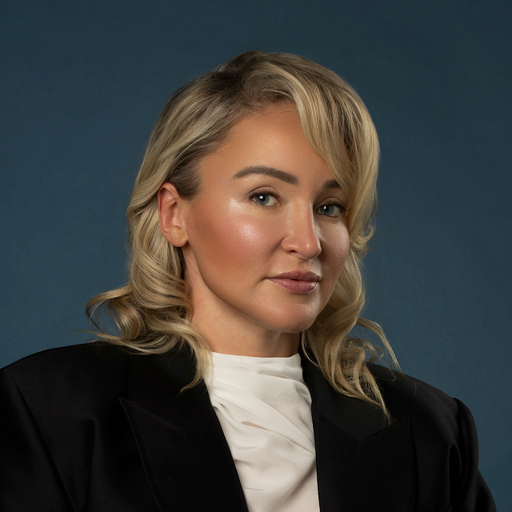
- Victoria Wells, Principal and Co-Founder, leads the legal practice. Her published background includes RWA tokenization, token launches, digital-asset licensing, funds and cross-border structures, as well as serving as Chief Legal Officer at Illuvium.
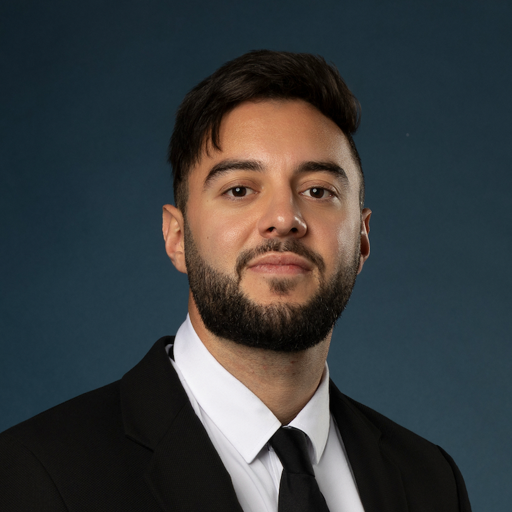
- Haider Ali, Associate, has focused on Web3 law since 2021 and works with Victoria on licensing, tokenization and compliance matters.
- Stephan Roberto, CTO and Co-Founder, brings a technical background in Bitcoin, DeFi, tokenomics and smart contracts. His role is technical strategy, not legal advice.
Readers can inspect the team, case studies, service scopes and Ape Law’s public UAE crypto regulatory tracker before making contact.
Some mandates also require UAE court advocacy, property counsel, tax advice, valuation, foreign counsel or an independent smart-contract security audit. Ask whether Ape Law will provide, coordinate or exclude each workstream. The right answer may be a coordinated team rather than one firm claiming to do everything.
Does Technical Capability Matter?
Sometimes. A lawyer advising on token classification, custody, DeFi, smart-contract controls or on-chain governance must understand the product well enough to identify the legally relevant facts. That does not mean a legal review replaces a smart-contract security audit.
Ask how the team obtains and tests technical information:
- Who maps the product, transaction and custody flows?
- Does the legal analysis identify assumptions about the code and operating model?
- Is a separate smart-contract or cybersecurity specialist needed?
- How are technical findings carried into contracts, disclosures and compliance controls?
The useful test is the process and work product, not whether a firm uses a particular job title.
How Should International Founders Compare Firms?
An international founder needs two separate answers: what UAE law requires and what each other relevant jurisdiction requires. A Dubai firm can advise on the UAE perimeter, but UAE advice does not resolve another country’s tax, foreign-exchange, securities or corporate-law questions.
For a cross-border project, ask whether the UAE firm can:
- onboard and work effectively with an overseas management team;
- identify which questions require local counsel elsewhere;
- coordinate advice without duplicating scope or leaving gaps;
- document where customers, promoters, developers and decision-makers are located; and
- explain whether the activity is conducted “in or from” a relevant UAE jurisdiction.
The legal selection test should remain tied to the project, not the searcher’s physical location.
What Should You Ask in the First Call?
Ask every shortlisted firm the same questions:
- Which regulator, regulated activity or legal classification would you analyse first, and why?
- For tokenization, what do you need to know about the asset, owner, investor rights, token and platform?
- What facts could move us into a different perimeter or structure?
- Who will lead, perform and supervise the work?
- Which similar matters can you describe without breaching confidentiality?
- What is included, excluded and dependent on a third party?
- How are fees connected to stages and decision points?
- What conflicts, referral arrangements or commercial relationships should we know about?
- Which claims about your experience can we independently verify?
How Should You Phase Legal Spend?
Match the scope to the decision in front of the business:
- Concept: identify obvious regulatory blockers and the facts that need testing.
- Validation: classify the activities, asset, investor rights, jurisdictions, entities and likely regulators before buying a full document suite.
- Application or launch: prepare the governance, policies, contracts, disclosures and application materials required for execution.
- Operations: assign responsibility for ongoing reporting, product changes, transfers, marketing, incidents and regulator contact.
Avoid purchasing generic policies or developing a token before the operating model and rights are settled. Equally, do not defer classification until after customers, funds or tokens are involved.
Frequently Asked Questions
Which crypto law firm is best in Dubai?
There is no supportable universal answer. The strongest fit depends on the regulator, activity, asset, transaction size, dispute risk, jurisdictions and the individual lawyer who will do the work. Compare providers against a defined matter using the same evidence test.
What makes a good tokenization law firm in Dubai or the UAE?
A good fit should be able to connect the underlying asset, ownership, issuer, investor rights, token mechanics, platform activities and target markets. It should identify which UAE and cross-border rules need analysis, make its assumptions visible and explain where property, tax, foreign or technical specialists are also needed.
Does a tokenization lawyer need experience with the underlying asset?
The legal team must understand the rights and risks attached to the asset, but it may need to work with sector specialists. Tokenized real estate, fund interests, commodities and private credit can raise different property, offering, valuation, custody and enforcement questions.
Should I choose a specialist or a full-service firm?
A specialist may suit a focused licensing, token or protocol question. A full-service firm may be better where the mandate also requires a large corporate, property, disputes, employment or cross-border team. Some matters benefit from both working together.
Can I verify a firm’s licensing track record?
You can often verify that a client holds a permission through an official register. That generally does not prove which adviser acted. Ask for client-approved references, published matters or other corroboration and record the limits of each source.
Does an in-house technical team prove better legal advice?
No. Technical capability can improve issue spotting where code and operating mechanics affect the analysis, but the relevant questions are how that capability is used, what assumptions are tested and where a separate audit is still required.
Can a Dubai firm advise an international founder?
It can advise on UAE law if appropriately qualified and engaged. Legal, tax, foreign-exchange and regulatory questions in other countries require appropriately qualified local counsel. The advisers should coordinate the scopes explicitly.
Should I rely on a search ranking or industry award?
No. Use rankings and awards only as discovery tools. Ask how the list was created, whether firms paid to participate and whether the named lawyer has experience matching your actual matter.
This guide provides general information about selecting legal counsel and is not legal advice or an independent ranking. Verify current regulatory requirements and obtain advice for your circumstances.


 Victoria Wells