
Without the review
- Compare every jurisdiction without clear decision criteria
- Keep multiple structures and licensing options open
- Evaluate pathways without testing commercial viability
- Leave the founders with more decisions and no execution plan
Case study
An asset manager had several tokenization routes to choose from. The review compared the costs, obligations and technology needs, ruled out poor fits and set out the next steps.
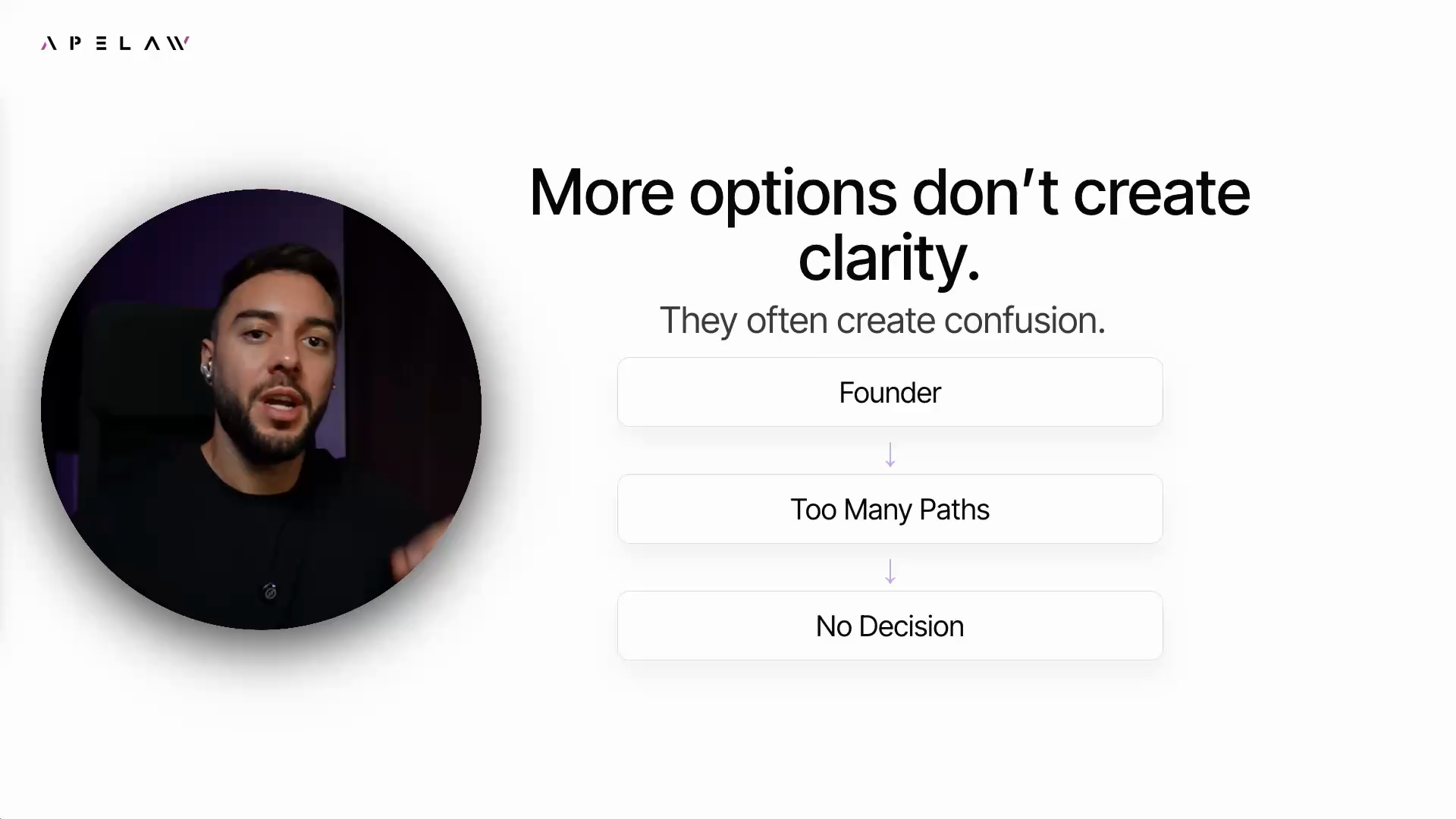 Watch the breakdown
How We Chose the Right RWA Tokenization Path | Ape Law2 min 29 sec · Uploaded
Watch on YouTubeMore options created more confusion
A realistic roadmap built around the strongest path
Based on a real Ape Law matter. Certain details have been anonymised.
Get a Clear Path ForwardThe difference
Without the review
With the review
The review
We compared the available jurisdictions, structures, licensing pathways and technology options against the commercial objectives of the project. The options that did not make sense were ruled out. The strongest pathway was then developed into a realistic roadmap.
Could the pathway support the investment strategy, target investors and intended product?
What costs, timelines, obligations and regulatory expectations came with each option?
Could the proposed technology and platform partners support the legal and operational structure?
Which steps were required to turn the preferred pathway into a launchable strategy?
The founder lesson
The full story
We worked with a regulated asset manager exploring a tokenized investment strategy.
The project had plenty of options. There were different jurisdictions, structures, licensing pathways and technology partners to consider.
At first, that flexibility appeared useful. In practice, it created more decisions than clarity.
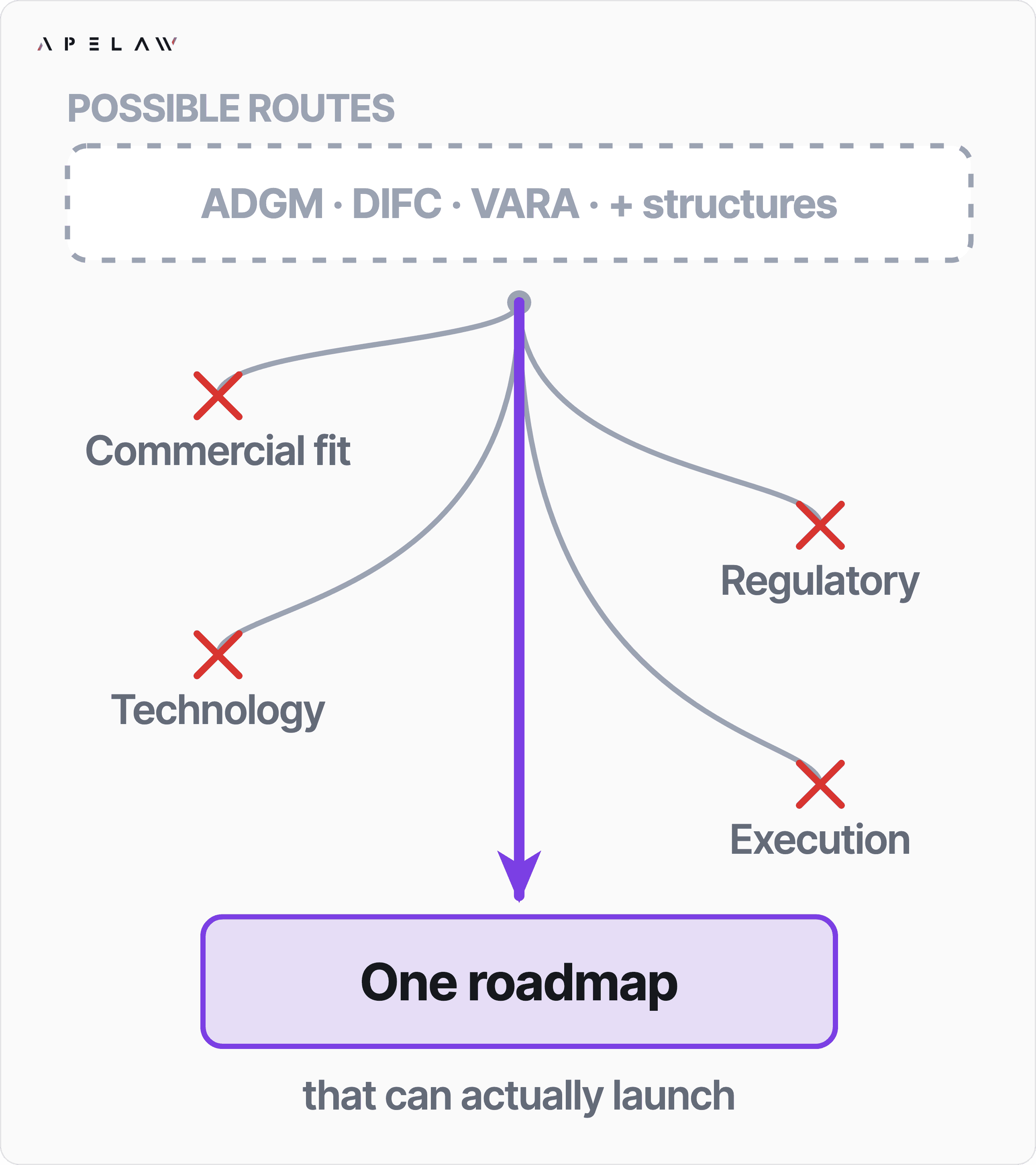
The founders could compare ADGM, DIFC, VARA and other possible routes. They could consider different investment structures, licensing models and technology platforms.
Each option appeared to offer something valuable.
The problem was that the project did not need every option. It needed one pathway that made commercial, regulatory and operational sense.
Continuing to compare everything would not necessarily produce a better answer. It could delay the project while increasing the number of unresolved decisions.
No jurisdiction, structure or licensing route could be assessed through one headline advantage.
Each option came with different costs, timelines, compliance obligations, regulatory expectations and execution risks. The technology and payment requirements could also change depending on the structure selected.
A pathway that appeared fast might create a heavier long-term compliance burden. A prestigious jurisdiction might not fit the product or target investors. A flexible technology platform might not support the required legal and regulatory structure.
The real task was to understand the complete set of trade-offs behind each option.
Instead of trying to make every pathway work, we challenged the assumptions behind each one.
We compared the jurisdictions, assessed the possible structures and evaluated the licensing requirements. We also considered whether the proposed technology partners could support the legal, regulatory and operational model.
Options that did not make commercial sense were ruled out.
This reduced the number of decisions and allowed the founders to focus on the pathways that could realistically support the investment strategy.
Once the weaker options had been eliminated, we validated the strongest pathway.
The final roadmap connected the jurisdiction, structure, licensing strategy, compliance requirements and technology decisions. It gave the founders a sequence of practical steps rather than another list of possibilities.
The legal opinion became a decision-making and execution tool. It did not leave the founders with more choices. It gave them a realistic path forward.
Great strategy is not about identifying every possible route.
It is about understanding the trade-offs, challenging the assumptions and eliminating the options that do not work.
Clarity often comes from saying no more frequently than saying yes.
Once the wrong paths have been removed, the right decision becomes much easier to see and execute.
The result described here relates to this matter. Another project's facts, rules and outcome may differ.
Talk about your project
If you are comparing jurisdictions, structures, licensing pathways or technology partners for a tokenized investment product, Ape Law can help eliminate the options that do not fit and build a roadmap around the strongest path.
Get Expert Advice