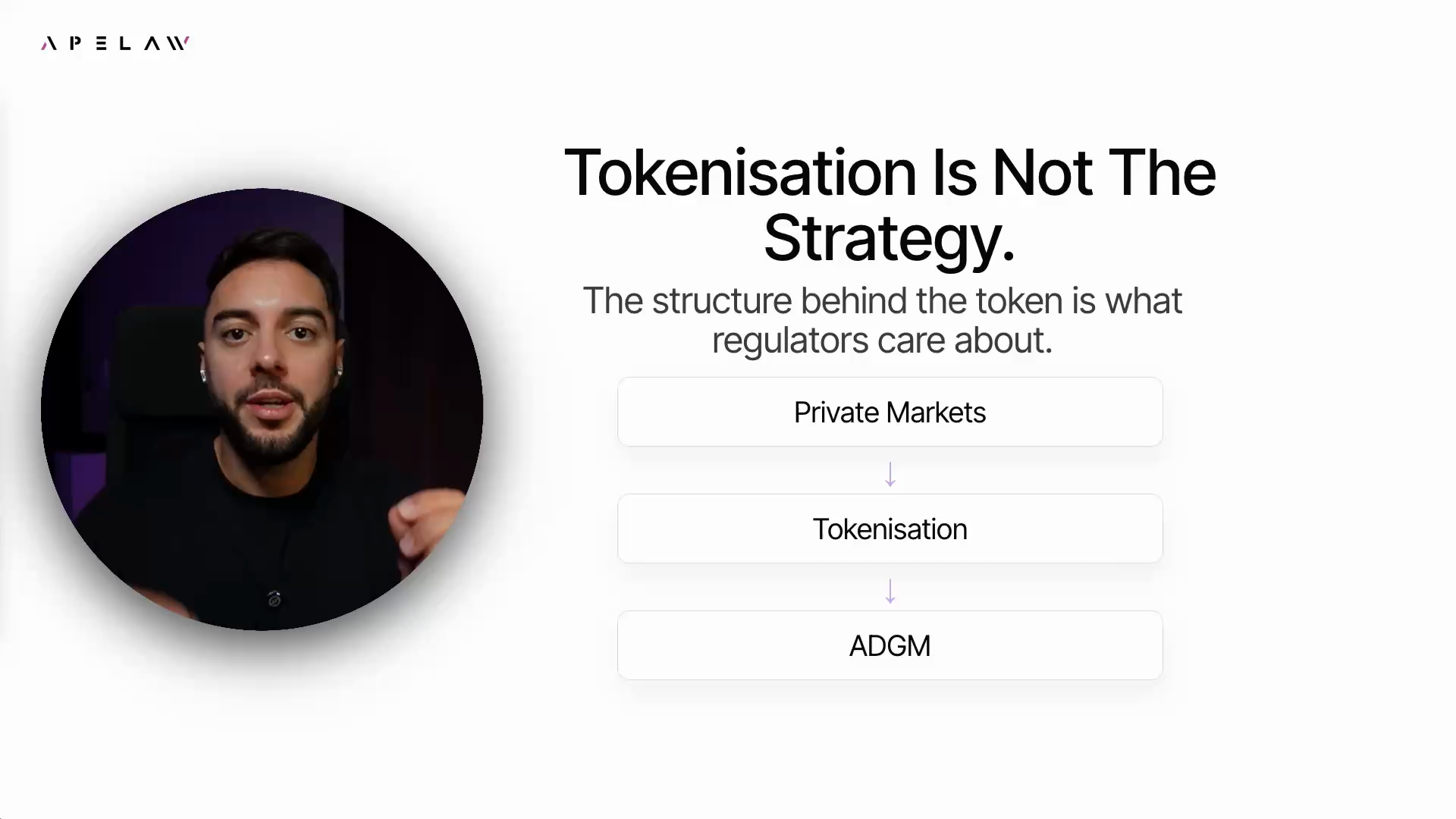
A private markets sponsor was building a tokenized investment platform. The biggest challenge was not creating the token. It was deciding what the token represented and designing the legal and regulatory structure behind it.
CHALLENGE
The token was being treated as the starting point
THE WIN
A regulator-ready structure with a clear path forward
Request a Review
Based on a real Ape Law matter. Client identities and certain details have been anonymized.
The difference
Same platform. Two very different places to begin.
Without the review
Create the token before defining the underlying rights
Build the platform before confirming the regulatory pathway
Leave investor eligibility and exit mechanics until later
Ask the legal questions after the product has already been designed
With the review
Define the asset, ownership and investor rights first
Map the product and its regulatory classification
Develop the licensing strategy before launch
Client type
Private markets sponsor
Matter type
Core issue
Structure before token
Main lesson
The token comes last
What founders see
“Create the token, put it on a platform and let investors buy it.”
That is how tokenization is often presented. It sounds simple because the token is the most visible part of the product. But creating the token first skips the questions that determine whether the platform can actually operate. Before anything is tokenized, the team needs to understand the asset, the ownership structure, the investor rights and the regulatory pathway.
The hidden risk
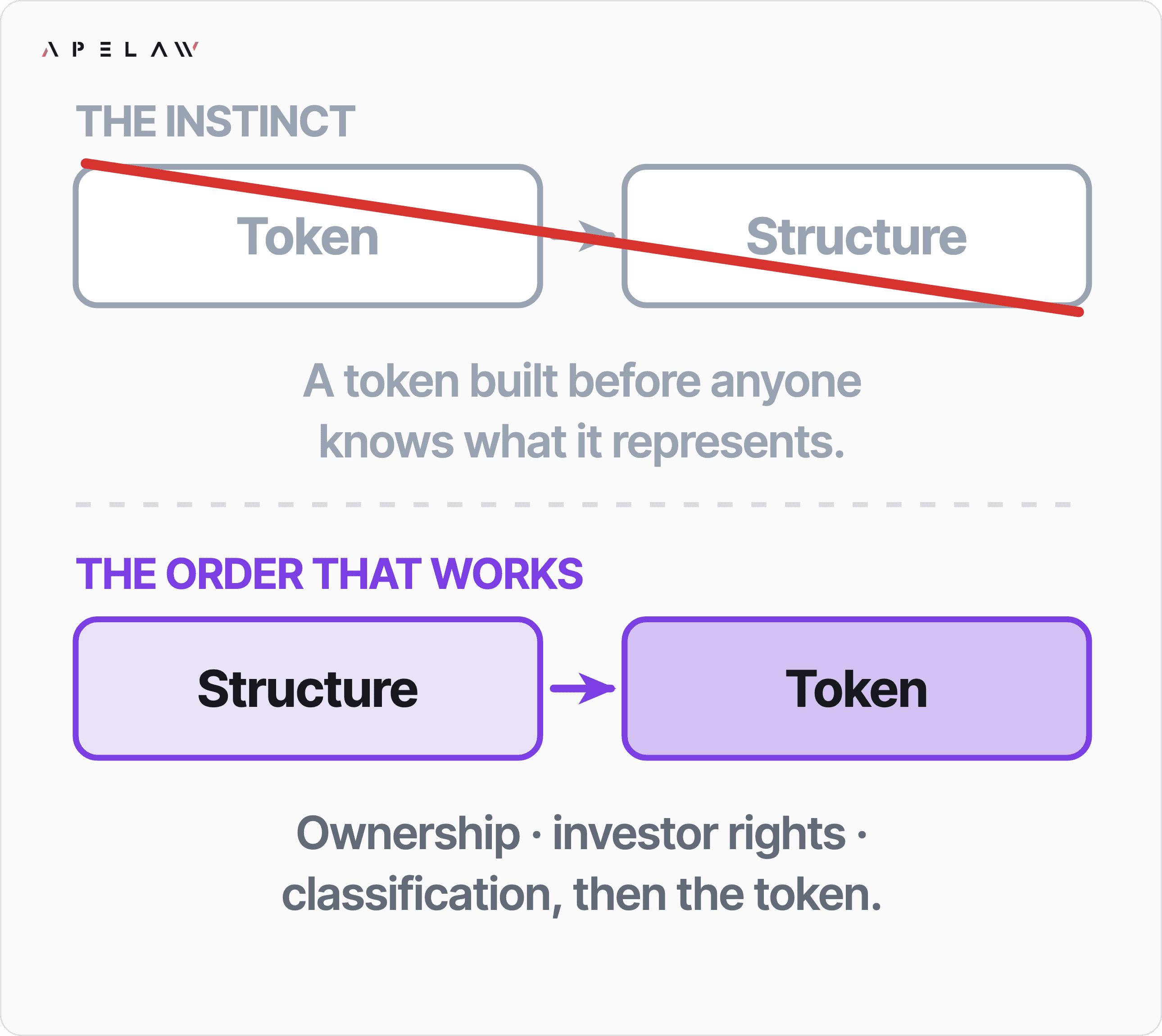
A token can be built before anyone knows exactly what it represents.
Ownership
Investor rights
Classification
Eligibility
Exit
The token was only one part of the platform. The underlying asset still needed an owner. Investors needed clear rights against the correct entity. The product had to be assessed for regulatory classification. The team needed to know who could invest, how interests could be transferred and whether investors had a workable route to exit. If those questions were left until after the token was created, the technology could lock the project into a structure that did not work legally or commercially.
The method
Strategic Structure Review: design the structure before the token
We started by mapping the product, ownership, investor rights and money flows. That work shaped the regulatory pathway, licensing strategy and regulator engagement. The token could then be designed around a structure that made sense.
Product map
What was the investment product, and what did the token actually represent?
Regulatory pathway
How would the product be classified, and which regulatory rules would apply?
Licensing strategy
Which permissions were required, and how should the platform prepare for them?
Regulator engagement
How should the structure and operating model be presented to the regulator?
The founder lesson
The token should be the final expression of the strategy, not the strategy itself.
Full lesson notes
The full breakdown
We worked with a private markets sponsor building a tokenized investment platform. The original idea appeared straightforward. Tokenize the asset, place it on a platform and allow investors to buy it. But that sequence started with the most visible part of the product instead of the questions that would determine whether the platform could operate.
The token was not the difficult part. The difficult part was understanding the legal and regulatory structure behind it.
The token was not the product
A token does not create legal rights by itself. It needs to represent something that exists within a clear legal structure.
Who owned the underlying asset? Which entity issued the token? Who did investors have rights against? What happened if the asset generated income? Could the token be transferred? Could investors sell or redeem their interests?
Those were not questions to answer after development. They shaped what the token needed to do in the first place.
Why ownership and investor rights came first
Before designing the token, we mapped the relationship between the asset, the platform, the operating entities and the investors.
The ownership chain needed to be clear. Investor rights had to sit against the correct entity. The movement of funds needed to match the legal structure. Eligibility rules and exit mechanics also had to be understood before they could be built into the platform.
Without that work, the token might have looked complete while the product behind it remained unclear.
Mapping the regulatory pathway
The next question was how the product would be treated by the regulator.
We assessed the product structure, investor rights, platform activities and proposed money flows. This helped identify the likely classification, the regulated activities involved and the permissions the business would need.
That analysis became the basis for the licensing strategy. It also gave the team a practical roadmap for developing the platform.
Building a regulator-ready pathway
We did more than prepare written legal advice. We mapped how the platform should operate, developed the licensing strategy and engaged directly with the regulator.
Each step built on the one before it. The product map informed the legal analysis. The legal analysis shaped the regulatory pathway. The regulatory pathway guided the licensing strategy and regulator discussions.
The legal opinion became a working roadmap for the project, not a document that sat apart from the business.
The takeaway
Tokenization should not begin with the token.
First, understand the asset and the rights attached to it. Then design the ownership and operating structure. Next, choose the regulatory pathway and licensing strategy. Only then should the token be designed.
The token should express the strategy that has already been built. It should not be expected to replace one.
Where this shows up
Related services
Planning to tokenize an asset?
Build the structure before the token.
If you are building a tokenized investment platform, a Strategic Structure Review can help define the ownership, investor rights, regulatory pathway and licensing strategy before development goes too far.
Request a Review
Confidential · Founder focused legal team · No obligation past the first call