


On 31 August 2026, Ape Law’s UAE VASP Licence Tracker contained 111 authorisation records. On 27 September, it contained 116. Those five extra records were older permissions recorded by Abu Dhabi Global Market’s Financial Services Regulatory Authority (ADGM/FSRA), already marked withdrawn. They were not five licences granted in September.
Two records already in the tracker changed from active to withdrawn: BITEXEN CUSTODY LTD and BITEXEN MENA LTD. ADGM’s register gives 17 September 2026 as the withdrawal date for both. For an asset owner choosing a tokenization provider, those individual records matter more than a rising headline count.
Stephan Roberto, Ape Law’s CTO and co-founder, compared the tracker data and regulator records for this review. Ape Law monitors public records to understand how the UAE virtual-asset landscape is moving and to help its legal team identify questions to ask for clients. This data analysis does not replace legal advice on a particular project.
September at a glance
We compared the tracker on 31 August 2026, before September began, with its 27 September 2026 update, the latest September data available for this review:
| Measure in Ape Law’s tracker | 31 August | 27 September | Change |
|---|---|---|---|
| Authorisation records | 111 | 116 | +5 |
| Entity records, counted separately by regulator | 110 | 115 | +5 |
| Activity descriptions in regulator records | 200 | 207 | +7 |
| Records explicitly marked active | 88 | 86 | −2 |
| Records marked withdrawn | 0 | 7 | +7 |
These are counts within Ape Law’s tracker of five reviewed UAE regulatory regimes, not an official total of active crypto firms in the UAE. A company can have more than one authorisation, and an authorisation can list several activity descriptions. The five added FSRA records had issue dates before 2026; their seven activity descriptions explain the increase from 200 to 207. The tracker had no withdrawn records in its 31 August data, but that does not mean there were no withdrawn UAE licences at the time.
The 86 figure counts only records whose regulator source expressly supported an active status. On 27 September, seven records were marked withdrawn: the five older entries added to the tracker and the two BITEXEN entries whose status changed. The remaining 23 had other or unstated status evidence. Those 23 should not be treated as inactive simply because they were not labelled active.
When did the changes appear?
- 7 and 13 September: The tracker was updated, but its record and status counts did not change from 31 August.
- 17 September: ADGM dates the withdrawal of the two BITEXEN permissions to this day. The 13 September tracker update had not yet shown the change.
- 23 September: The tracker first showed those two status changes and added the five older withdrawn FSRA records.
- 27 September: The totals and status counts were unchanged from 23 September.
The other four reviewed regulators had no change in their authorisation counts. The original permission wording for records already in the tracker did not change between the August and September comparison dates.
How did we check this?
We compared saved tracker data from 31 August and 27 September and checked the updates in between. We matched the authorisation records to see what had been added and which statuses changed. We used the regulator’s dates for the BITEXEN withdrawals; the date a record appears in the tracker is not necessarily the date a permission was granted or withdrawn.
The tracker methodology explains its scope and status rules. The downloadable CSV shows the latest records, which may differ from the September data. This is a comparison of Ape Law’s tracker, not an exhaustive account of every UAE licensing event.
What should a tokenization buyer check?
If a platform says it is “licensed in the UAE,” ask for more than a brand name or website:
- Which company will sign your agreement? Ask for the full legal name of the contracting entity and any separate issuer, distributor or custodian.
- Which company will do each job? Match those roles against each entity’s permission, using the regulator’s own wording rather than a broad activity label.
- What does the regulator’s record say now? Check the current status, conditions and restrictions, and keep a dated copy of the source you relied on.
One company’s permission does not automatically cover another company in the same group. The tracker helps you find source records, but it cannot decide whether your token is legally classified in a particular way or whether your project needs a permission. Those questions depend on the asset, holder rights, activities and jurisdictions. Ape Law’s RWA tokenization guide explains where to start; its RWA legal strategy service covers project-specific advice.
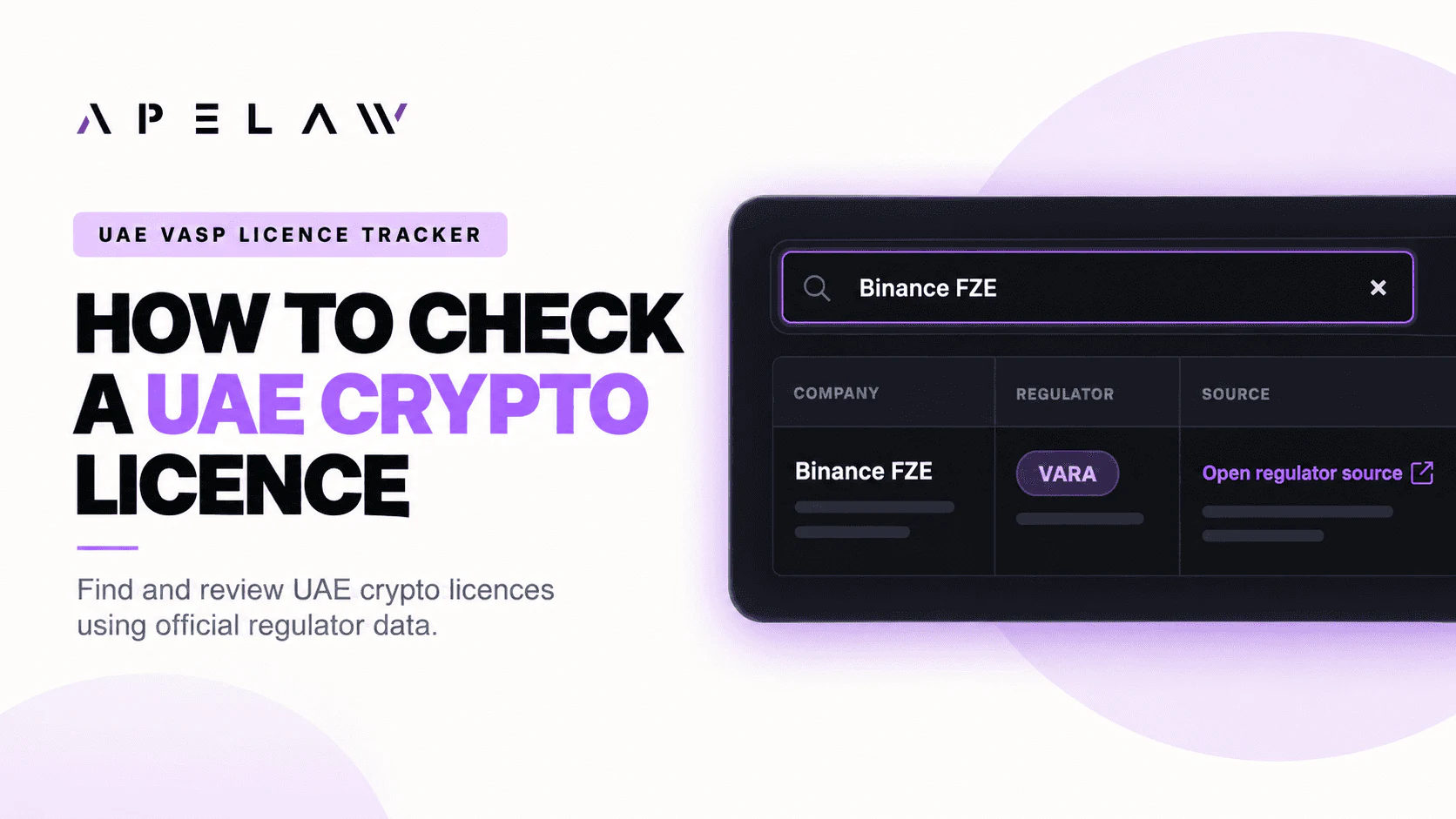
For a walkthrough of checking a company, see How can I check if a crypto company is licensed in the UAE?. The live tracker gives its latest collection date and links records to official sources.
About this analysis: It compares Ape Law’s tracker on 31 August and 27 September 2026 and checks the regulator’s dates for two withdrawals. Public records can change. The tracker is a research starting point, not legal advice, regulatory confirmation, due diligence or an endorsement of any listed entity.


 Victoria Wells