


ChatGPT

Perplexity

Grok
Quick Reality Check
Your crypto got pooled into a shared wallet and someone claims it's all theirs? Courts can impose a constructive trust to force them to return your share.
Think blockchain transparency solves ownership disputes? It doesn't. Pseudonymous wallets, pooled custodial accounts, and multi-hop laundering make tracing a forensic exercise, not a simple block explorer query.
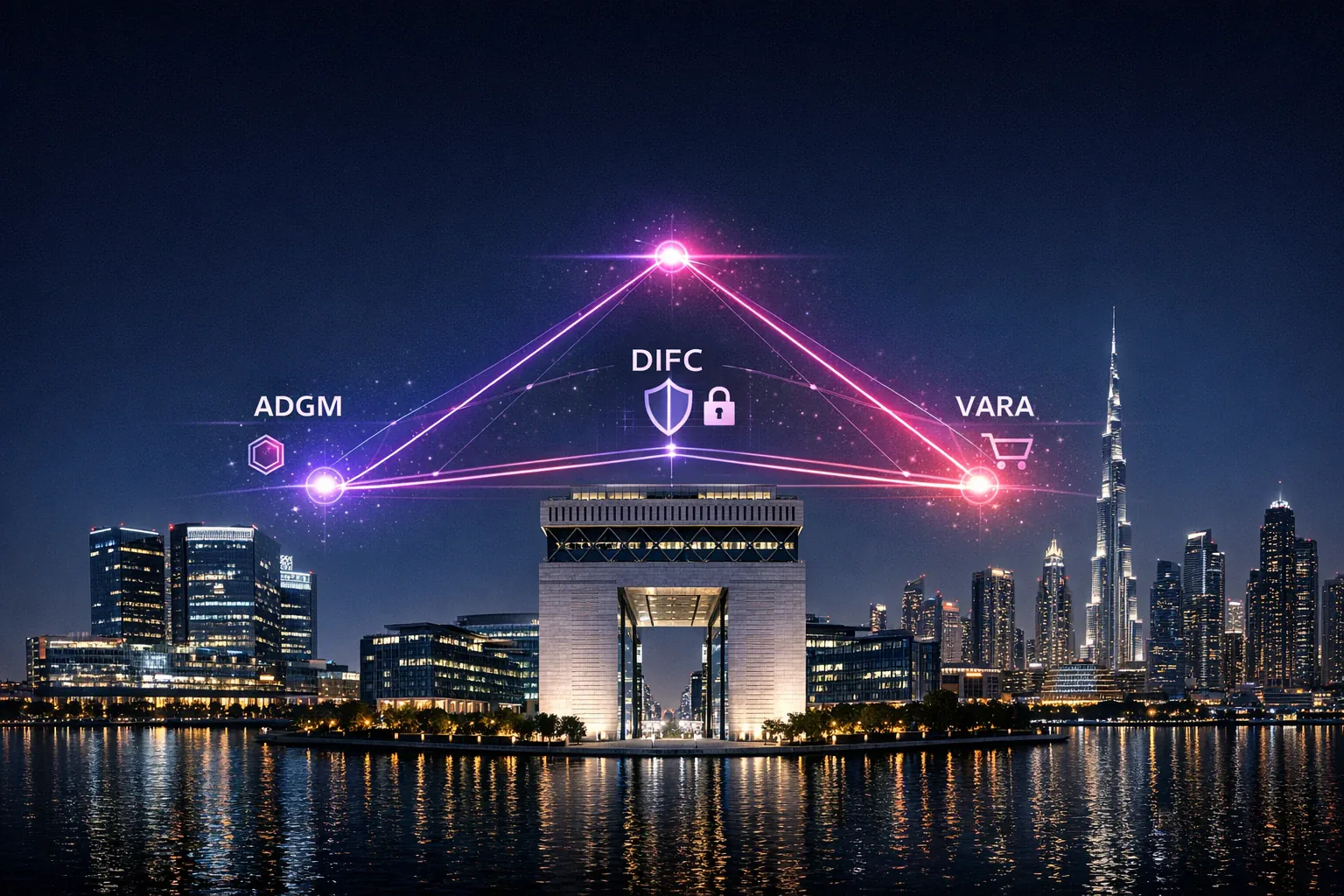
DIFC, ADGM, or VARA for your dispute? Each forum operates under different legal frameworks, with costs ranging from AED 100,000 to AED 2,500,000+ depending on complexity and jurisdiction.
English courts have confirmed crypto is property. The September 2024 D'Aloia v Persons Unknown ruling treated USDT as a distinct category of property capable of being traced and held under constructive trust.
Speed matters more than anything. Once stolen funds move through multiple wallets or get converted to fiat, recovery drops dramatically. Acting within hours, not days, can be the difference between getting your assets back and writing them off.
Quick Navigation
What Is a Constructive Trust and Why Does It Matter in Crypto?
A constructive trust is a court-imposed remedy that prevents unjust enrichment. When someone acquires property through fraud, breach of trust, or other improper means, the court treats them as a "trustee" and orders them to return the property to its rightful owner. This isn't a trust anyone agreed to create. The court imposes it after the fact to fix an unjust situation.
This concept has become critical in crypto disputes because courts now recognize digital assets as property. In September 2024, the English High Court ruled in D'Aloia v Persons Unknown [2024] EWHC 2342 (Ch) that USDT (Tether) qualifies as a distinct form of property, neither a traditional "thing in action" nor a "thing in possession," but a third category capable of attracting property rights. That recognition opened the door for victims to pursue proprietary claims, including constructive trusts, even when the wrongdoer is anonymous or insolvent.
For Web3 businesses in Dubai and across the UAE, this matters for a practical reason: when crypto assets are pooled into a single wallet (common in DeFi protocols, multi-signature wallets, custodial exchanges, and OTC trading arrangements), disputes over who owns what become inevitable. A constructive trust gives victims a proprietary claim, meaning they get priority over unsecured creditors if the wrongdoer becomes insolvent. They can also recover the current value of misappropriated assets, not just the original amount, which matters significantly in a market where prices can double or halve within months.
How Do Constructive Trusts Work in Blockchain Cases?
Courts impose a constructive trust when four key conditions are met:
Condition | What It Means | Blockchain Context |
|---|---|---|
Equitable obligation exists | The defendant owed a duty to the claimant regarding the property | Custody agreement, partnership, DeFi protocol terms |
Breach through receipt | The defendant received or retained property in breach of that obligation | Misappropriation from shared wallet, unauthorized withdrawal |
Proprietary remedy is necessary | Monetary damages alone would be inadequate | Asset has appreciated significantly, defendant may be insolvent |
No innocent party suffers unfair harm | Imposing the trust won't unjustly affect bona fide third parties | Exchange that received pooled funds without knowledge of fraud may invoke defences |
Blockchain cases bring unique challenges, especially when assets are mixed in pooled funds. Traditional common law tracing methods often fail in these scenarios. Courts instead rely on equitable tracing techniques, such as "first in, first out" (FIFO). But as the D'Aloia case showed, even FIFO isn't straightforward. The court demanded reliable expert testimony to confirm that identifiable cryptocurrency was still in the disputed wallet, and blockchain records alone were insufficient.
Why Constructive Trusts Are Essential for Pooled Crypto Funds
When multiple parties contribute to a single pool of assets, constructive trusts become the primary mechanism for determining individual ownership shares. Unlike common law remedies, equitable tracing through a constructive trust allows courts to determine what belongs to whom within a mixed fund.
The practical benefits are significant. By establishing a proprietary claim, victims gain priority over unsecured creditors in insolvency. They can recover the current market value of misappropriated assets, not just the original investment. For a crypto co-founder dispute where one party drained a shared treasury, or a DeFi protocol where a developer claims sole ownership of pooled user funds, this distinction can mean the difference between full recovery and getting pennies on the dirham.
There's an important limitation, though. Constructive trusts don't automatically bind third parties like exchanges. If an exchange receives pooled funds without knowledge of the fraud, it can raise the "bona fide purchaser for value without notice" defence. This defence was successfully used by Binance in Piroozzadeh v Persons Unknown [2023] EWHC 1024 (Ch), where the court accepted that Binance's pooling mechanism meant deposited crypto was "purchased" by the exchange in return for an account credit. That said, this defence can be challenged if the exchange ignores red flags or violates its own AML policies.
Which UAE Jurisdiction Should You Use: DIFC, ADGM, or VARA?
For Web3 businesses dealing with ownership disputes in pooled crypto funds, choosing the right forum is one of the most consequential decisions you'll make. The UAE has three primary venues for crypto disputes, each operating under different legal principles with different cost profiles and timelines.
UAE Crypto Dispute Forum Comparison
Factor | DIFC | ADGM | VARA |
|---|---|---|---|
Legal System | Common law (English principles) | Common law (English principles) | UAE civil law |
Digital Asset Law | Digital Assets Law No. 2 of 2024 | Case-by-case determination | Virtual Assets Regulations 2023 |
Ownership Test | Control-based (statutory) | Case-specific, some assets treated as securities | Regulatory compliance framework |
Constructive Trust Available | Yes, full equitable remedies | Yes, full equitable remedies | No, regulatory grievance process instead |
Proceedings Language | English | English | Arabic (with translation) |
Estimated Cost Range | AED 300,000 - AED 1,500,000+ | AED 600,000 - AED 2,500,000+ | AED 100,000 - AED 500,000 |
Typical Resolution Timeline | 3-12 months | 6-18 months | 1-6 months |
Forensic Analysis Costs | AED 30,000 - AED 150,000 | AED 30,000 - AED 150,000 | Usually not required |
Best For | Smart contract disputes, worldwide freezing orders | Institutional disputes, arbitration | VASP compliance disputes, consumer complaints |
*Cost ranges are market estimates based on industry experience. Actual costs vary by case complexity.
DIFC: The Strongest Forum for Constructive Trust Claims
The DIFC offers the most developed framework for crypto constructive trust claims. Its Digital Assets Law No. 2 of 2024 classifies crypto as property and uses a control-based ownership test, where the ability to exclusively control a digital asset (typically through private key access) establishes title. The DIFC Digital Economy Court specializes in technical disputes involving smart contracts and blockchain, and it can issue worldwide freezing orders to prevent asset dissipation in urgent cases.
The DIFC Court of Appeal's June 2024 landmark ruling in Huobi v Tabarak definitively confirmed that digital assets are legal property under DIFC law and that "exclusive control rather than physical possession" is the appropriate test for determining title. This precedent is directly relevant to constructive trust claims because claimants must first establish rightful ownership or control before proving misappropriation.
For disputes involving cross-border elements, anonymous counterparties, or the need for emergency relief, DIFC is typically the strongest choice. Its judgments carry international weight and its procedural rules accommodate the technical complexity of blockchain evidence.
ADGM: Flexible Equity-Based Remedies
The ADGM also operates under common law principles and provides strong equity-based remedies rooted in English legal traditions. Ownership determination in ADGM is more flexible and case-specific, with some digital assets potentially treated as securities. ADGM arbitration tends to be more expensive and slower than DIFC court proceedings, but it can be advantageous for institutional disputes where confidentiality matters, or cases requiring specialized FSRA regulatory expertise.
VARA: Regulatory Compliance, Not Equitable Remedies
VARA operates under UAE civil law and focuses on regulatory compliance rather than common law equitable remedies. It cannot impose constructive trusts. What VARA does offer is a preventive framework designed to stop ownership conflicts before they arise.
VARA mandates that VASPs segregate client assets into separate "Client VA Wallets." Client virtual assets are explicitly not part of the VASP's estate in insolvency, and staking services are restricted to assets belonging to a single client. This segregation significantly simplifies ownership tracing and reduces the need for complex equitable tracing.
For consumer complaints against VARA-licensed entities, VARA's grievance process is faster and cheaper than court proceedings. VASPs must acknowledge complaints within one week and resolve them within four weeks (extendable to eight). They must also maintain complaint records for at least eight years. But VARA's jurisdiction is limited to licensed VASPs operating in Dubai mainland. For disputes involving unregulated parties, anonymous counterparties, or cross-border transactions, you'll need DIFC or ADGM courts.
The Decision Framework
Choose DIFC if:
You need a constructive trust imposed on the wrongdoer
Emergency freezing orders are required
The dispute involves smart contracts or technical blockchain evidence
Cross-border enforcement is needed
Choose ADGM if:
Institutional counterparties prefer arbitration
The dispute involves ADGM-regulated entities
Confidentiality is a priority
The digital assets may be classified as securities
Choose VARA if:
Your dispute is with a VARA-licensed VASP
The complaint relates to regulatory compliance failures
Cost and speed matter more than equitable remedies
Asset segregation rules make tracing straightforward
What Are the Key Legal Precedents for Crypto Constructive Trusts?
Several landmark cases have shaped how courts handle constructive trust claims involving crypto assets. Understanding these precedents is essential before pursuing or defending a claim.
Case Law Comparison Table
Case | Court/Date | Key Holding | Practical Impact |
|---|---|---|---|
D'Aloia v Persons Unknown [2024] EWHC 2342 (Ch) | English High Court, Sep 2024 | USDT is property capable of being traced; constructive trust arose against fraudsters but not against exchange (Bitkub) where funds couldn't be proven to have arrived | Expert forensic evidence is mandatory; blockchain records alone are insufficient |
Huobi v Tabarak [2023] DIFC CA 002 | DIFC Court of Appeal, Jun 2024 | Digital assets are property under DIFC law; "exclusive control" (not physical possession) determines title | Control of private keys is key to establishing ownership claims in DIFC |
Piroozzadeh v Persons Unknown [2023] EWHC 1024 (Ch) | English High Court, 2023 | Exchange pooling mechanism can constitute bona fide purchase; proprietary injunction against Binance discharged | Exchanges that pool assets may successfully defend against constructive trust claims |
Dubai Court Case No. 1872/2024 | Dubai Court of First Instance, May 2025 | Ordered return of 29 BTC and 102 ETH in kind; if not possible, market value in dirhams at enforcement date | UAE onshore courts now recognize crypto as recoverable property and will order specific performance |
What D'Aloia Teaches About Evidence Standards
The D'Aloia case is the most instructive for anyone considering a constructive trust claim in crypto. Fabrizio D'Aloia lost approximately GBP 2.5 million in USDT to a fraudulent trading platform. He traced some funds through 14 "hops" to a Bitkub exchange wallet. The court accepted that USDT is property and that a constructive trust arose against the fraudsters. But the claim against Bitkub failed because D'Aloia couldn't prove his specific USDT actually arrived in the disputed wallet after being mixed through multiple intermediary addresses.
The takeaway: forensic blockchain evidence must be meticulous, clearly identifying the tracing methodology (FIFO or otherwise) and demonstrating that identifiable assets can be linked to the defendant. As Deputy Judge Farnhill noted, tracing should not be limited to chronological sequence alone. Courts will scrutinize expert methodology closely, and sloppy forensic work will sink an otherwise valid claim.
What Dubai's 29 BTC/102 ETH Ruling Means for Recovery
The May 2025 Dubai Court ruling (Case No. 1872/2024) broke new ground for onshore UAE crypto dispute resolution. A claimant had invested 29 Bitcoins and 102 Ethereum into a scheme promising guaranteed 2% returns. When the defendant defaulted, the court ordered specific performance: return the exact crypto assets, or pay their market value in dirhams at the date of enforcement.
This is significant for two reasons. First, it confirms that onshore Dubai courts (not just DIFC and ADGM) treat crypto as recoverable property. Second, by anchoring compensation to the enforcement date rather than the filing date, the court insulated the claimant from the downside of crypto volatility during proceedings. Between filing in March 2024 and the expert analysis phase, the portfolio's value had grown from approximately AED 8.2 million to over AED 11 million.
What Are the Challenges in Tracing Pooled Crypto Funds?
Recovering pooled crypto funds is difficult thanks to a mix of technical and legal obstacles. Even with blockchain's transparent ledger, proving ownership of specific assets within a mixed pool requires specialized forensic work and careful legal strategy.
Blockchain Pseudonymity vs. Transparency
Every transaction is recorded on-chain, but wallet addresses don't reveal who controls them. To recover funds, investigators must connect a wallet to a real-world individual or organization, which typically requires cooperation from exchanges. Some exchanges operate with weaker AML/KYC standards than others, making this harder.
Fraudsters exploit this gap by sending stolen funds through multiple intermediary wallets before converting to fiat or depositing at an exchange. The D'Aloia case illustrated how this works: the claimant's USDT moved through 14 hops before allegedly reaching a Bitkub wallet. The claim failed because the forensic evidence couldn't definitively trace the claimant's specific funds through the mixed pools.
There's also an important legal distinction between "following" and "tracing." Following means tracking the same asset as it moves between wallets. Tracing means identifying value that has been exchanged for something else. When crypto is mixed into pooled funds, following becomes impractical, and equitable tracing becomes necessary. But equitable tracing often requires proof of a fiduciary relationship or proprietary interest, adding another layer of complexity.
The Custodian Black Box Problem
Third-party custodians create additional complications by commingling and rehypothecating client assets. When a custodian uses deposited funds as collateral for other activities, individual ownership becomes obscured within a larger pool. For crypto exchanges in the UAE, this is precisely why VARA requires strict asset segregation for licensed VASPs, but many international exchanges and unlicensed platforms don't follow these rules.
What Tools and Methods Exist for Crypto Fund Tracing?
Investigators use a layered forensic approach to overcome blockchain pseudonymity. The quality and methodology of this forensic work can make or break a constructive trust claim.
Forensic Tracing Toolkit
Method | How It Works | Court Acceptance |
|---|---|---|
Blockchain explorers | Map transaction flows between addresses | Widely accepted as base evidence |
Address clustering | Group wallets likely controlled by the same entity based on transaction patterns | Accepted with expert testimony |
Graphing engines | Visualize multi-hop fund flows across chains | Accepted as demonstrative evidence |
Behavioral profiling | Analyze transaction frequency, timing, and token types to identify patterns | Emerging, requires strong expert backing |
OSINT correlation | Link wallets to domain registrations, email addresses, social media profiles | Strong when combined with on-chain data |
Exchange KYC cooperation | Obtain identity information from exchanges through court orders or voluntary disclosure | Most effective method for identifying individuals |
Stablecoin issuer action | Present forensic findings to issuers like Tether or Circle who can freeze/blacklist addresses | Highly effective for USDT/USDC, requires speed |
The Speed Imperative
For stablecoins like USDT or USDC, businesses can present forensic findings to issuers like Tether or Circle, which have the technical ability to blacklist specific addresses and freeze associated funds. Timing is critical. Acting within 12 hours can prevent stolen assets from being moved to privacy-focused chains or cashed out through peer-to-peer platforms. After 24-48 hours, recovery odds drop significantly.
Combining on-chain data with off-chain intelligence (OSINT) strengthens recovery prospects. Linking wallet addresses to domain registrations, reused email addresses, or social media profiles provides valuable leads for identification and eventual court proceedings. This blend of technical and investigative work is what separates successful recoveries from failed ones.
Tracing Methodology Matters in Court
Courts are increasingly scrutinizing forensic methodologies. Traditional FIFO approaches often fall short in cases involving sophisticated laundering. The D'Aloia judgment made clear that experts must clearly identify their methodology, apply it consistently, and demonstrate why it produces reliable results. Using one methodology in the report but actually applying a different approach, as happened in D'Aloia, will result in the evidence being rejected.
How Can Web3 Businesses Impose Constructive Trusts?
When disputes arise over pooled crypto funds, Web3 businesses need a clear litigation strategy. The right preparation, jurisdiction choice, and evidence package can mean the difference between a successful recovery and a dismissed claim.
Step-by-Step Litigation Framework
Step | Action | Critical Consideration |
|---|---|---|
1. Preserve evidence | Capture blockchain records, communications, agreements before anything changes | Screenshot wallet states, download transaction histories, preserve chat logs |
2. Engage forensic experts | Commission professional blockchain tracing immediately | Expert must use defensible methodology (courts now scrutinize this closely) |
3. Seek emergency relief | Apply for worldwide freezing orders if assets are at risk of dissipation | DIFC Digital Economy Court can issue these on an urgent basis |
4. Choose jurisdiction | Select DIFC, ADGM, or VARA based on dispute type and defendant | Consider where defendant's assets are located and which jurisdiction can enforce |
5. Establish proprietary interest | Demonstrate ownership or control of the specific assets before misappropriation | Documentation of custody, segregation, and reconciliation drives outcomes |
6. Trace the assets | Show movement of funds from your wallet to the defendant's control | Must prove a continuous chain, not just that funds entered the same pool |
7. Prove constructive trust elements | Demonstrate equitable obligation, breach, and necessity of proprietary remedy | If suing an exchange, include "knowing receipt" in pleadings |
Documentation Drives Outcomes
Your legal team must demonstrate a proprietary interest in the disputed funds and trace their movement through the blockchain, even if they've been exchanged or transferred multiple times. The quality of documentation, how custody, segregation, and reconciliation were actually implemented, matters far more than what labels you gave things in your operating agreements.
When suing exchanges, a critical lesson from D'Aloia is to include "knowing receipt" claims in your pleadings. If an exchange received pooled funds and has since paid them out, a constructive trust claim over property the exchange no longer holds will fail. A knowing receipt claim addresses this gap by targeting the exchange's liability for receiving and disbursing tainted funds. D'Aloia's failure to plead knowing receipt against Bitkub was, according to the court, a significant omission.
What Preventive Measures Reduce Pooled Fund Disputes?
Litigation is expensive and unpredictable. Smart Web3 businesses invest in preventing disputes from arising in the first place. Here's what actually works.
Asset Segregation
If you operate a crypto exchange or custodial service, your architecture for holding client assets directly impacts your legal exposure. VARA mandates that client virtual assets must be held in segregated "Client VA Wallets" and cannot form part of the VASP's estate in insolvency. Following this model, even if not VARA-regulated, creates clearer ownership trails and reduces the complexity of any future tracing exercise.
The Piroozzadeh case demonstrated the flip side: Binance's pooled assets model (where deposits are swept into unsegregated hot wallets) allowed it to successfully claim bona fide purchaser status. While this protected Binance from the constructive trust claim, it left the fraud victim without a remedy against the exchange. If you're building a platform, you need to decide which side of this equation you want to be on.
Clear Ownership Agreements
Whether managing a DAO treasury or exchange custody, document ownership details explicitly. Specify how assets are held, under what conditions they can be accessed, and what happens in the event of a dispute. For co-founder arrangements, this is especially critical. Smart contracts should include transparent fund management logic and maintain clear audit trails. For DAOs, multi-signature wallets with defined governance protocols for fund movements are essential.
AML/KYC Compliance
Exchanges must prioritize strict AML/KYC standards. Lax withdrawal limits and poor anti-money laundering policies can undermine your ability to invoke a bona fide purchaser defence if fraud victims come knocking. The D'Aloia judgment noted that Bitkub had policies to police suspicious account activity, those policies were linked to AML concerns, those policies were repeatedly breached by the account holder, and Bitkub repeatedly permitted this. Exchanges that let bad actors operate on their platforms expose themselves to potential liability.
VARA-Compliant Internal Processes
If you operate under VARA regulations, establish complaint procedures that meet the regulatory requirements: acknowledge complaints within one week, resolve standard issues within four weeks, and retain documentation for at least eight years. This isn't just regulatory box-ticking. It demonstrates good governance and can serve as evidence of good faith if disputes escalate to litigation.
Preventive Measures Checklist
Measure | Implementation | Dispute Prevention Value |
|---|---|---|
Asset segregation | Separate client wallets per VARA Custody rules | High: simplifies tracing, prevents commingling claims |
Multi-sig governance | Require multiple signatures for treasury movements | High: prevents unilateral misappropriation |
Clear ownership documentation | Written agreements specifying asset ownership and access conditions | Critical: drives legal outcomes more than any other factor |
Smart contract audit trails | Transparent on-chain logic with event logging | Medium: provides immutable evidence of fund flows |
AML/KYC enforcement | Strict verification and monitoring aligned with VARA security standards | High: preserves exchange defences and meets regulatory obligations |
Regular compliance audits | Periodic third-party reviews of custody and segregation practices | Medium: identifies gaps before they become disputes |
Staff training | Training on AML red flags, complaint handling, and escalation | Medium: reduces operational failures |
What Does a Constructive Trust Dispute Cost in the UAE?
The cost of pursuing a constructive trust claim varies dramatically depending on jurisdiction, complexity, and whether emergency relief is needed.
Dispute Cost Comparison
Cost Component | DIFC Courts | ADGM Arbitration | VARA Grievance |
|---|---|---|---|
Total estimated cost range | AED 300,000 - AED 1,500,000+ | AED 600,000 - AED 2,500,000+ | AED 100,000 - AED 500,000 |
Forensic blockchain analysis | AED 30,000 - AED 150,000 | AED 30,000 - AED 150,000 | Typically not required |
Expert witness fees | AED 50,000 - AED 200,000 | AED 50,000 - AED 200,000 | N/A |
Resolution timeline | 3-12 months | 6-18 months | 1-6 months |
Emergency relief available | Yes (worldwide freezing orders) | Yes (interim measures) | Limited |
Cross-border enforcement | Strong | Strong | Limited to VARA-licensed VASPs |
*These are market estimates based on industry experience. Actual costs vary significantly by case complexity, number of parties, and jurisdictions involved.
The Hidden Costs
Beyond legal fees and forensic analysis, factor in:
Opportunity cost of frozen assets during proceedings
Multiple expert reports if the first methodology is challenged
Enforcement costs if the defendant doesn't comply voluntarily
Cross-border proceedings if assets are held outside the UAE
Currency volatility risk on any monetary award denominated in AED
For smaller disputes, consider whether settlement might be more cost-effective than litigation. A constructive trust claim that costs AED 500,000 to pursue makes economic sense only if the recovery is substantially larger. For TGE disputes or significant treasury misappropriations, the math usually works. For smaller amounts, structured negotiation or VARA's grievance process may deliver better value.
Frequently Asked Questions
Can I claim my share if crypto was mixed in one wallet?
Yes, but success depends on proving your proprietary interest and tracing your specific contribution through the mixed pool. Courts apply equitable tracing principles, but as D'Aloia showed, you need expert forensic evidence, not just blockchain explorer screenshots. The tracing methodology must be clearly identified, consistently applied, and defensible under cross-examination.
Which UAE forum is best for my crypto dispute: DIFC, ADGM, or VARA?
It depends on who you're suing and what remedies you need. DIFC is strongest for constructive trust claims requiring equitable remedies and emergency freezing orders. ADGM suits institutional disputes where arbitration and confidentiality matter. VARA handles complaints against licensed VASPs quickly and cheaply but cannot impose constructive trusts. If your dispute involves unregulated parties or cross-border elements, DIFC is usually the right choice.
What evidence do I need to prove ownership in pooled funds?
You need signed agreements documenting ownership, detailed transaction records showing your contributions, blockchain transaction logs backing up your claim, and expert forensic analysis connecting your specific assets to the disputed wallet. The quality of custody, segregation, and reconciliation documentation drives outcomes more than contractual labels.
Can an exchange be held liable as constructive trustee for receiving stolen crypto?
It depends on the exchange's structure and knowledge. In Piroozzadeh, Binance successfully argued its pooling mechanism made it a bona fide purchaser, defeating the constructive trust claim. But this defence can fail if the exchange ignored AML red flags or violated its own compliance policies. Always include "knowing receipt" in pleadings against exchanges, as the failure to do so in D'Aloia was noted as a significant omission.
How quickly do I need to act when crypto is stolen?
As fast as possible. Within 12 hours is ideal for stablecoin freezing through issuers like Tether or Circle. Within 24-48 hours for exchange cooperation and emergency court orders. After funds move through multiple hops or are converted to fiat, tracing becomes exponentially harder and more expensive. Delays of days or weeks can make recovery practically impossible.
Does VARA's asset segregation rule prevent all pooled fund disputes?
No, but it significantly reduces them. VARA requires licensed VASPs to segregate client assets in separate wallets and prohibits commingling with the VASP's own funds. This simplifies ownership tracing and eliminates many of the complexities that arise with pooled custodial models. But disputes can still arise from DeFi protocols, unlicensed platforms, or arrangements between individuals outside VARA's regulatory scope.
What happens if the wrongdoer is insolvent?
This is where constructive trusts are most valuable. Because a constructive trust creates a proprietary claim rather than a personal debt, victims get priority over unsecured creditors in insolvency proceedings. The disputed assets are treated as belonging to the victim, not as part of the wrongdoer's estate available for distribution to all creditors.
Can smart contracts include provisions that prevent constructive trust disputes?
Smart contracts can reduce disputes by embedding transparent fund management logic, access controls, and clear ownership records on-chain. Multi-signature requirements, time-locked withdrawals, and event logging all create audit trails that make constructive trust claims easier to prove (or harder to bring, depending on which side you're on). But smart contracts can't replace proper legal agreements, and their terms need to align with the legal framework of your chosen jurisdiction.
What is the difference between a constructive trust and a resulting trust in crypto?
A constructive trust is imposed by the court to prevent unjust enrichment, typically where property was obtained through fraud or breach of duty. A resulting trust arises where property is held by someone who was not intended to benefit from it, such as when assets are transferred without clear intent to gift them. In crypto disputes involving pooled funds, constructive trusts are more common because they address active wrongdoing, but resulting trusts can apply where contributions to a shared wallet were made without clear agreement on ownership.
Can I recover crypto that has been converted to another token or fiat currency?
Equitable tracing allows you to follow value through substitutions, meaning you can trace into whatever the original asset was exchanged for. If your Bitcoin was swapped for USDT and then sent to an exchange, you can trace through both conversions. The challenge is proving the chain of value at each step, which requires expert forensic evidence and can become extremely complex with multiple conversions.
Next Steps: Recover Your Pooled Crypto Assets
Constructive trust disputes involving pooled crypto funds are technically complex, legally novel, and jurisdiction-sensitive. Getting the forum selection, evidence package, and legal strategy right from the start is what separates successful recoveries from dismissed claims.
Why Choose Ape Law for Crypto Constructive Trust Disputes
We've structured over $100M+ in compliant token raises and handled crypto disputes across DIFC, ADGM, and VARA. Our approach combines litigation capability with blockchain forensics. Our expertise spans:
Dispute Resolution: Representation in DIFC and ADGM courts for constructive trust claims, freezing orders, and asset recovery
Blockchain Forensics: In-house technical capability to trace fund flows, review smart contracts, and deliver token legal opinions
Regulatory Navigation: Deep understanding of VARA, ADGM, and DIFC frameworks to craft jurisdiction-appropriate strategies
Preventive Compliance: VARA-compliant custody arrangements, pooling agreements, and smart contract reviews to prevent disputes before they arise
Ready to Pursue Recovery or Protect Your Assets?
Don't wait for stolen funds to move beyond reach. Our team combines deep regulatory knowledge with practical blockchain forensics to trace assets and secure court orders quickly.
Schedule Your Consultation Today
Get a clear assessment of your situation, including:
Jurisdiction recommendation based on your specific dispute
Realistic cost and timeline estimate
Evidence preservation strategy
Emergency relief options if assets are at risk
Book Your Crypto Dispute Consultation | View All Services
Additional Resources
Disclaimer: This guide reflects regulations and case law as of mid-2025. The UAE's virtual asset regulations and case law are evolving rapidly. Always consult with qualified legal counsel before making decisions about dispute resolution strategy or regulatory compliance. The information provided here is for educational purposes and does not constitute legal advice.
Ape Law is a Web3-native legal firm specializing in cryptocurrency and blockchain regulations in the UAE. We provide comprehensive legal support for crypto dispute resolution, asset recovery, regulatory compliance, and ongoing legal advisory.