
What to Do When a Crypto Co-Founder Dispute Arises in UAE

What to Do When a Crypto Co-Founder Dispute Arises in UAE

What to Do When a Crypto Co-Founder Dispute Arises in UAE

What to Do When a Crypto Co-Founder Dispute Arises in UAE

Victoria Wells - Principal & Web3 Legal Lead

Written by

Victoria Wells

Principal & Web3 Legal Lead

Published on

Jan 20, 2026

token generation event legal dispute

Get the quick brief from your AI

Get the quick brief from your AI

ChatGPT

ChatGPT

ChatGPT

ChatGPT

ChatGPT

ChatGPT

Perplexity

Perplexity

Perplexity

Perplexity

Perplexity

Perplexity

Grok

Grok

Grok

Grok

Grok

Grok

Gemini

Gemini

Gemini

Gemini

Gemini

Gemini

Claude

Claude

Claude

Claude

Claude

Claude

Gemini

Claude

Quick Reality Check: The Stakes Are Higher Than You Think

  • Over 60% of startup failures stem from internal disagreements, with unclear equity splits being a primary cause

  • Licence suspensions and AED 4,000,000 fines can result from unresolved disputes that affect regulatory compliance

  • 57% of UAE cases are resolved through alternative dispute resolution rather than traditional courts

  • Your shareholder agreement is either your safety net or your biggest vulnerability

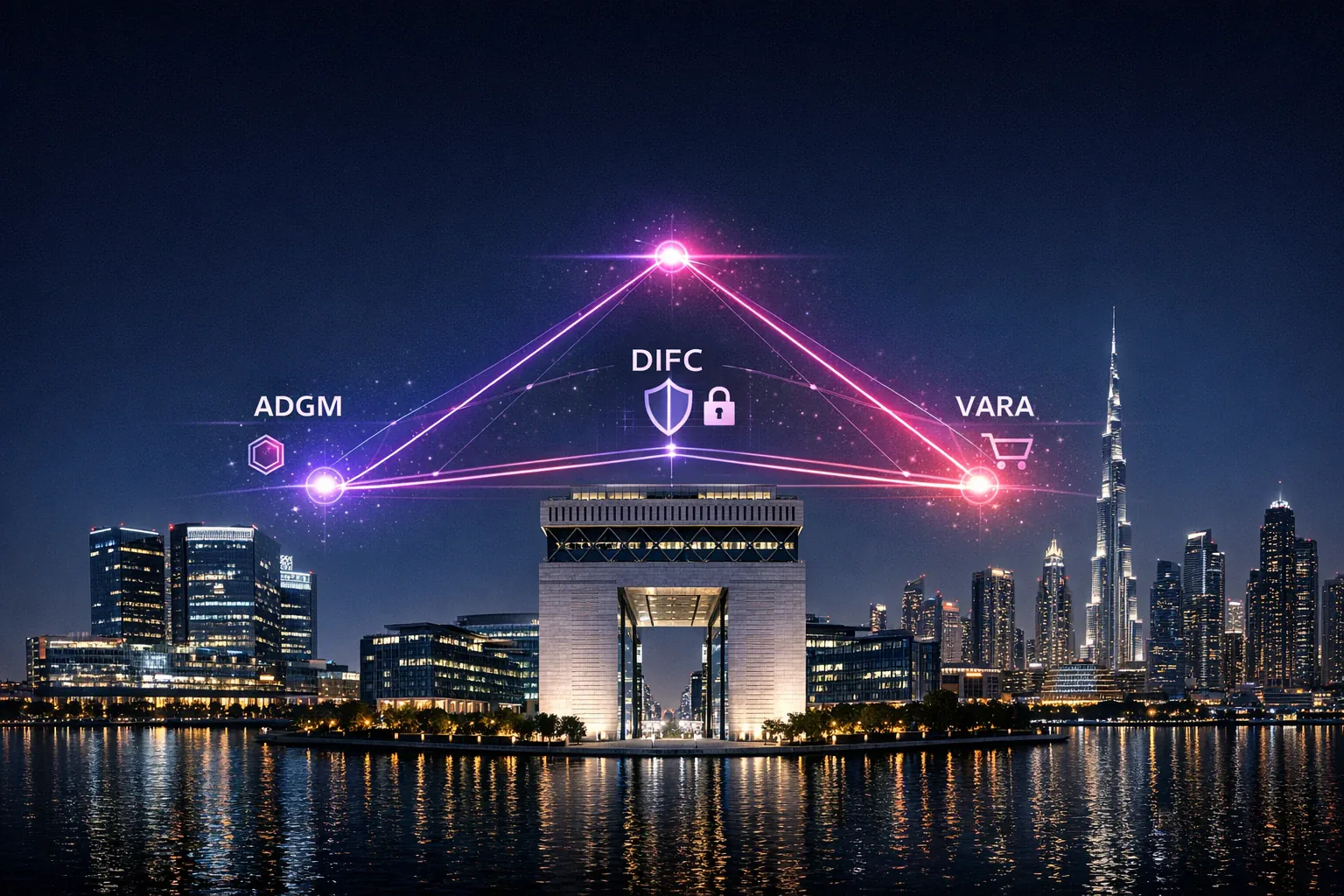
  • Three distinct legal systems (Onshore UAE, DIFC, ADGM) offer different advantages depending on your situation

Co-founder disputes in UAE crypto businesses rarely stay contained. What starts as a disagreement over equity or decision-making authority can cascade into regulatory problems, investor concerns, and operational paralysis. The good news: UAE offers sophisticated dispute resolution frameworks specifically designed for blockchain ventures. The bad news: most founders discover these options too late.

This guide walks you through the complete dispute resolution pathway, from reviewing your shareholder agreement through to DIFC and ADGM court proceedings. Whether you're facing an active dispute or want to prevent one, understanding these mechanisms is essential for any Web3 Dubai venture.

Quick Navigation

What Are the Most Common Causes of Crypto Co-Founder Disputes?

Equity distribution is one of the most common triggers for co-founder disputes in UAE crypto startups. Statistics indicate that over 60% of startup failures are rooted in internal disagreements, with unclear shareholding arrangements being a major culprit. Many founders begin their ventures with informal equity splits or even operate under personal names, often neglecting to formalise these arrangements through legal agreements.

This pattern becomes particularly dangerous in the virtual assets space, where token allocations, vesting schedules, and governance rights add layers of complexity that traditional shareholder agreements rarely address.

The Three Primary Dispute Triggers

Trigger

Why It Happens

How It Escalates

Equity Distribution

Informal splits at founding, no documentation of contributions

One founder feels undervalued as company grows

Intellectual Property

Code and smart contracts created without assignment agreements

Departing founder claims ownership of core technology

Role Ambiguity

Undefined decision-making authority, overlapping responsibilities

Regulatory decisions become battlegrounds

Equity Distribution Conflicts

The lack of clarity becomes a ticking time bomb as the business grows, especially when the equity split doesn't reflect the actual contributions of each co-founder. For token launches, this extends beyond traditional equity to include token allocations for founders, advisors, and team members. Without clear documentation, disputes arise over who controls what percentage of the token supply.

Intellectual Property Ownership

Under UAE law, intellectual property created by a founder doesn't automatically belong to the company unless there's a written agreement assigning those rights. This gap in documentation often leads to disputes over valuable assets like proprietary code, smart contracts, or even .ae domains.

"Digital control needs to be treated like equity or capital. It should be documented, shared through company-managed systems and covered explicitly in the agreement."

For DLT ventures, this extends to protocol designs, tokenomics models, and blockchain architecture. A departing co-founder could claim personal ownership of developed code, creating existential risk for the venture.

Role Ambiguity and Decision-Making Authority

Like equity and IP, clearly defining each co-founder's responsibilities is essential for any VASP operation. When roles and decision-making authorities remain undefined, disagreements inevitably arise. UAE Federal Decree Law No. 32 of 2021 specifies the legal duties and liabilities of an authorised manager. Without clear role definitions in the Memorandum of Association, co-founders may clash over who is accountable for regulatory breaches or personal liabilities.

How Do Regulatory Challenges Create Co-Founder Conflicts?

The UAE's constantly evolving regulatory environment often exacerbates tensions between co-founders. When VARA regulations change or new compliance requirements emerge, disagreements over strategic direction can fracture partnerships.

VARA Rulebook Updates and Compliance Pressure

The introduction of VARA's Rulebook 2.0 in June 2025 brought significant changes, including a "Sponsored VASP" regime and revamped issuance framework requiring prior approval for Category 1 tokens like stablecoins. These regulatory updates forced many crypto ventures to overhaul their operations, and the associated compliance costs, sometimes reaching AED 4,000,000 in fines, often expose pre-existing tensions between co-founders.

Jurisdiction Selection Disputes

Another common flashpoint is the decision over which regulatory jurisdiction to operate within. Co-founders must weigh the pros and cons of:

Jurisdiction

Legal System

Language

Best For

Onshore UAE

Civil Law

Arabic

Local retail operations

DIFC

Common Law

English

International institutional focus

ADGM

English Common Law

English

Crypto-progressive framework

One founder might favour DIFC's Digital Assets Law No. 2 of 2024 for its well-defined property rights framework, while another might argue for ADGM's institutional custody benefits. These strategic disagreements compound under pressure to launch quickly in the UAE's competitive market.

For founders weighing EU vs UAE options, jurisdiction disputes become even more complex when international regulatory considerations enter the picture.

How Should You Review Your Shareholder Agreement During a Dispute?

When disputes arise, your shareholder agreement is often the first place to turn. The clauses within these agreements frequently provide solutions that prevent conflicts from reaching litigation. Whether your business operates under Federal Decree Law No. 32 of 2021 or within free zones like DIFC or ADGM, certain provisions deserve immediate attention.

Key Agreement Sections to Review

Section

What to Look For

Why It Matters

IP Assignment

Clear transfer of all founder-created IP to company

Prevents departing founders from claiming core technology

Non-Compete Clauses

Reasonable scope and duration restrictions

Protects against competitive threats

Exit Mechanisms

Buyout terms, valuation methods, deadlock procedures

Enables clean separation without court involvement

Dispute Resolution

Specified forum (DIFC, ADGM, or mainland)

Determines enforcement pathway

Decision Authority

Clear allocation of operational vs. strategic decisions

Reduces day-to-day conflicts

The Arbitration Clause Advantage

If your agreement includes an arbitration clause, it remains enforceable even if the partnership agreement is terminated. This principle, known as separability under Article 6 of the UAE Arbitration Law, allows arbitration to address issues like buyout valuations or final asset distributions even after the partnership ends.

For disputes valued at AED 500,000 or less, the DIFC Small Claims Tribunal provides a cost-effective option, allowing co-founders to represent themselves without legal counsel. This threshold increases to AED 1,000,000 if both parties agree.

What IP Ownership Clauses Should You Review During Disputes?

Intellectual property disputes are common in blockchain ventures, especially when determining ownership of proprietary code, smart contracts, or tokenomics created during the partnership. Understanding how UAE law treats these assets is critical for security token projects and other IP-intensive ventures.

DIFC IP Law Framework

Under DIFC Intellectual Property Law No. 4 of 2019, IP created by employees during their work duties belongs to the employer. However, co-founders aren't typical employees, making explicit assignment language essential in your shareholder agreement.

IP Violation Penalties in DIFC

Violation Type

Maximum Fine (USD)

Additional Consequences

Copyright Infringement

$40,000

Trade licence suspension possible

Patent Violation

$35,000

Injunctions and damages

Trademark Misuse

$30,000

Brand protection orders

If your agreement lacks explicit IP assignment language, a departing co-founder could claim personal ownership of developed code. This ambiguity can alarm investors during due diligence, as it signals potential legal risks that could impact funding rounds.

Digital Assets as Property

For businesses operating in DIFC, the DIFC Digital Assets Law No. 2 of 2024 provides crucial clarity. This law defines legal terms related to control, ownership, and transfer of digital assets, ensuring that asset ownership is clearly understood and legally protected. This framework is particularly relevant for real estate tokenization projects and other ventures where digital and physical assets intersect.

How Do Non-Compete and Confidentiality Clauses Protect You During Disputes?

Non-compete and confidentiality clauses serve as protective measures during disputes, safeguarding sensitive information and preventing co-founders from launching competing ventures. These protections become critical when a co-founder threatens to leave and start a rival crypto exchange or similar operation.

Key Protection Mechanisms

A well-drafted non-compete clause can restrict departing founders from:

  • Soliciting existing clients or investors

  • Hiring team members for a specified period

  • Using proprietary technology or trade secrets

  • Operating in the same market segment

Under DIFC law, it's crucial to define what constitutes a "trade secret" and document reasonable steps taken to protect it. UAE courts generally support restrictions that protect legitimate business interests without overly limiting an individual's ability to work.

Enforcement Considerations

Enforcement depends on the clause being reasonable in scope and duration. Courts examine:

Factor

Enforceable

Likely Unenforceable

Geographic Scope

UAE or GCC region

Global restriction

Duration

1-2 years

5+ years

Activity Scope

Specific competing activities

All crypto-related work

Consideration

Reasonable compensation provided

No benefit to restricted party

Beyond financial penalties, companies could face trade licence suspensions for IP violations. Reviewing and activating these clauses early in a dispute can prevent a departing co-founder from causing lasting damage to your business.

What Exit and Termination Mechanisms Should Your Agreement Include?

Clear exit mechanisms are vital for resolving disputes without destabilising the business. Your shareholder agreement should outline buyout options, valuation methods, and deadlock resolution procedures. The first step is determining which provisions apply, whether it's a voluntary exit, a "bad leaver" situation, or a deadlock between co-founders.

Exit Mechanism Types

Mechanism

How It Works

Best For

Shotgun Clause

One founder offers to buy out the other at a set price; recipient must accept or buy at same terms

Equal partners who can afford buyout

Tag-Along Rights

Minority holder can join in sale if majority sells

Protecting minority shareholders

Drag-Along Rights

Majority can force minority to sell in acquisition

Facilitating exit transactions

Bad Leaver Provisions

Departing founder forfeits unvested equity

Protecting against early departures

Valuation Formula

Pre-agreed method for determining company value

Avoiding disputes over price

Federal Mediation Law Advantage

Before initiating formal exit procedures, activate any mandated mediation or internal resolution steps. Under the Federal Mediation Law, mediated agreements can be enforced like court judgements, offering a quicker and more private resolution process than litigation.

Authority Verification

When activating exit mechanisms, ensure the person authorising the termination has the legal authority to bind the company. Lack of proper authority is a common reason for nullifying awards. Maintain detailed records of board minutes, correspondence, and financial documents, as written evidence carries more weight than verbal accounts in UAE legal forums.

Once an arbitration decision is made, it typically needs ratification by the competent Court of Appeal within 60 days before enforcement by the Execution Court.

What Internal Dispute Resolution Methods Should You Try First?

Before turning to courts or arbitration, internal resolution methods provide a quicker and more private way to address conflicts between co-founders. These approaches help preserve relationships and ensure the business continues to function while disputes are resolved.

In the UAE, around 57% of cases are resolved through alternative dispute resolution methods rather than traditional court proceedings. This preference for privacy is particularly relevant for crypto trading platforms and other ventures where regulatory perception matters.

Resolution Method Comparison

Method

Best For

Key Advantage

Typical Timeline

Direct Negotiation

Internal co-founder disagreements

Maintains privacy and relationships

Days to weeks

Mediation

Third-party facilitated resolutions

Enforceable as court judgement under UAE Federal Law

2-4 weeks

Deadlock Provisions

Tie-breaking in decision-making

Pre-agreed exit or buy-out options

Per agreement terms

VARA Grievance Committee

Crypto-specific regulatory disputes

Expert oversight for Dubai-based VASPs

Varies

Direct Negotiation Best Practices

Direct negotiation is often the simplest path forward. These discussions should be approached with proper documentation and a thorough understanding of your shareholder agreement. In the UAE, maintaining detailed records, including board meeting minutes, WhatsApp conversations, bank statements, and correspondence, is crucial as these documents carry significant weight in legal forums.

Important: "Without prejudice" protections apply in DIFC and ADGM jurisdictions but not under onshore UAE law. If your business operates in mainland Dubai, anything discussed during negotiations could potentially be used in future legal proceedings.

VARA Grievance Committee

For disputes specific to the crypto sector in Dubai's onshore jurisdiction, the VARA Grievance Committee, established in June 2023, offers a specialised forum. This committee handles grievances from parties operating in the virtual asset space and can impose penalties for non-compliance. Referring disputes here can lead to quicker resolutions, as committee members understand the technicalities of blockchain and cryptocurrency operations.

When Should You Activate Deadlock Provisions?

Deadlock provisions are pre-agreed procedures in your shareholder agreement that help resolve impasses when direct negotiation fails. These mechanisms reduce tensions before disputes escalate publicly or disrupt business operations.

What Qualifies as a Deadlock?

Your agreement should clearly define what constitutes a "deadlock." Common definitions include:

  • Co-founders with equal shares failing to agree on a major decision after a set number of board meetings

  • Fundamental disagreement on regulatory strategy (such as VARA vs. ADGM licensing)

  • Inability to approve annual budgets or strategic plans

  • Disagreement on capital raises or investor terms

Common Deadlock Resolution Mechanisms

Mechanism

How It Works

Consideration

Cooling-Off Period

Mandatory waiting period (30-90 days) before escalation

Allows emotions to settle

Mandatory Mediation

Third-party facilitator before arbitration

Often required in DIFC/ADGM clauses

Casting Vote

Chairman or designated party breaks ties

Creates hierarchy; may cause resentment

Russian Roulette

One party names price; other must buy or sell

Favours party with more capital

Texas Shootout

Sealed bids; highest bidder buys out other

More balanced than Russian Roulette

"A clear agreement at the outset, one that sets out roles, exit routes, and what happens when partners cannot agree, goes further than goodwill ever will."

Before activating deadlock provisions, review all deadlines and jurisdiction clauses. Missing a deadline could invalidate your claim, and the governing jurisdiction, whether DIFC, ADGM, or mainland UAE, determines how enforcement is handled.

What Are the Benefits of DIFC Courts for Crypto Disputes?

The DIFC Digital Economy Court is tailored to handle technology-driven disputes, including those involving blockchain, smart contracts, and digital assets. It operates under Part 58 of the DIFC Court Rules, which are specifically designed for cases in the digital economy.

Why Choose DIFC for Crypto Disputes?

Feature

DIFC Advantage

Legal Framework

DIFC Digital Assets Law No. 2 of 2024 recognises digital assets as property

Language

English proceedings; no Arabic translation required

Judges

Specialised international judges with technology expertise

Interim Remedies

Freezing orders and search orders available; emergency motions by phone

Small Claims

SCT handles disputes up to AED 500,000 (AED 1,000,000 with consent)

Speed

Expedited timelines compared to mainland courts

"With the digital economy fast emerging as a prime accelerant of global business, these specialised rules have been engineered to strengthen our mission of building a courts system that not only absorbs current dispute resolution needs, but can flex to address and resolve new emerging disputes." - Justice Omar Al Mheiri, Director, DIFC Courts

Urgent Interim Remedies

DIFC Courts provide urgent interim remedies essential for crypto disputes:

  • Freezing orders to block the transfer of crypto assets

  • Search orders to secure digital evidence

  • Emergency applications can be initiated by phone, with full hearing within three days

Opt-In Jurisdiction

Even if your business isn't physically based in DIFC, you can access its expertise by including an "opt-in" clause in your shareholder agreement. This is common for DAO structures and other decentralised ventures that want access to sophisticated dispute resolution without establishing a DIFC presence.

How Does ADGM Arbitration Work for Blockchain Disputes?

ADGM arbitration offers a private and confidential option, ideal for resolving blockchain-related disputes while safeguarding proprietary technology and sensitive business information. The ADGM framework has specific advantages for crypto ventures.

Key ADGM Arbitration Features

Feature

Details

Privacy

Proceedings are confidential; no public record

Expert Arbitrators

Ability to appoint arbitrators with blockchain and smart contract expertise

Procedural Framework

Follows UNCITRAL Model Law for consistency

Blockchain Verification

Judgements can be verified via blockchain technology

International Enforcement

UAE joined New York Convention on 21 August 2006

Blockchain-Based Judgement Verification

ADGM has introduced a blockchain-based solution for publishing and verifying commercial judgements. This innovative approach enables fast and secure authentication of decisions, cutting down on delays and costs associated with traditional paper-based enforcement.

"There is no point in having a judgement if you cannot enforce it. What we've done by using blockchain is cut out an enormous number of traditional, paper-driven, time-consuming, costly steps in the delivery of an immutable and secure judgment..." - Linda Fitz-Alan, Registrar and CEO, ADGM Courts

International Enforcement

The UAE's accession to the New York Convention ensures that arbitration awards from both DIFC and ADGM are enforceable in over 160 countries. This is particularly valuable for ventures with international co-founders or investors from jurisdictions like Singapore or Cayman.

To avoid complications, ensure the arbitration seat is clearly designated as ADGM in your founding documents, and verify the authority of the signatory to prevent awards from being nullified under UAE Federal Law.

DIFC vs ADGM: Which Forum Should You Choose?

Choosing between DIFC and ADGM depends on your specific circumstances, business structure, and dispute characteristics. Here's a direct comparison:

Feature

DIFC Digital Economy Court

ADGM Arbitration

Legal System

Common Law (Dubai)

Common Law (Abu Dhabi)

Language

English

English

Privacy

Public judicial proceedings

Private and confidential

Decision Makers

Specialised international judges

Party-appointed arbitrators/experts

Procedural Basis

DIFC Court Rules (Part 58)

UNCITRAL Model Law

Enforcement

Judicial treaties and local courts

New York Convention and blockchain verification

Best For

Precedent-setting cases, urgent interim relief

Technical disputes requiring expert knowledge

Cost Structure

Court fees based on claim value

Arbitrator fees plus administrative costs

Decision Framework

Choose DIFC if:

  • You need urgent interim remedies (freezing orders, search orders)

  • Your dispute involves precedent-setting legal questions

  • You want a court judgement rather than arbitration award

  • Your claim is under AED 500,000 (Small Claims Tribunal)

Choose ADGM if:

  • Confidentiality is paramount

  • Your dispute involves highly technical blockchain issues

  • You want to appoint arbitrators with specific crypto expertise

  • International enforcement across 160+ countries is essential

How Can You Prevent Future Co-Founder Disputes?

Addressing potential disputes early can save time, money, and relationships in the long run. By focusing on detailed shareholder agreements and strict regulatory compliance, UAE crypto ventures can avoid many common pitfalls that lead to DeFi legal risks and partnership breakdowns.

Essential Shareholder Agreement Clauses

Clause Type

What to Include

Why It Prevents Disputes

IP Assignment

All founder-created IP vests in company

No ambiguity over code ownership

Vesting Schedules

Time-based or milestone-based equity release

Protects against early departures

Decision Matrix

Clear allocation of operational vs. strategic authority

Reduces daily conflicts

Exit Mechanisms

Buyout terms, valuation methods, deadlock procedures

Enables clean separation

Dispute Forum

Specified DIFC or ADGM jurisdiction

Clear enforcement pathway

Non-Compete Terms

Reasonable scope and duration

Protects competitive position

VARA Compliance as Dispute Prevention

VARA compliance plays a crucial role in preventing disputes by setting clear guidelines for licensing, governance, and risk management. These regulations lay out specific rights, responsibilities, and accountabilities of each founder.

Key VARA requirements that reduce disputes:

VARA Requirement

How It Prevents Disputes

Whitepaper Schedule 1

Forces early agreement on roles, governance, and management identities

Use of Proceeds Disclosure

Prevents disputes over fund allocation and token sale proceeds

Governance Framework

Mandates clear decision-making structures

Complaint Procedures

Requires formal mechanisms for internal grievances

Independent Legal Entity

VASPs must function as separate entities with proper agreements

For ventures pursuing VARA licensing, the application process itself forces co-founders to formalise their roles and responsibilities. This documentation becomes the foundation for preventing future disagreements.

Frequently Asked Questions

How do I choose the best jurisdiction for resolving a crypto co-founder dispute in the UAE?

Choosing the right jurisdiction depends on where your company is incorporated, the terms in your shareholders' agreement, and specific dispute requirements like speed, confidentiality, or technical expertise. If your business operates in DIFC or ADGM free zones, these jurisdictions offer courts and arbitration frameworks designed for blockchain disputes. The DIFC Digital Economy Court handles cases involving smart contracts and digital assets, with English proceedings and expedited timelines. ADGM arbitration provides confidentiality and the ability to appoint blockchain-expert arbitrators. Businesses operating onshore fall under UAE Federal Arbitration Law No. 6 of 2018 unless another law is specified.

How can I prevent co-founder disputes over intellectual property in a UAE crypto business?

Start by ensuring your shareholder or partnership agreements clearly define IP ownership. Specify who holds rights to existing IP, how newly developed IP like code, whitepapers, or token designs will be handled, and whether these contributions are considered part of capital. Include vesting schedules or performance-based milestones to maintain fairness. Register trademarks, patents, and source code with relevant UAE authorities, and keep timestamped records of each contribution. For dispute resolution, include clauses for mediation followed by arbitration under DIFC or ADGM, which are equipped to handle blockchain-related cases.

How does VARA compliance help prevent disputes between crypto co-founders?

VARA compliance sets clear guidelines for licensing, governance, and risk management that reduce misunderstandings. The regulations require VASPs to function as independent legal entities with standardised shareholder and custody agreements. The Whitepaper requirements force co-founders to document roles, token allocations, and governance frameworks from the outset. This transparency builds trust and provides a reference point when disagreements arise.

What happens if our shareholder agreement doesn't specify a dispute resolution forum?

Without a specified forum, both co-founders must agree in writing to select either DIFC or ADGM for English-language proceedings. If you cannot agree, the dispute defaults to onshore UAE courts, which operate in Arabic and follow civil-law procedures. This typically requires Arabic translations of all documents and engagement of local advocates. For crypto disputes, this is generally less favourable than DIFC or ADGM, which have specialised digital economy expertise.

Can I resolve a co-founder dispute without going to court?

Yes. Around 57% of UAE cases are resolved through alternative dispute resolution. Start with direct negotiation using your shareholder agreement as a framework. If that fails, activate deadlock provisions or engage in mediation. Under the Federal Mediation Law, mediated agreements can be enforced like court judgements. The VARA Grievance Committee also provides a specialised forum for crypto-specific disputes in Dubai.

What is the cost of DIFC Small Claims Tribunal for co-founder disputes?

The DIFC Small Claims Tribunal handles disputes valued at AED 500,000 or less, or up to AED 1,000,000 if both parties agree. You can represent yourself without legal counsel, making it significantly more cost-effective than full DIFC Court proceedings. Exact fees vary based on claim value and are published on the DIFC Courts website.

How long does ADGM arbitration typically take?

Timeline depends on dispute complexity, arbitrator availability, and procedural requirements. Simple disputes can be resolved in 3-6 months. Complex blockchain-related matters with technical expert testimony may take 12-18 months. The ADGM framework allows parties to agree on expedited procedures for urgent matters.

Are arbitration awards from UAE enforceable internationally?

Yes. The UAE joined the New York Convention on 21 August 2006, ensuring that arbitration awards from both DIFC and ADGM are enforceable in over 160 countries. This is essential for ventures with international co-founders or investors. Awards typically need ratification by the competent Court of Appeal within 60 days before enforcement by the Execution Court.

What should I do immediately if a co-founder dispute arises?

First, review your shareholder agreement for applicable provisions on dispute resolution, deadlock mechanisms, and exit procedures. Document everything: board minutes, correspondence, financial records. Assess whether "without prejudice" protections apply in your jurisdiction. Engage legal counsel experienced in crypto disputes before taking actions that could affect your legal position. Avoid public statements that could impact regulatory standing or investor confidence.

Can a departing co-founder take the company's smart contracts or code?

Not if your shareholder agreement includes proper IP assignment clauses. Under UAE law, IP created by a founder doesn't automatically belong to the company unless there's a written agreement assigning those rights. If assignment language is missing, a departing founder could claim personal ownership of developed code. DIFC courts can grant injunctions to prevent unauthorised use while ownership disputes are resolved.

Next Steps: Protect Your Partnership and Your Business

Co-founder disputes in UAE crypto ventures require sophisticated navigation of multiple legal frameworks, regulatory requirements, and business considerations. The stakes are too high for improvisation.

Why Choose Ape Law for Co-Founder Disputes

We've successfully guided dozens of crypto ventures through co-founder disputes, from initial negotiation through to DIFC and ADGM proceedings. Our expertise spans:

  • Dispute Resolution Strategy: Assessment of optimal forum and approach for your specific situation

  • Agreement Review and Enhancement: Strengthening shareholder agreements to prevent future conflicts

  • Regulatory Navigation: Maintaining VARA and ADGM compliance during disputes

  • Mediation and Arbitration Support: Representation in DIFC, ADGM, and alternative dispute resolution

Our Dispute Resolution Success Stories

While client confidentiality prevents naming specific ventures, we've helped resolve:

  • Multi-million dirham buyout negotiations for a Dubai-based exchange founding team

  • IP ownership disputes involving smart contract code for a tokenization platform

  • Deadlock resolution for co-founders disagreeing on regulatory jurisdiction strategy

Ready to Resolve Your Dispute?

Don't let a co-founder conflict destroy what you've built. Our team combines deep regulatory knowledge with practical dispute resolution experience to protect your interests while preserving business value where possible.

Schedule Your Consultation Today

Get a confidential assessment of your situation, including:

  • Analysis of your shareholder agreement and dispute resolution options

  • Jurisdiction recommendations based on your specific circumstances

  • Strategic roadmap for resolution

  • Compliance considerations to protect your regulatory standing

Book Your Dispute Resolution Consultation

View All Services

Additional Resources


Disclaimer: This guide reflects regulations and court procedures as of January 2026. UAE virtual asset regulations and court rules evolve regularly. Always consult with qualified legal counsel before making decisions about dispute resolution strategy. The information provided here is for educational purposes and does not constitute legal advice.

Ape Law is a Web3-native legal firm specialising in cryptocurrency and blockchain regulations in the UAE. We provide comprehensive legal support for dispute resolution, regulatory compliance, and partnership structuring.


Related Reading