
Written by
Stephan Roberto
CTO & Web3 Technical Director
Published on
Jan 20, 2026
Quick Reality Check: The Numbers That Matter
Regulatory penalties for non-compliance? Up to AED 10,000,000 or criminal charges
Token misclassification disputes? The most common trigger for TGE litigation in the UAE
Legal cost recovery? UAE courts generally don't allow it, making prevention critical
Arbitration agreements challenged? Often invalidated if signed by unauthorized personnel
Settlement offers in onshore courts? Can be used as evidence against you
Token Generation Events (TGEs) remain one of the most popular fundraising mechanisms for blockchain projects globally. But when things go wrong, the legal fallout can be severe. The UAE's complex regulatory framework for crypto creates both opportunities and pitfalls. Understanding the dispute resolution landscape before you launch is the difference between a successful project and years of litigation.
This guide covers the full spectrum of TGE disputes in the UAE: what triggers them, how regulators respond, what remedies exist for investors and founders, and how to structure your project to avoid conflicts altogether.
Quick Navigation
Regulatory Non-Compliance: The Root of Most TGE Disputes
Failing to adhere to UAE crypto regulations can result in hefty fines, operational limitations, token delistings, and irreversible damage to a project's reputation. To avoid such pitfalls, TGE projects must fully understand and comply with the specific regulatory frameworks in place across the UAE.
What Are the UAE Crypto Regulations for TGEs?
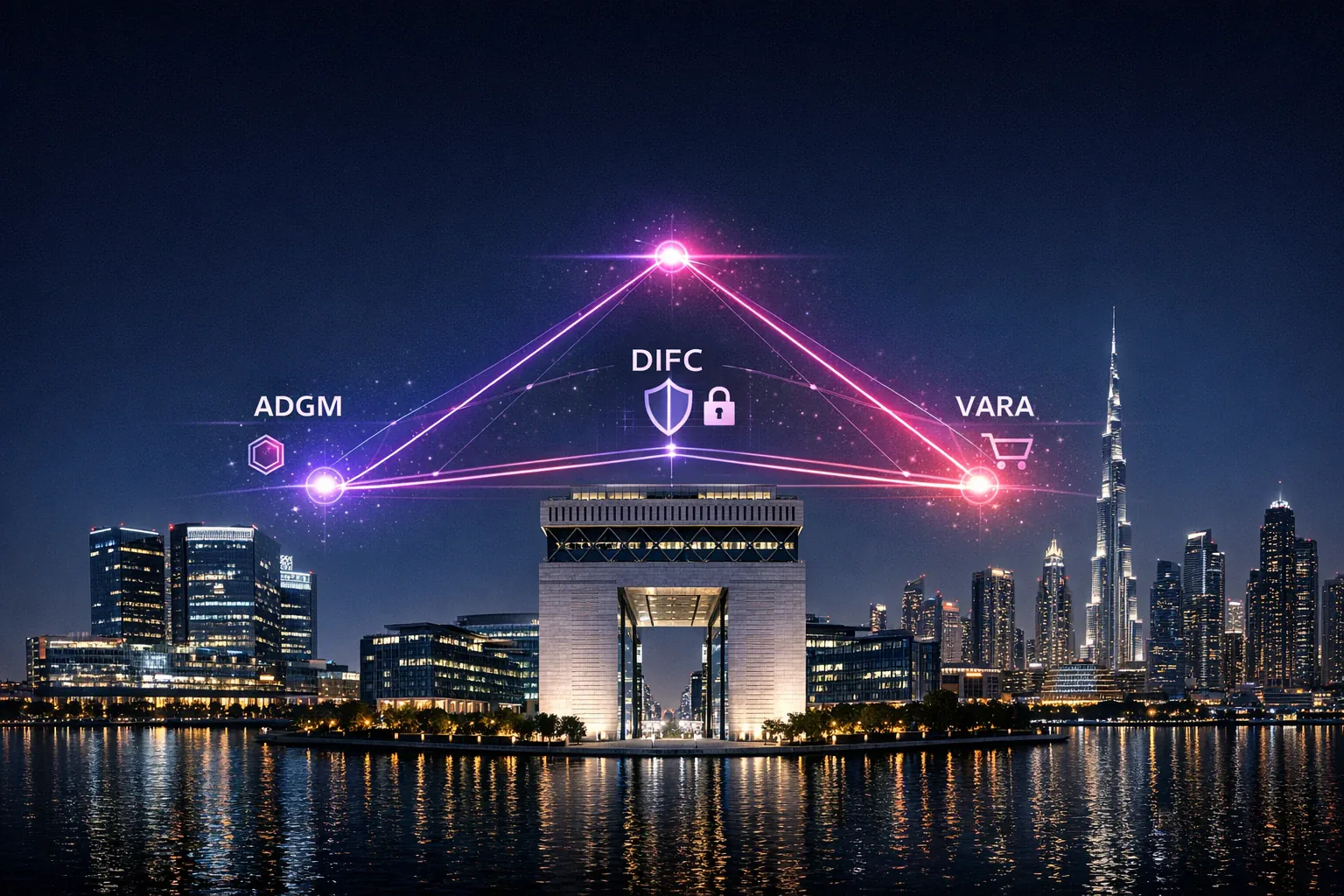
In Dubai, the Virtual Assets Regulatory Authority (VARA) requires all virtual asset issuers to follow the VA Issuance Rulebook. This framework categorizes token issuances into three groups, each with distinct compliance requirements and licensing implications.
Issuance Category | License Requirement | Key Characteristics |
|---|---|---|
Category 1 | Full VARA license required | Public offerings, retail access, highest compliance burden |
Category 2 | No license, but strict requirements | Must use Licensed Distributor, whitepaper mandatory |
Exempt VA | No license required | Limited scope, specific qualifying criteria |
For projects considering a VARA license, the Category 1 pathway involves substantial capital requirements and ongoing compliance obligations. The real cost of VARA licensing extends far beyond application fees.
Multi-Regulator Landscape
The UAE operates a multi-regulator system that creates complexity for TGE projects:
Regulator | Jurisdiction | Primary Focus | TGE Relevance |
|---|---|---|---|
VARA | Dubai (excluding DIFC) | Virtual assets broadly | Primary regulator for Dubai-based TGEs |
CBUAE | UAE-wide | Payment tokens, stablecoins | Required for payment token issuance |
DFSA | DIFC | Investment tokens, securities | Security token offerings |
FSRA | ADGM | Virtual assets, securities | Alternative jurisdiction for structured offerings |
SCA | UAE Federal | Securities, commodities | Federal oversight layer |
The Central Bank of the UAE (CBUAE) oversees payment tokens and stablecoins under the Payment Token Services Regulation (C 2/2024), effective from 31 August 2024. Any activity involving Payment Token Services, whether issuance, conversion, custody, or transfer, directed at UAE residents or conducted within the UAE requires licensing or registration with the CBUAE. For detailed cost breakdowns, see our stablecoin license costs guide.
Mandatory VASP Rulebook Compliance
Virtual Asset Service Providers must comply with four mandatory rulebooks:
Rulebook | Key Requirements | Dispute Relevance |
|---|---|---|
Company Rulebook | Corporate governance, capital requirements | Inadequate structure triggers enforcement |
Compliance and Risk Management | AML/CFT frameworks, risk assessments | Non-compliance leads to license suspension |
Technology and Information | Cybersecurity, data protection | Security breaches create liability |
Market Conduct | Fair dealing, disclosure requirements | Investor complaints, mis-selling claims |
Understanding VARA regulations in detail is essential before launching any token offering in Dubai.
Prohibited Assets
Certain assets face outright bans that create immediate dispute triggers if violated:
Prohibited Asset | Regulatory Basis | Consequence of Violation |
|---|---|---|
Algorithmic Stablecoins | VARA VA Issuance Rulebook | License revocation, fines up to AED 10M |
Privacy Tokens | VARA explicit prohibition | Criminal prosecution possible |
Anonymity-Enhanced Cryptocurrencies | VARA prohibition | All related VA Activities banned |
VARA explicitly states that the issuance of Anonymity-Enhanced Cryptocurrencies and all VA Activities related to them are prohibited in the Emirate. Projects must also adhere to the UAE Federal Decree-Law addressing anti-money laundering (AML) and combating the financing of terrorism (CFT).
Registration Thresholds
Dubai-based entities investing over USD 250 million in virtual assets within a 30-day period are required to register with VARA, regardless of whether they're conducting VA Activities. This threshold catches institutional players who might otherwise assume they're outside regulatory scope.
What Are the Penalties for Non-Compliance in the UAE?
The consequences of regulatory violations in the UAE are severe and multi-dimensional. Financial penalties represent just one aspect of the enforcement toolkit available to regulators.
Penalty Framework by Regulator
Regulator | Maximum Financial Penalty | Additional Sanctions |
|---|---|---|
VARA | AED 10,000,000 | License suspension/revocation within 30 days of unpaid judgment |
DFSA | Unlimited (at discretion) | Public censure, prohibition orders |
FSRA | USD 10,000,000+ | Restriction orders, public statements |
SCA | AED 10,000,000 | Trading suspensions, criminal referral |
CBUAE | AED 5,000,000 | Banking restrictions, license revocation |
Operational Consequences Beyond Fines
Consequence | Trigger | Impact on TGE Project |
|---|---|---|
License Suspension | Unpaid judgment for 30+ calendar days | Operations cease immediately |
Banking Relationship Loss | Regulatory action notification | Unable to process fiat transactions |
Token Delisting | Exchange compliance requirements | Secondary market liquidity destroyed |
Reputational Damage | Public enforcement action | Future fundraising compromised |
For projects considering ADGM licensing or DIFC authorization, understanding the enforcement landscape in each jurisdiction is critical for risk assessment.
Payment Token Specific Restrictions
Merchants in the UAE are prohibited by law from accepting virtual assets as payment for goods or services unless the transaction involves a Dirham Payment Token issued by a CBUAE-licensed entity or a registered Foreign Payment Token used for acquiring other virtual assets. Offering or promoting Payment Token Services without proper licensing or registration is strictly forbidden.
Banks intending to issue Payment Tokens must establish a separate subsidiary or affiliate. They cannot engage in this activity directly through their main banking entity. This structural requirement creates additional compliance complexity for traditional financial institutions entering the space.
Legal Risks in TGE Disputes: Investors vs. Founders
When disputes arise or TGEs fail, the stakes differ significantly for investors and founders. Recognizing these risks early is essential to safeguarding interests and ensuring a solid legal foundation.
What Are the Investor Risks in Failed TGEs?
Investors in TGEs face a range of potential risks that can lead to serious financial setbacks. Understanding these risks helps inform due diligence processes and investment structuring decisions.
Token Misclassification Risk
A recurring issue is token misclassification. Some projects inaccurately label tokens as "utility" tokens, even when they exhibit characteristics of securities. The SCA treats most token offerings as either securities or commodities that need approval. This misclassification can leave investors holding tokens that aren't legally tradable within the UAE.
Token Type | Regulatory Treatment | Investor Risk if Misclassified |
|---|---|---|
Utility Token | VARA oversight | Token may actually be security, requiring SCA approval |
Security Token | SCA/DFSA/FSRA | Unlicensed offering voids investor protections |
Payment Token | CBUAE | Illegal operation, potential asset freeze |
Commodity Token | SCA | Missing commodity trading authorization |
For deeper analysis of token classification, see our guide on security tokens and virtual assets.
Legal Cost Recovery Problem
UAE courts generally do not allow recovery of legal fees. This creates asymmetric risk where even successful litigation leaves investors bearing substantial costs. Arbitration-related cases are usually heard publicly, exposing sensitive project details or investment strategies.
Jurisdiction | Legal Cost Recovery | Confidentiality | Practical Impact |
|---|---|---|---|
UAE Onshore Courts | Generally not recoverable | Public proceedings | Settlement often more practical |
DIFC Courts | Possible partial recovery | More confidential | Preferred for larger disputes |
ADGM Courts | English law principles apply | Confidential options | Sophisticated dispute resolution |
Arbitration | Depends on agreement | Typically confidential | Preferred for cross-border disputes |
Arbitration Agreement Validity
Arbitration agreements can be invalidated if the person signing them lacked the proper authority. A company may claim an arbitration agreement is not binding if the signatory lacked specific authority, even if a director or top executive signed it. This technical defense frequently surfaces in TGE disputes where documentation was rushed during the fundraising process.
Investor Protection Strategies
Strategy | Implementation | Effectiveness |
|---|---|---|
Whitepaper Due Diligence | Review risk sections, verify claims | High, identifies red flags early |
Blockchain Analytics | Trace fund sources, monitor movements | Medium, technical expertise required |
Precautionary Attachments | Seek freezing orders through UAE courts | High, but requires credible dissipation risk |
VASP License Verification | Confirm licensing with relevant regulator | Essential, prevents unlicensed exposure |
What Are Founder Liabilities in TGE Disputes?
Founders are not immune to legal risks and may face personal liability if they fail to establish proper legal structures or comply with regulations.
Personal Liability Triggers
Liability Trigger | Consequence | Typical Scenario |
|---|---|---|
Inadequate Corporate Structure | Personal responsibility for debts/penalties | No SPV separation between founder and project |
Regulatory Breach | Fines up to AED 10,000,000 | Operating without required license |
Fund Mismanagement | Personal accountability, potential fraud charges | Funds not allocated per whitepaper commitments |
Fiduciary Breach | Civil liability to investors | Failure to act in investor interests |
Understanding the critical legal considerations for token launches helps founders structure their projects to minimize personal exposure.
Confidentiality Vulnerabilities
UAE onshore courts lack confidentiality protections. Settlement offers made during negotiations can be used as evidence in court, potentially weakening a founder's defense. This creates a significant tactical disadvantage compared to arbitration or financial free zone proceedings.
Proceeding Type | Confidentiality | Settlement Privilege | Strategic Implication |
|---|---|---|---|
UAE Onshore Courts | None | Not protected | Avoid written settlement offers |
DIFC Courts | Limited | Protected under common law | Safer for negotiation |
ADGM Courts | English law applies | Protected | Preferred for sensitive matters |
DIFC-LCIA Arbitration | Full | Protected | Best for cross-border disputes |
How Can Legal Structuring Mitigate TGE Risks?
To address these interconnected risks, both investors and founders must prioritize strong legal structuring from the outset. The choice of jurisdiction and entity structure has lasting implications for dispute resolution options and liability exposure.
Financial Free Zone Advantages
Establishing Special Purpose Vehicles (SPVs) or corporate entities in financial free zones like ADGM or DIFC offers several advantages:
Advantage | ADGM | DIFC | UAE Onshore |
|---|---|---|---|
Legal System | English Common Law | English Common Law | Civil Law |
Court Language | English | English | Arabic (translations required) |
Legal Privilege | Recognized | Recognized | Not recognized |
Capital Markets Infrastructure | Established | Established | Limited |
Private Placement Rules | Clear framework | Clear framework | Less defined |
For detailed comparison of structuring options, see our guides on ADGM SPV formation and DIFC foundations.
Entity Separation Strategy
For founders, creating separate entities helps maintain clear distinction between functions:
Entity Type | Function | Liability Isolation |
|---|---|---|
Development Company (Labs) | Protocol development, engineering | Separates IP from token liability |
Token Issuer SPV | Token issuance, investor relations | Contains fundraising-related claims |
Operating Company | Day-to-day operations | Isolates operational liabilities |
Foundation | Governance, ecosystem development | Long-term stewardship structure |
This approach ensures regulatory compliance while allowing founders to benefit from favorable tax conditions, including 0% personal income tax and 9% corporate tax rate in certain structures.
DIFC Digital Assets Law Protection
The DIFC Digital Assets Law (No. 2 of 2024), effective 8 March 2024, strengthens protections by clearly defining digital assets, enabling proper title transfer and collateral usage. Recent DIFC rulings underscore that proper structuring in these zones provides robust asset protection and facilitates remedies like freezing orders.
VASP Licensing Verification
Both investors and founders should confirm that any Virtual Asset Service Provider involved is licensed by one of the UAE's five regulators (SCA, CBUAE, VARA, FSRA, or DFSA). This ensures access to local grievance mechanisms and regulatory safeguards. Understanding VASP requirements is foundational to proper structuring.
What Dispute Resolution Mechanisms Exist for TGEs in the UAE?
The UAE has developed specialised platforms to address digital asset-related conflicts. Understanding these mechanisms before disputes arise enables better preparation and strategic positioning.
Primary Dispute Resolution Pathways
Mechanism | Jurisdiction | Best For | Typical Timeline |
|---|---|---|---|
VARA Grievance Committee | Dubai (VARA-licensed) | Regulatory breaches, investor complaints | 2-4 months |
DIFC Courts | DIFC entities, opted-in parties | Complex commercial disputes | 6-12 months |
DIFC Digital Economy Court | Digital asset matters | Technical disputes, smart contract issues | 4-8 months |
ADGM Courts | ADGM entities, opted-in parties | Institutional disputes | 6-12 months |
UAE Federal Courts | Onshore entities | Criminal matters, regulatory enforcement | 12-24 months |
Arbitration (DIFC-LCIA, DIAC) | Contractual agreement | Cross-border, confidential disputes | 6-18 months |
VARA Grievance Committee
In June 2023, VARA introduced a Grievance Committee specifically aimed at resolving disputes within Dubai's virtual asset ecosystem. This committee can impose penalties and sanctions for regulatory breaches, offering an administrative solution for TGE-related conflicts.
VARA's Settlement Rulebook mandates that licensed VASPs implement systems for correcting errors and issuing refunds. Founders must ensure their TGE platforms comply with these requirements, allowing for either automated or manual refunds in case of technical issues.
DIFC Digital Economy Court
For more intricate disputes, the DIFC Digital Economy Court provides a specialized forum based on English Common Law. The Digital Assets Law (Law No. 2 of 2024) outlines clear rules for managing control, ownership, and transfer of digital assets, providing legal certainty that general courts may lack.
SCA Grievance Process
The Securities and Commodities Authority oversees its own grievance process under Cabinet Resolution No. 111 of 2022. Violations under this framework can result in fines of up to AED 10,000,000. This pathway applies primarily to security token offerings and commodity-linked tokens.
Anti-Money Laundering Court
Dubai has established a dedicated Anti-Money Laundering Court to address financial crimes, including those tied to TGE disputes involving illicit fund flows. This court handles criminal prosecutions arising from AML/CFT violations in token offerings.
When Should You Use Arbitration for TGE Disputes?
Arbitration is a practical option for resolving cross-border TGE disputes, particularly when parties want to avoid public court proceedings or need enforcement across multiple jurisdictions.
Jurisdiction Selection
Choosing to seat arbitration in ADGM allows parties to leverage English Common Law, which is often preferred by international Web3 participants. The ADGM Courts make English Common Law directly applicable in ADGM, marking a clear distinction from the civil law applicable at the federal level.
Arbitration Seat | Legal Framework | Enforcement | Best For |
|---|---|---|---|
ADGM | English Common Law | New York Convention + ADGM enforcement | International parties, institutional investors |
DIFC | English Common Law | New York Convention + DIFC enforcement | Regional parties, financial disputes |
Dubai (DIAC) | UAE Civil Law | New York Convention + UAE enforcement | Local parties, straightforward disputes |
Pre-Arbitration Options
Before initiating formal arbitration, parties operating within onshore Dubai can seek quicker, cost-effective resolutions through the VARA Grievance Committee. This administrative pathway may resolve disputes without the expense and time of full arbitration proceedings.
AML/CFT Compliance Requirements
Arbitration awards must comply with federal AML/CFT laws, as Financial Free Zones are subject to federal criminal regulations despite their civil and commercial legal autonomy. Awards that facilitate money laundering or terrorism financing violations will not be enforced.
Staking Services Consideration
For projects offering staking services, prior approval under VARA's Custody Services Rulebook is required. Arbitration clauses should account for the specific regulatory requirements applicable to custody and staking arrangements. Understanding VARA's custody requirements is essential for drafting appropriate dispute resolution provisions.
What Dispute Prevention Strategies Work for TGE Projects?
While legal remedies exist, proactive measures remain the best way to avoid disputes altogether. The cost of prevention is invariably lower than the cost of litigation.
Compliance Management Framework
VARA's Compliance and Risk Management Rulebook requires that VASPs act truthfully, justly and equitably, in good faith serving the best interests of their clients, while preserving market integrity. Implementing this standard requires systematic compliance infrastructure.
Prevention Strategy | Implementation Requirement | Dispute Prevention Benefit |
|---|---|---|
Independent CMS | Compliance Management System with regular monitoring | Early detection of compliance gaps |
Qualified Compliance Officer | 5+ years experience, Board reporting line | Professional oversight, regulatory credibility |
Quarterly Internal Audits | Objective review of compliance practices | Documentation for regulatory defense |
8-Year Audit Trail | Transaction amounts, dates, times, wallet details | Evidence for dispute resolution |
Enhanced CDD | Sanction screening, risk assessment | Prevents problematic participant onboarding |
Licensing and Registration
Securing the necessary VARA licensing and CBUAE registration is critical for operating in Dubai. The cost of ADGM licensing or DIFC authorization should be factored into project budgets from the outset.
AML/CFT Compliance
Federal Decree-Law No. 20 of 2018 requires businesses to implement KYC protocols, conduct Customer Due Diligence, and report suspicious transactions. Failing to comply can lead to fines ranging from AED 100,000 to AED 5,000,000.
AML/CFT Requirement | Implementation | Penalty for Non-Compliance |
|---|---|---|
KYC Protocols | Identity verification, document collection | AED 100,000 - 5,000,000 |
Customer Due Diligence | Risk-based assessment, ongoing monitoring | License suspension |
Suspicious Transaction Reporting | Timely STR filing to FIU | Criminal prosecution possible |
Sanctions Screening | Real-time screening against lists | Asset freezing, criminal charges |
Transparent Documentation
Clear and precise documentation safeguards both founders and investors. White Papers should explicitly cover token classification, risk factors, and the intended use of proceeds. Including a detailed "Legal Considerations" section manages investor expectations and minimizes disputes over misleading claims.
Proactive Regulatory Engagement
Engaging regulatory bodies early in the process yields substantial advantages. By collaborating with regulators, businesses can align operations with legal requirements and reduce future dispute risk. This is particularly important for novel token structures or cross-jurisdictional offerings.
Frequently Asked Questions
What legal challenges do Token Generation Events commonly face in the UAE?
TGEs in the UAE face several recurring legal challenges. Token classification disputes, determining whether a token is utility, security, or commodity, directly impact licensing requirements. The SCA and VARA enforce distinct regulations depending on token type. Other common issues include meeting AML/KYC obligations, adhering to mandatory whitepaper disclosure rules, and navigating VARA restrictions on specific virtual assets. Non-compliance can result in regulatory penalties, investor lawsuits, or contractual conflicts.
How much does it cost to resolve a TGE dispute in the UAE?
Dispute resolution costs vary significantly by pathway. VARA Grievance Committee proceedings are relatively cost-effective, typically AED 50,000-150,000 in legal fees. DIFC or ADGM court proceedings range from AED 200,000-1,000,000+ depending on complexity. International arbitration commonly exceeds AED 500,000. UAE courts generally don't allow legal cost recovery, making prevention significantly more cost-effective than litigation.
What steps can founders and investors take to prevent TGE disputes?
Prevention starts with proper regulatory classification of the token and establishment of appropriate entity structures. Setting up separate entities for development and token issuance compartmentalizes liabilities. Implementing strong compliance measures, including vesting schedules, escrow arrangements, and clear dispute resolution clauses, provides contractual protection. Post-TGE, maintaining transparency through regular stakeholder updates, respecting governance rights, and keeping comprehensive records minimizes dispute triggers.
What happens if a company doesn't comply with UAE crypto regulations?
Non-compliance triggers severe consequences. Regulators like the DFSA may impose substantial financial penalties up to AED 10,000,000, suspend or revoke licenses, or restrict operations within the region. In severe instances, individuals may face criminal charges. Beyond legal consequences, non-compliance damages reputation, destroys investor trust, and compromises future fundraising ability. Projects should adhere to licensing, disclosure, and suitability requirements to maintain standing in the UAE market.
Can TGE disputes be resolved confidentially in the UAE?
Confidentiality depends on the chosen forum. UAE onshore courts conduct public proceedings with no settlement privilege protection. DIFC and ADGM courts offer greater confidentiality under English common law principles. Arbitration, particularly through DIFC-LCIA or similar institutions, provides the highest confidentiality. Projects with sensitive commercial information should structure dispute resolution clauses to preserve confidentiality options.
How long does the VARA Grievance Committee process typically take?
The VARA Grievance Committee process typically takes 2-4 months from initial filing to resolution, depending on complexity and cooperation of parties. This is significantly faster than court proceedings, which can extend 12-24 months. However, the Committee's jurisdiction is limited to VARA-licensed entities and regulatory matters within Dubai's virtual asset framework.
What evidence should TGE projects maintain for dispute defense?
Projects should maintain comprehensive audit trails including transaction amounts, dates, times, and wallet details for a minimum of eight years per VARA requirements. Additional documentation should include all investor communications, whitepaper versions, compliance policies, KYC/CDD records, board resolutions, and regulatory correspondence. Blockchain analytics data tracing fund movements provides objective evidence in misappropriation disputes.
Are arbitration agreements in SAFT documents enforceable in the UAE?
Arbitration agreements in SAFTs are generally enforceable, but validity depends on signatory authority. UAE courts may invalidate agreements if the signatory lacked specific authority to bind the company to arbitration, even if they were a director or executive. Projects should ensure arbitration clauses are signed by individuals with documented authority and that such authority is established in corporate resolutions.
What jurisdiction should TGE projects choose for dispute resolution?
Jurisdiction selection depends on investor base and asset location. For international investors, ADGM or DIFC-seated arbitration provides English common law familiarity and New York Convention enforcement. For UAE-focused projects, VARA Grievance Committee offers efficient administrative resolution. Projects should avoid UAE onshore courts for complex commercial disputes due to confidentiality limitations and civil law unfamiliarity for Web3 matters.
How does the DIFC Digital Assets Law affect TGE dispute resolution?
The DIFC Digital Assets Law (No. 2 of 2024) provides legal certainty for digital asset disputes by clearly defining ownership, control, and transfer mechanics. This enables DIFC courts to issue freezing orders, determine title disputes, and enforce security interests over digital assets with legal precision that general courts lack. Projects structured within DIFC benefit from this enhanced legal infrastructure.
Next Steps: Protect Your TGE Project
TGE disputes in the UAE can destroy projects, wipe out investor capital, and expose founders to personal liability. The regulatory complexity across VARA, ADGM, DIFC, CBUAE, and SCA creates multiple compliance requirements that interact in unexpected ways. Getting the structure right from the start is essential.
Why Choose Ape Law for TGE Legal Support
We've guided dozens of token projects through UAE regulatory requirements, from initial structuring through successful launches. Our expertise spans:
Regulatory Navigation: Deep relationships with VARA, ADGM, DIFC, and CBUAE regulatory teams
Entity Structuring: SPV formation, foundation setup, and liability isolation strategies
Documentation Preparation: Whitepapers, SAFTs, and compliance frameworks that meet regulatory standards
Dispute Resolution: Representation before VARA Grievance Committee, DIFC Courts, and arbitration panels
Our TGE Success Record
While client confidentiality prevents naming specific projects, we've helped launch:
Multiple token offerings exceeding USD 50M under VARA Category 1 licensing
Cross-border TGE structures utilizing ADGM SPVs for liability isolation
Payment token projects navigating CBUAE registration requirements
Dispute resolution strategies that preserved project operations during regulatory inquiries
Ready to Structure Your TGE Properly?
Don't wait for disputes to reveal structural weaknesses. Our team combines regulatory expertise with practical Web3 experience to ensure your TGE launches successfully and maintains compliance throughout its lifecycle.
Schedule Your Consultation Today
Get a customized legal roadmap for your TGE project, including:
Jurisdiction selection analysis (VARA vs ADGM vs DIFC)
Entity structuring recommendations for liability protection
Compliance framework design meeting all regulatory requirements
Dispute resolution clause drafting for investor agreements
Book Your TGE Legal Consultation.
Additional Resources
Disclaimer: This guide reflects regulations as of January 2026. The UAE's virtual asset regulations evolve rapidly. Always consult with qualified legal counsel before making licensing or operational decisions. The information provided here is for educational purposes and does not constitute legal advice.
Ape Law is a Web3-native legal firm specializing in cryptocurrency and blockchain regulations in the UAE. We provide comprehensive legal support for token launches, dispute resolution, and ongoing compliance.