
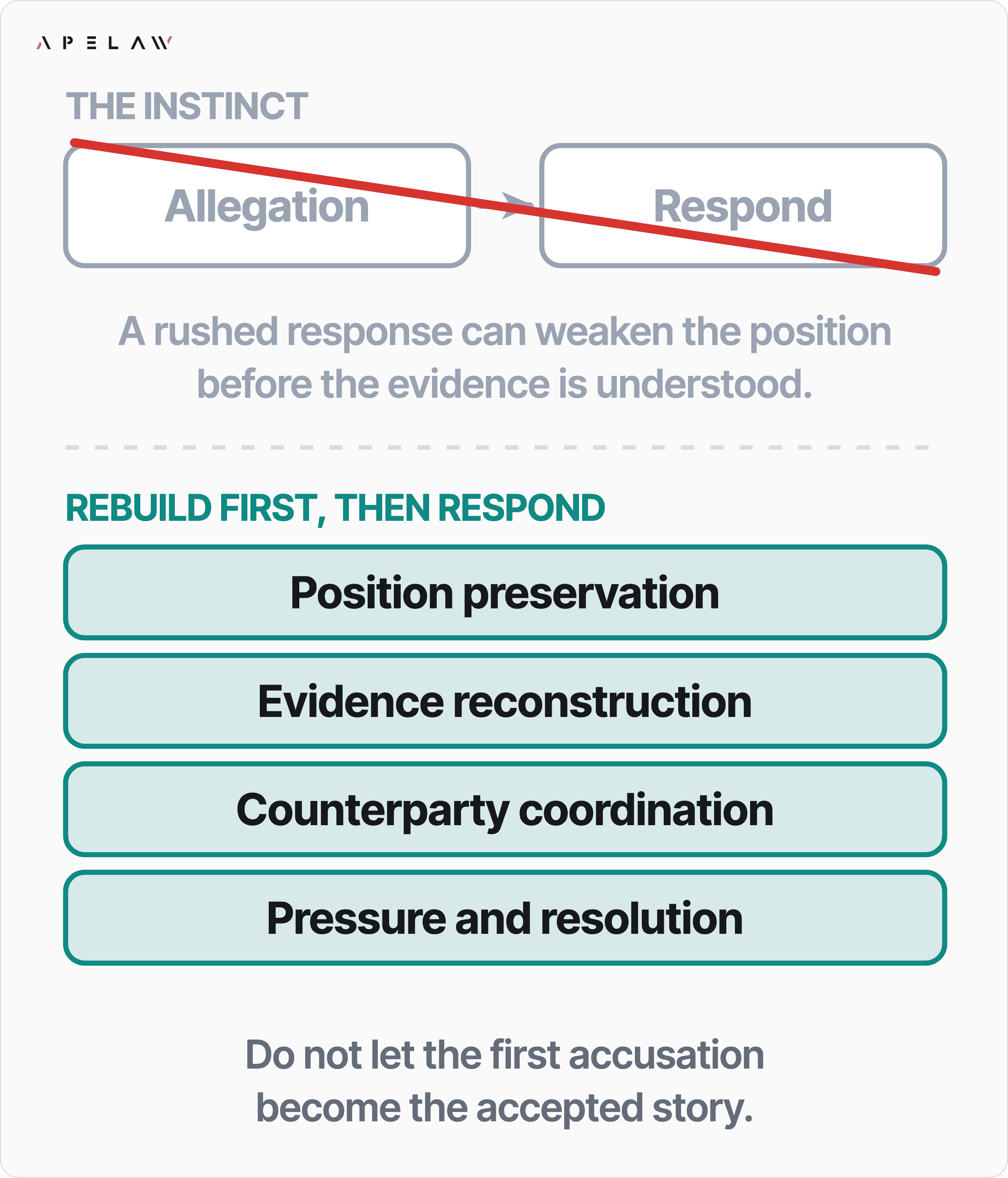
Without the review
- React immediately before understanding the complete facts
- Explain or defend every allegation in the first response
- Allow the other side’s version to frame the dispute
- Escalate the matter without protecting the assets or evidence
Case study
The first accusation put the client on the defensive. Reviewing the agreements, wallets, payments and messages gave a fuller picture before the client decided how to respond.
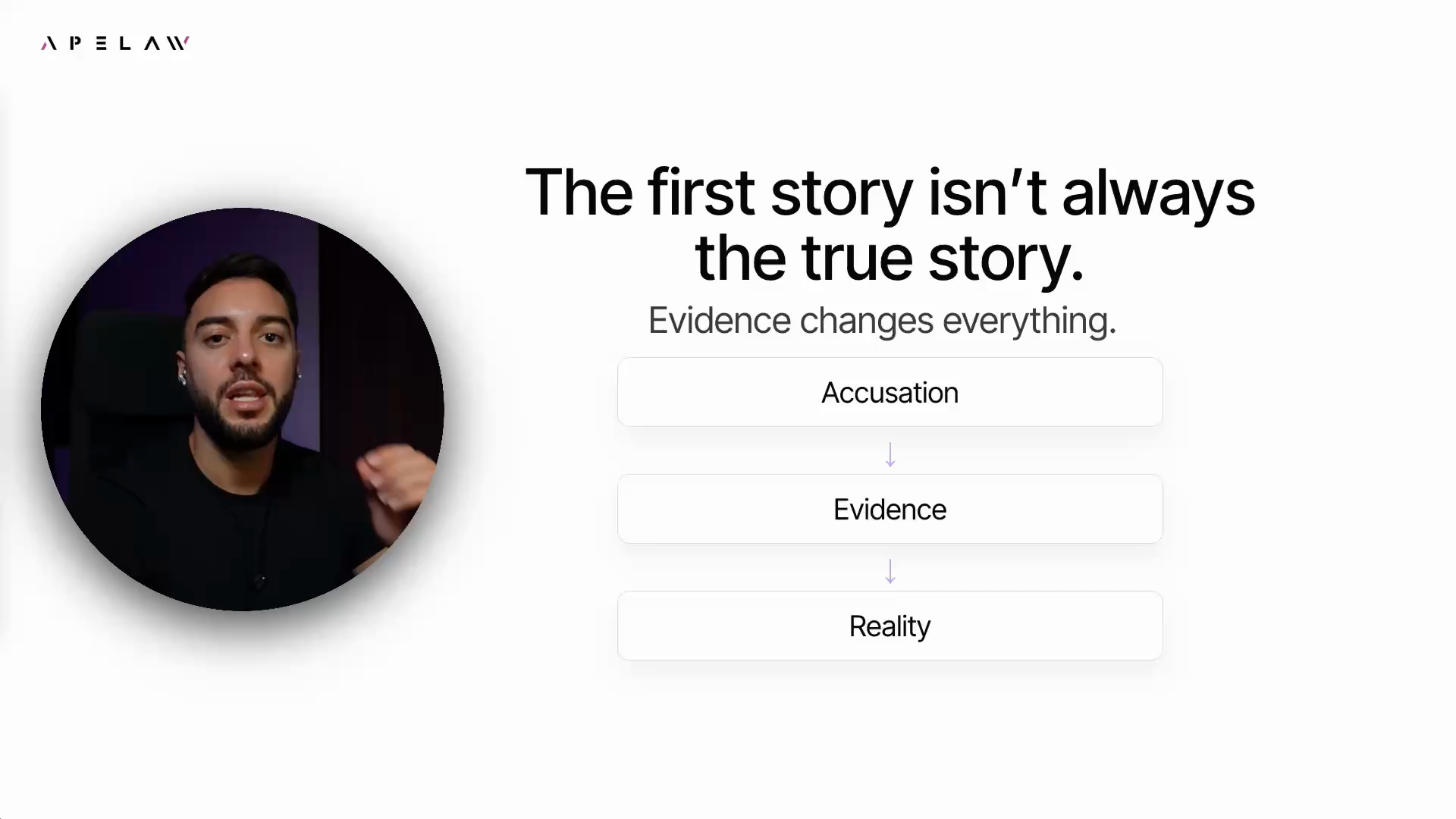 Watch the breakdown
Web3 Dispute: Rebuild the Facts Before You Respond | Ape Law2 min 34 sec · Uploaded
Watch on YouTubeThe first accusation placed the client on the defensive
An evidence-backed strategy that protected leverage
Based on a real Ape Law matter. Certain details have been anonymised.
Get a Clear Path ForwardThe difference
Without the review
With the review
The review
We protected the immediate position before reconstructing the evidence. Once the agreements, wallet activity, financial records, timeline and communications were organised, we could develop a strategy grounded in what the client could prove.
Which assets, rights, evidence and confidential details needed immediate protection?
What did the agreements, wallets, financial records and communications show when viewed together?
Which third parties held information or influence relevant to the dispute?
How could legal and commercial pressure strengthen the position without causing unnecessary escalation?
The founder lesson
The full story
We worked on a complex Web3 commercial dispute involving digital assets, intellectual property and multiple counterparties.
At first glance, our client appeared to be the party on the defensive. Allegations had been made and the natural response would have been to start answering them immediately.
We took a different approach.
The other side’s version of events framed the dispute in a way that placed our client under immediate pressure.
Responding to every allegation at that stage would have meant accepting that framing before the complete evidence had been reviewed.
The client needed to understand the actual position first. That meant looking beyond the allegations and reconstructing how the commercial relationship, transactions and communications had developed.
The first task was not to argue. It was to establish the facts.
We reviewed the agreements, wallet activity, financial records, timeline and communications.
Each source revealed a different part of the story. The agreements showed what had been documented. The wallets and financial records showed how assets and payments had moved. The communications helped explain what the parties understood and how they had behaved.
Piece by piece, the factual picture began to change.
The evidence did not support the simple narrative created by the first accusation. It revealed a more complex commercial relationship and gave the client a stronger basis for responding.
While the evidence was being rebuilt, the client’s immediate position still needed protection.
We focused on preserving key assets, maintaining anonymity and preventing unnecessary escalation. We also coordinated with relevant third parties where their information, cooperation or commercial position affected the dispute.
This allowed the factual work to continue without exposing the client to avoidable risk.
Protecting the position first created the time and space needed to make better strategic decisions.
Once the evidence and legal position were clearer, we developed an evidence-backed strategy.
The strategy was not limited to writing legal letters. It considered the counterparties, the commercial relationships, the relevant assets and the pressure points that could influence the dispute.
Each step was designed to strengthen the client’s position before the matter escalated further.
The matter was then positioned for private resolution from a stronger factual, legal and commercial foundation.
Do not let the first accusation become the accepted story.
An immediate response may feel necessary, but reacting before the evidence has been reviewed can weaken the position.
Start with the agreements, wallets, financial records, timeline and communications. Rebuild the facts. Protect the assets and evidence. Then decide how to respond.
That is how founders protect their leverage when a complex Web3 dispute begins.
The result described here relates to this matter. Another project's facts, rules and outcome may differ.
Talk about your project
If your dispute involves digital assets, intellectual property, wallet activity, financial records or multiple counterparties, Ape Law can help preserve the immediate position, organise the evidence and map the legal and commercial options available.
Get Expert Advice