Stay Out Of Trouble
Prediction Market Lawyer & Regulatory Strategy
For founders, exchanges, fintech teams, and platforms building prediction markets or event-contract products in or through the UAE, Ape Law helps assess the legal, regulatory, and commercial path before launch so the model is structured, defensible, and ready for serious counterparties.
Best for
Prediction markets, event-contract platforms, forecasting products and crypto-native market launches
Primary outcome
Product classification, jurisdiction strategy, platform documents, compliance controls and launch-risk roadmap
Reviewed by
Ape Law legal team
You are probably here because
If one of these sounds familiar, the prediction market needs legal structure before its technology, contract mechanics, user access, or public launch plans are finalized.
You are building a prediction market but do not know how the product will be classified.
Depending on its design and jurisdiction, the model may raise gaming, wagering, derivatives, securities, virtual asset, financial promotion, or other regulated-activity questions.
You need a jurisdiction, entity, and licensing route that fits the actual model.
Operator functions, user geography, contract design, custody, settlement, market making, and token or payment flows can all affect the legal pathway.
You need platform rules, terms, compliance controls, and launch review before going public.
Founders need to know which legal opinions, user terms, market rules, disclosures, AML controls, restrictions, and operational documents are required.
What Ape Law helps with
The work is focused on practical outputs that help prediction-market founders move forward without hiding the legal and regulatory risk.
Product classification
Map the event contracts, user rights, economic exposure, settlement model, operator functions, token flows, fees, and market mechanics that determine the legal analysis.
Jurisdiction and licensing
Assess the UAE, offshore, and cross-border pathways, including whether financial-services, virtual-asset, gaming, wagering, or other regulatory permissions may be implicated.
Platform documents
Prepare or review user terms, market rules, disclosures, prohibited-market policies, oracle and resolution procedures, dispute processes, and partner documentation.
Launch and compliance risk
Identify AML, KYC, sanctions, geofencing, access-control, market-integrity, insider-information, financial-promotion, banking, and payment risks before launch.
How the engagement works
The engagement turns an unclear prediction-market model into a practical roadmap with clear inputs, outputs, risks, restrictions, and next steps.
1. Intake
What happens
We understand the product, parties, event contracts, user journey, target markets, money or token flows, settlement process, jurisdiction, timeline, and desired outcome.
What Ape Law needs
Product deck, platform flow, contract mechanics, token or payment architecture, target countries, market categories, existing documents, counterparties, and launch timeline.
Output
Initial issue map and fit assessment.
2. Legal analysis
What happens
We assess the platform functions, event contracts, user rights, trading model, payment flows, market categories, and distribution strategy under the relevant legal and regulatory frameworks.
What Ape Law needs
Contract specifications, fee and revenue model, settlement and oracle design, custody arrangements, compliance materials, user terms, partner arrangements, and technical documentation.
Output
Classification analysis, risk map, and recommended routes.
3. Strategy
What happens
We map the entity structure, jurisdiction, licensing questions, user restrictions, document plan, compliance controls, regulatory engagement, and implementation priorities.
What Ape Law needs
Founder priorities, target markets, launch timeline, entity details, draft documents, commercial constraints, and preferred operating model.
Output
Action roadmap, regulatory pathway, and document list.
4. Implementation support
What happens
We support the preparation, review, and refinement of platform terms, market rules, policies, legal analysis, partner materials, regulator responses, and launch controls.
What Ape Law needs
Final instructions, platform materials, technical flows, draft documents, compliance decisions, approvals, and relevant correspondence.
Output
Final documents, implementation support, and next legal steps.
Regulatory pathway and risk drivers
These are the issues that usually determine whether a prediction market can follow a straightforward launch route or requires deeper regulatory and jurisdictional design.
Pathway map
1. Product and event contracts
What can users buy or trade, what event determines the outcome, what legal rights arise, and how is the contract settled?
2. Operator and structure
Who lists markets, sets the rules, accepts funds, holds assets, controls settlement, earns fees, and manages liquidity?
3. Users and distribution
Where are users located, are they retail or professional, how is the platform promoted, and what access restrictions apply?
4. Launch route
Choose the structure, jurisdiction, permissions, restrictions, documents, and compliance model that fit the actual product and intended market.
What can make this complex
1. Real-money or crypto settlement
Fiat payments, stablecoins, platform tokens, wallets, custody, and withdrawals can introduce separate regulatory and banking issues.
2. Retail and cross-border access
Open global access can trigger multiple legal regimes, consumer-protection rules, promotion restrictions, and licensing questions.
3. Sports, elections, financial, and sensitive events
The types of markets offered can materially affect the gaming, public-policy, market-integrity, and regulatory analysis.
4. Trading and market infrastructure
Order books, automated market makers, liquidity providers, custody, exchange functions, and secondary trading can change the platform’s regulatory profile.
5. Oracles, resolution, and disputes
The source of truth, settlement process, cancellation rules, ambiguous outcomes, manipulation risks, and appeal procedures need clear legal treatment.
Common mistakes this service helps prevent
Most prediction-market problems begin before launch. The goal is to identify them while the product, jurisdiction, and operating model can still be changed.
Building the platform before deciding how the product may be classified.
A completed technical model can require expensive redesign once lawyers, regulators, banks, payment providers, investors, or commercial partners review it.
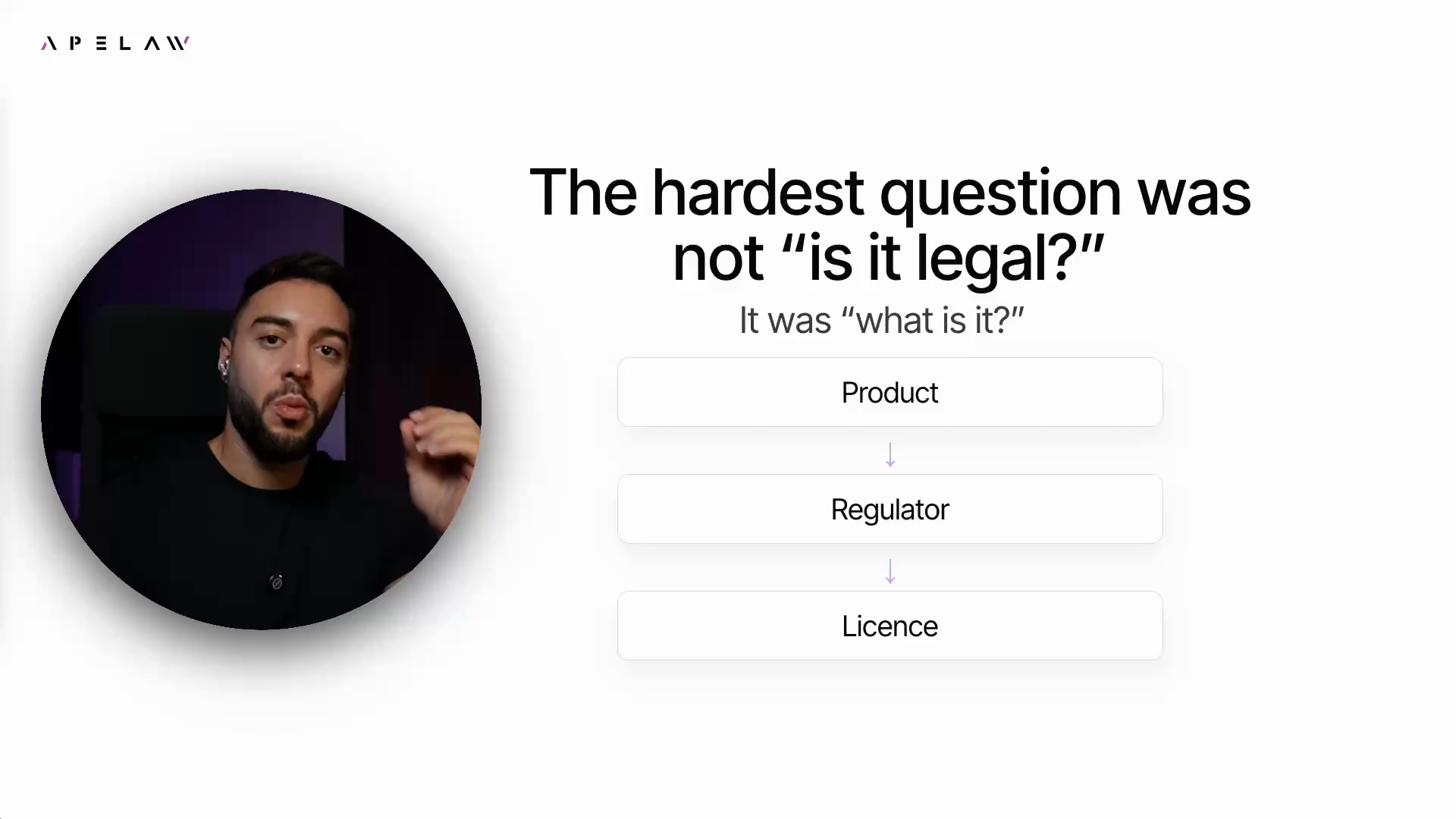
Assuming the “prediction market” label determines the legal treatment.
Regulators usually look at the actual contracts, rights, payments, operator functions, users, market categories, and commercial substance rather than the label used by the founders.
Treating an offshore company or geoblocking as the entire legal strategy.
An offshore entity does not automatically solve licensing, user-location, promotion, AML, banking, payment, market-integrity, or enforcement risk.
Book Prediction Market Consultation
Built for founders who need practical prediction-market judgment
Ape Law works with fintech, crypto, Web3, tokenization, and digital-asset teams that need legal advice tied to how prediction-market products actually launch, operate, accept users, settle markets, and manage regulatory risk.
Reviewed by Ape Law legal team
Content and structure reviewed by crypto-native legal professionals.
UAE, offshore, and cross-border pathway mapping
Legal analysis across platform functions, users, payments, tokens, market rules, distribution, jurisdiction, and launch strategy.
Anonymized prediction-market experience
Built from real legal work for a prediction-market client.
Next step
Need a prediction market structure that can survive regulatory, banking, partner, and platform review?
Send the product model and target markets. Ape Law will map the classification issues, legal routes, documents, restrictions, and next steps before you commit to the wrong structure.