
Without the review
- Build the token before confirming the underlying rights
- Leave IP, data and software ownership unclear
- Assume the DAO can exercise rights that were never documented
- Allow the token narrative and legal reality to move apart
Case study
A Web3 platform was building a token and DAO. It first needed clear ownership and licences for its data, software and IP, so the project could support the rights it described.
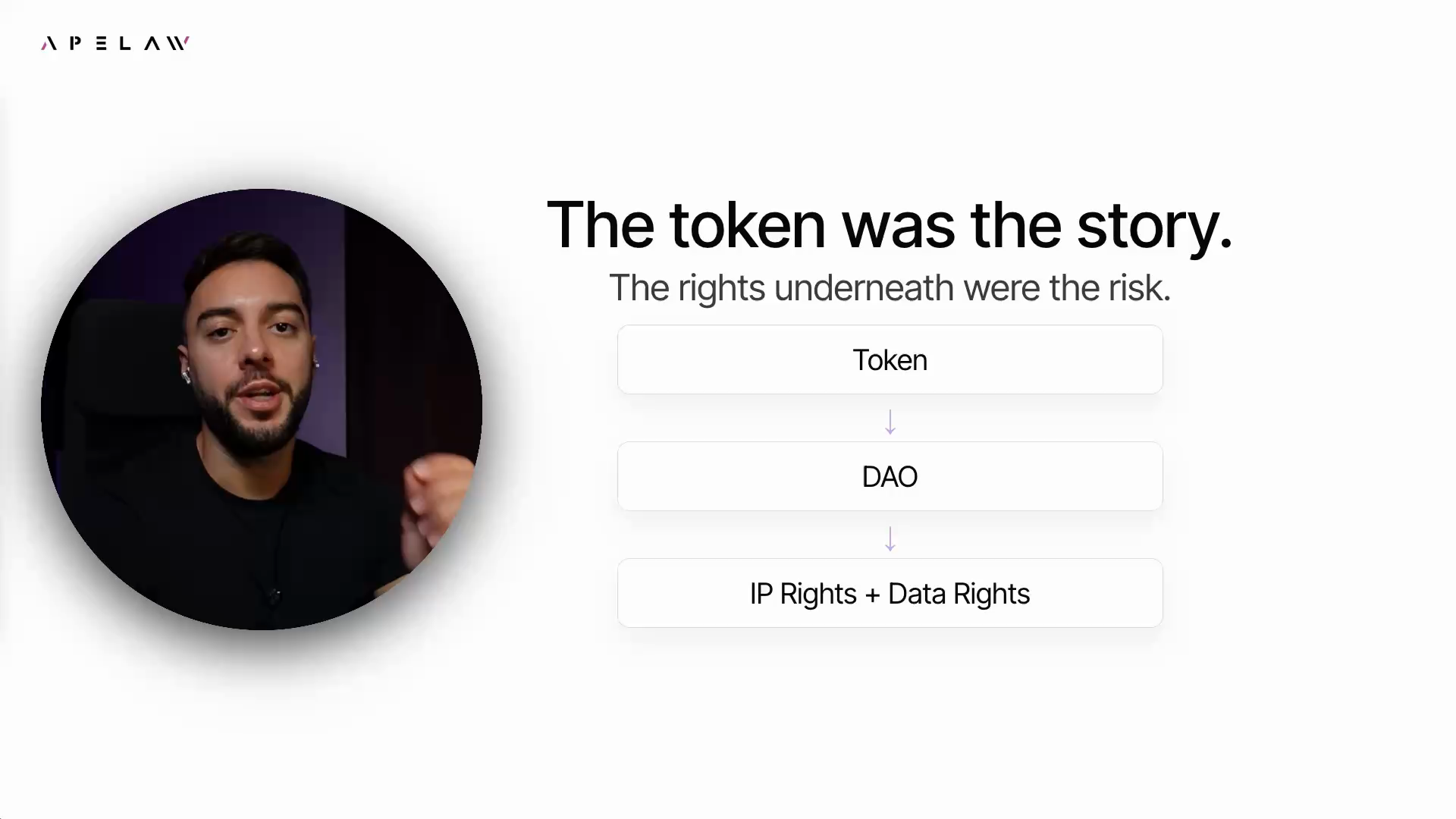 Watch the breakdown
A Token Cannot Create Rights That Do Not Exist | Ape Law2 min 57 sec · Uploaded
Watch on YouTubeThe token narrative sat above unclear legal rights
Legal infrastructure built beneath the ecosystem
Based on a real Ape Law matter. Certain details have been anonymised.
Get a Clear Path ForwardThe difference
Without the review
With the review
The review
We reviewed the group structure, asset ownership, licensing arrangements, governance and corporate records. Once the legal rights were clear, we could strengthen the infrastructure beneath the token and DAO.
Which entities existed, what role did each one perform and how did they relate to each other?
Who legally owned the intellectual property, data, software and other core assets?
Which entities could use the assets, and were those rights properly documented?
Did the DAO governance, cap table and company registers reflect the commercial reality?
The founder lesson
The full story
We worked with a Web3 data platform building a token, a DAO and a decentralised ecosystem.
The token was the most visible part of the project. It was also the part that attracted the most attention from founders, investors and the community.
But the real legal risk was sitting underneath it.
A token can describe a right, benefit or role within an ecosystem.
It does not automatically create ownership of intellectual property, data or software. It cannot give a DAO control over an asset that no entity has properly transferred or licensed.
Before relying on the token narrative, the project needed to understand which legal rights already existed and who controlled them.
That meant looking beneath the token and reviewing the complete legal infrastructure.
We started by asking who owned the core assets.
Who owned the intellectual property? Who owned or controlled the data? Which entity held the software rights? Who had authority to grant licences? Could the DAO legally exercise the rights described by the project?
Those questions revealed how closely the token narrative matched the legal position.
If the rights and licences were unclear, the token story could become difficult to defend during investor due diligence, a commercial transaction or a dispute.
We mapped the multi-jurisdiction group and clarified the role of each entity.
We documented the IP and data licensing arrangements, reviewed the software rights and examined how the DAO governance connected to the wider legal structure.
The goal was not to make the ecosystem more centralised. It was to ensure that decentralised governance operated around rights that had been properly created, owned and documented.
Once the foundations were clearer, the token could represent a legal and commercial reality rather than an unsupported narrative.
The work extended beyond preparing new documents.
We supported investor due diligence, addressed cap-table and company register issues and coordinated implementation across multiple entities and jurisdictions.
Later, we helped update legacy IP and security arrangements so that the legal documentation better reflected how the business and ecosystem actually operated.
This was important because legal infrastructure needs to remain aligned with the commercial reality as a Web3 project develops.
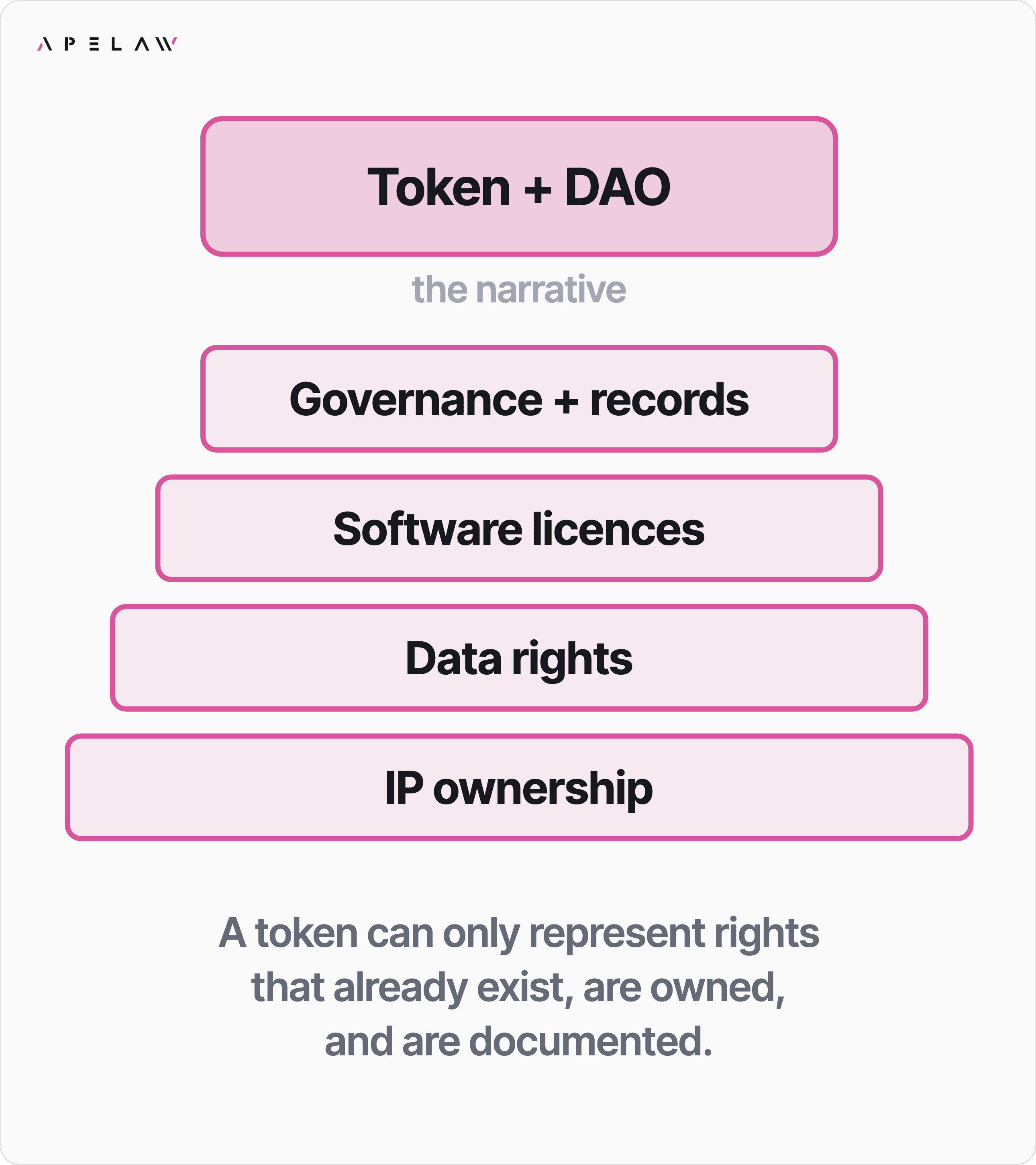
A token cannot create rights that do not already exist.
It can only represent rights that have been properly established, owned, transferred or licensed.
If the intellectual property, data, software and licensing arrangements are unclear, the token narrative becomes fragile.
Build the legal infrastructure first. Then make sure the token and DAO accurately reflect the rights beneath them.
The result described here relates to this matter. Another project's facts, rules and outcome may differ.
Talk about your project
If your project involves a token, DAO, intellectual property, data or software across multiple entities, Ape Law can help map the ownership, document the licences and build legal infrastructure around the commercial reality.
Get Expert Advice