
Without the review
- Place the entire project inside one company
- Leave contributions and ownership expectations unclear
- Rely on informal decision-making between the founders
- Deal with exits and disagreements only when they happen
Case study
The founders and investors trusted each other. Their property venture still needed clear rules for ownership, decisions, new capital and what would happen if someone left.
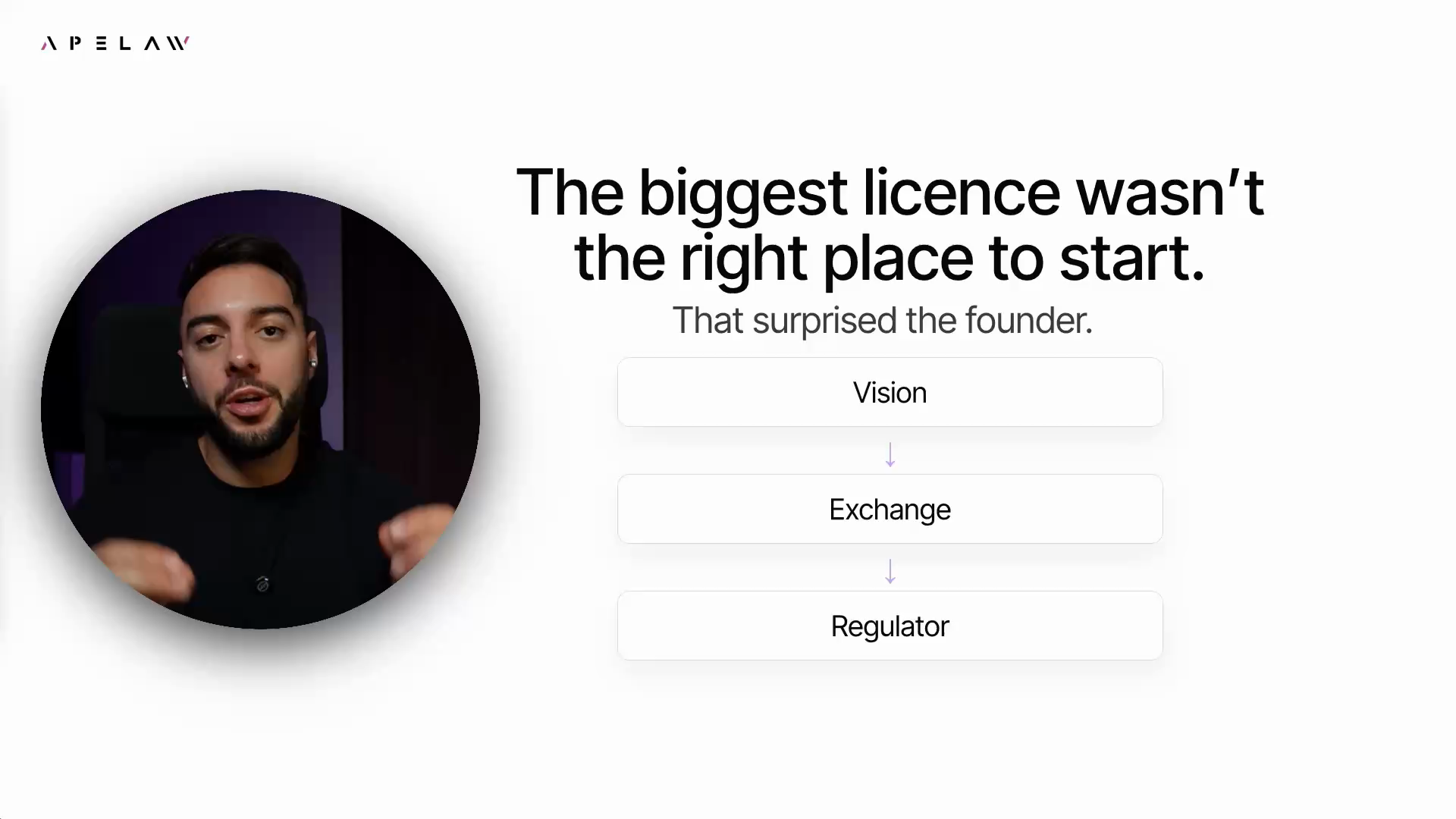 Watch the breakdown
Cross-Border Joint Ventures: Why Trust Is Not Enough | Ape Law2 min 20 sec · Uploaded
Watch on YouTubeThe relationship depended on trust alone
A structure designed to protect the partnership
Based on a real Ape Law matter. Certain details have been anonymised.
Get a Clear Path ForwardThe difference
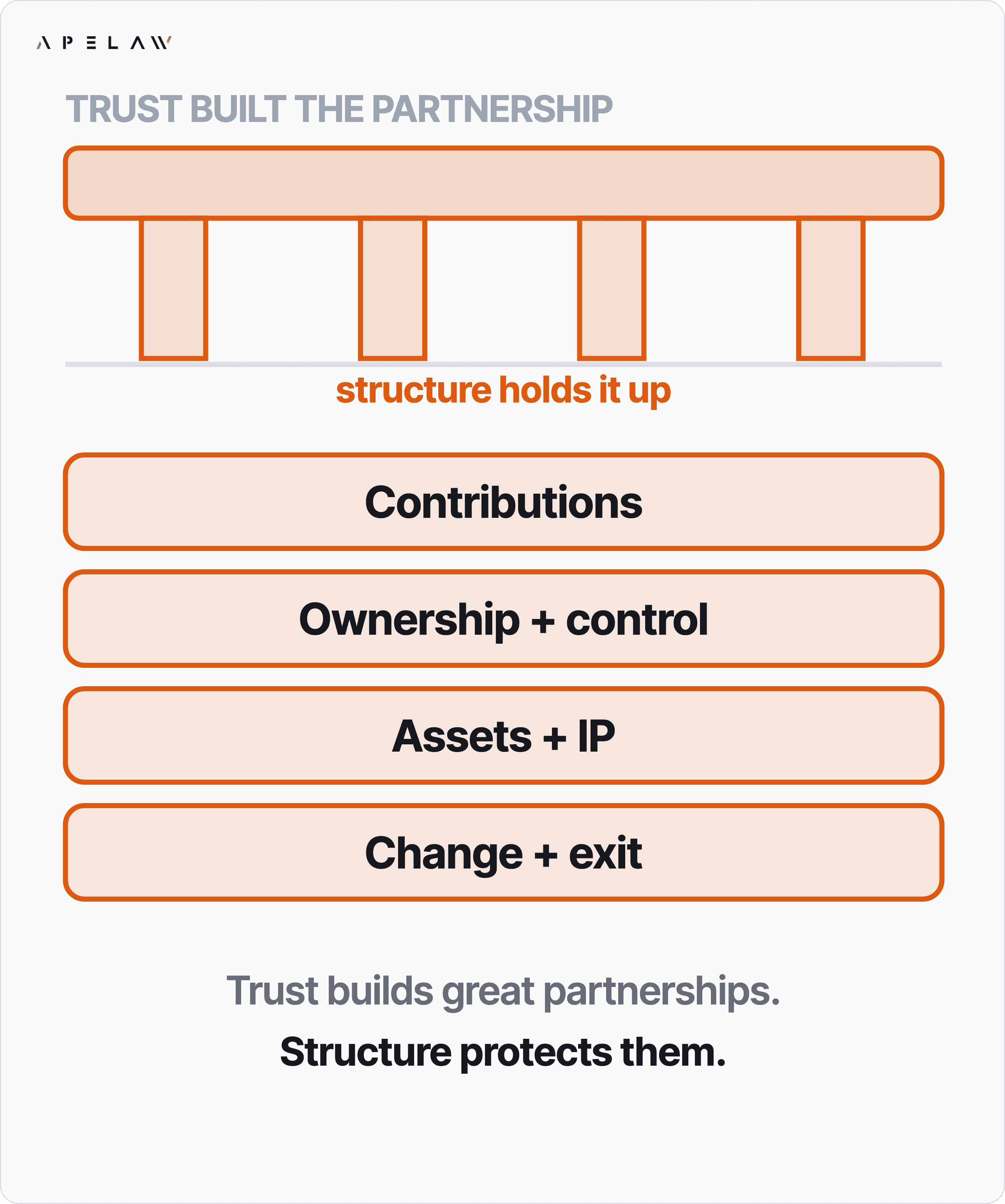
Without the review
With the review
The review
We started by understanding the commercial relationship. Once the contributions, ownership expectations, decision rights and assets were clear, we could design a purpose-built structure around them.
What was each founder or investor contributing to the venture?
How should equity, voting rights and major decisions reflect the commercial deal?
Where should the property interests, intellectual property and investment assets sit?
What should happen if someone leaves, stops contributing or wants to sell?
The founder lesson
The full story
We worked on a cross-border property development involving multiple founders and investors.
Everyone trusted each other. They shared a commercial vision and wanted to build the project together.
That was a strong place to begin, but trust alone could not answer every question the venture would face as it developed.
The purpose of the structure was not to replace trust or prepare for a dispute.
It was to protect the relationship the parties had already built.
Businesses change over time. Capital requirements increase. Responsibilities shift. New investors join. Founders may want to leave or reduce their involvement. Decisions that seem obvious at the beginning can become difficult when the commercial position changes.
A strong joint venture structure gives the parties a way to manage those changes without placing the entire relationship at risk.
We did not begin by drafting a standard shareholders’ agreement or incorporating a company.
We started by understanding the commercial relationship.
What was each person contributing? Who was providing capital? Who was responsible for developing the project? How should ownership reflect those contributions? Which decisions required agreement? What needed to be protected?
Those answers provided the foundation for the legal structure.
The project involved different assets, activities and relationships. Placing everything inside one company would not necessarily reflect how the venture worked.
We designed a purpose-built structure in which different entities had different roles. The ownership structure reflected the commercial deal. The intellectual property and investment arrangements were protected. The structure also supported the cross-border nature of the project.
The objective was not to create complexity. It was to give each important part of the venture a clear legal place.
The structure also needed to address what would happen when circumstances changed.
The parties needed clear decision-making rules. They needed to understand how additional capital would be handled, what happened if someone stopped contributing and how a founder or investor could leave.
Answering those questions early did not weaken the relationship. It reduced the risk that an unanswered question would damage it later.
The agreements supported the partnership because they gave everyone a shared understanding of ownership, control, responsibilities and exits.
Trust is an important foundation for any partnership, but trust alone does not protect ownership, capital, intellectual property or decision-making rights.
The strongest agreements are not written because the parties expect problems. They are written so the relationship has a clear way to survive if circumstances change.
Start with the people and the commercial relationship. Then build the entities, ownership and documents around them.
Trust builds great partnerships. Structure protects them.
The result described here relates to this matter. Another project's facts, rules and outcome may differ.
Talk about your project
If you are starting a venture with founders, investors or assets across multiple jurisdictions, Ape Law can help map the contributions, ownership, decision rights, asset protection and exit arrangements before problems arise.
Get Expert Advice