
Without the review
- Put users, the product and revenue inside one company
- Allow investment and operating risks to sit together
- Route every obligation and money flow through one entity
- Let one problem affect the wider business
Case study
A staking platform planned to keep its users, investment activity and money flows inside one company. The review separated those activities and gave each entity a clear role.
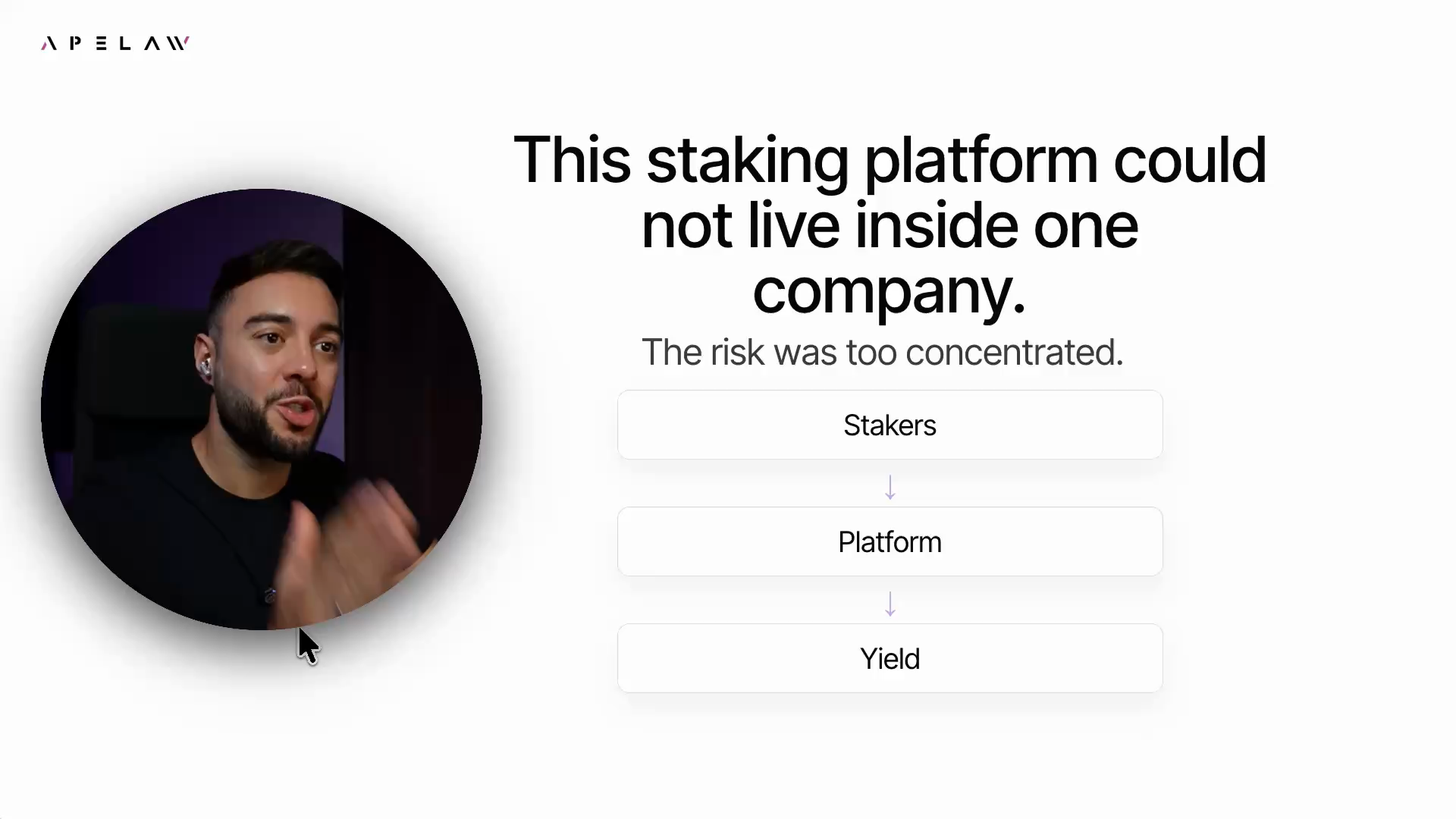 Watch the breakdown
Why One Company Should Not Carry Every Business Risk | Ape Law2 min 39 sec · Uploaded
Watch on YouTubeOne problem could put the entire business at risk
A structure built to contain problems before they spread
Based on a real Ape Law matter. Certain details have been anonymised.
Request A ReviewThe difference
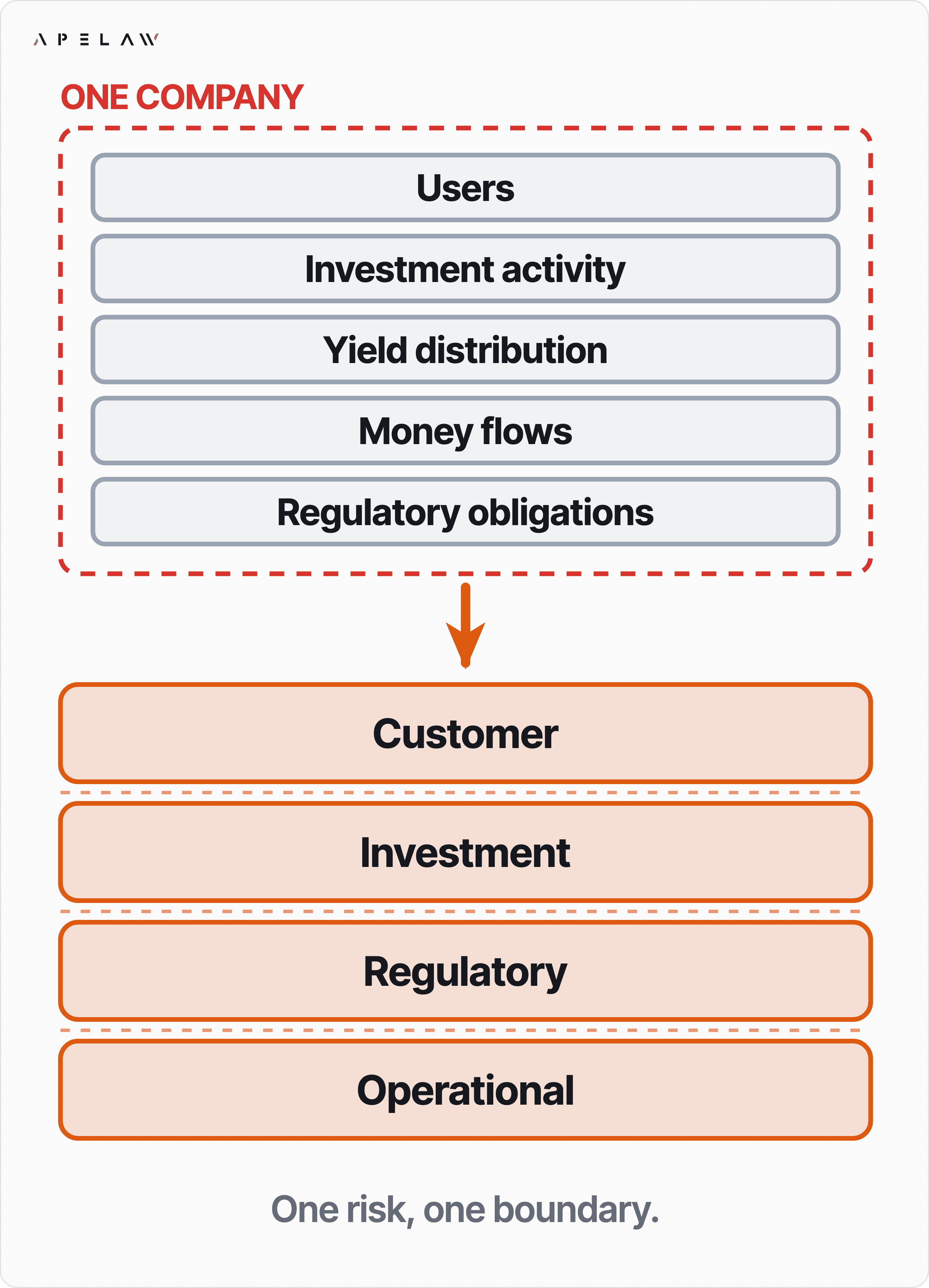
Without the review
With the review
The review
We started by mapping the users, activities, obligations and money flows. Once the risks were clear, the right entity structure became much easier to see.
Where did the customer, investment, regulatory and operational risks sit?
What should stay together, and what needed to be separated?
How would capital, revenue and yield move through the structure?
How could the product work within clearer risk boundaries?
The founder lesson
The full story
We worked with a crypto staking platform that involved users, investment activity, yield distribution and cross-border money flows. The simple option was to place everything inside one company. The users would interact with that company. The product would sit inside it. Revenue would flow through it. The same entity would also carry the investment, regulatory and operational obligations. On paper, that looked clean. In practice, it concentrated several different risks in one place.
This business was not exposed to one type of problem. It had customer-related risk, investment activity, yield distribution, regulatory obligations, money movements and day-to-day operational liability. If every part of the business sat inside one company, one issue could spread much further than it needed to. A problem affecting the operating business could reach the investment activity. A regulatory concern could affect the wider product. An issue involving funds or yield could create consequences for everything else the company was doing. Keeping the structure simple did not remove the risk. It placed more of the risk in the same place.
We did not begin by preparing documents or incorporating entities. We started by mapping how the business actually worked. Who interacted with the users? Where did the investment activity take place? Which entity received revenue? How did funds move? Where was yield calculated and distributed? Which parts of the business created the greatest exposure? Those questions helped us understand which activities belonged together and which needed a clear boundary between them. Once the risk map was clear, the entity structure became much easier to design.
The final structure separated the major areas of risk. The operating business did not carry every obligation. The investment activity sat where it made commercial and legal sense. The movement of funds was carefully mapped. Each entity had a clearer role. The product was then designed around that structure. This was important. Trying to force a legal structure around an already finished product often creates gaps, awkward money flows and responsibilities that sit in the wrong place. Here, the structure and product were designed to work together. The objective was not to create more companies for the sake of it. It was to stop every risk from landing in the same company.
Putting everything inside one company can feel simpler. It can also mean that one problem reaches the whole business. A good structure creates boundaries. It helps separate different activities, obligations and exposures before something goes wrong. The lesson is simple. Do not build one company that carries every risk.
The result described here relates to this matter. Another project's facts, rules and outcome may differ.
Talk about your project
If your product combines users, investment activity, yield or cross-border money flows, a Strategic Structure Review can help map the risk and decide what should stay together and what should be separated.
Get Expert Advice