
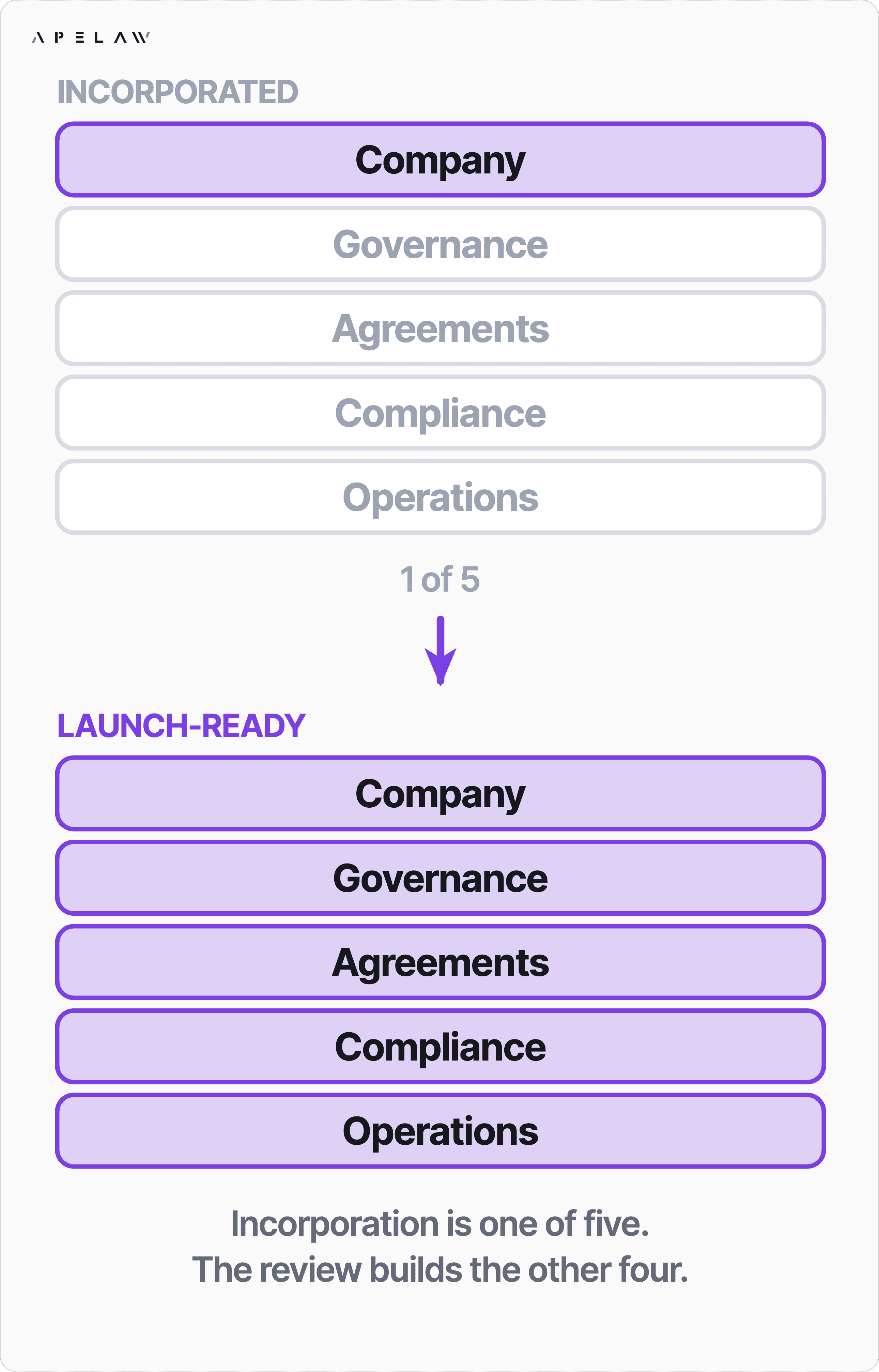
Without the review
- Incorporate the company and assume it is ready
- Leave governance and agreements until later
- Discover compliance gaps close to launch
- Delay operations while the foundations are rebuilt
Case study
The company had been incorporated, but its tokenization and investment business was not ready to launch. The next work covered governance, agreements, compliance and day-to-day responsibilities.
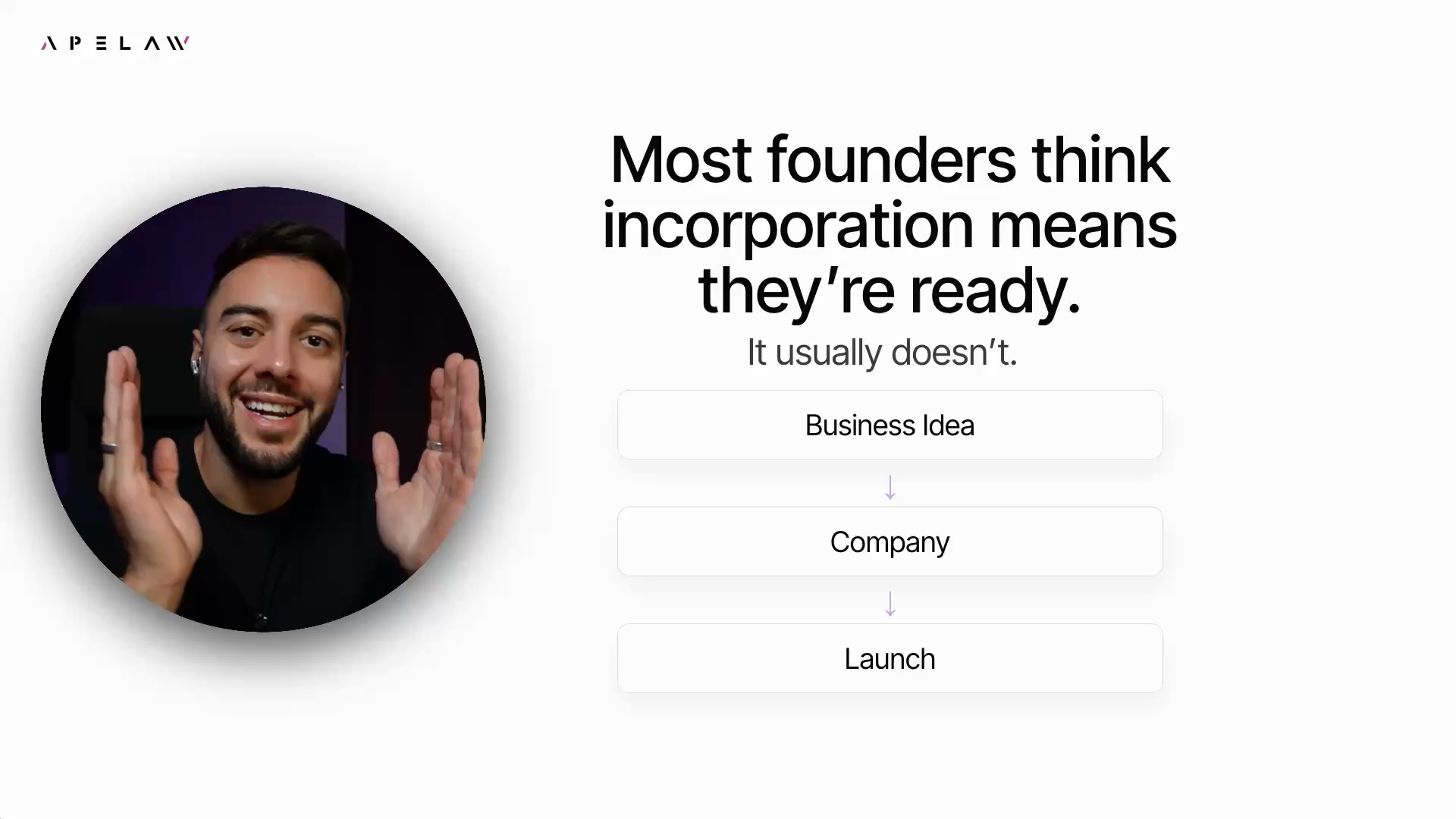 Watch the breakdown
Why Incorporation Does Not Mean You Are Ready to Launch | Ape Law3 min 0 sec · Uploaded
Watch on YouTubeThought they were ready to launch
Foundations in place before launch
Based on a real Ape Law matter. Certain details have been anonymised.
Request A ReviewThe difference
Without the review
With the review
The review
We worked through the business in the order it would actually operate. First the commercial objectives, then the regulatory requirements, the corporate structure, the legal documents and the ongoing compliance framework.
What was the business planning to offer, and how would it operate?
What rules and ongoing obligations applied to the proposed activities?
Which entities were needed, and what purpose would each one serve?
What documents, governance and compliance processes had to be in place?
The founder lesson
The full story
We worked with the innovation arm of a major regional bank that was building a tokenisation and investment business. The project involved establishing entities in the DIFC, preparing the core legal documents and putting the governance and compliance foundations in place. Many founders assume that incorporation is the point at which a business becomes ready to launch. Once the company exists, they expect operations to begin. In reality, incorporation is only one part of the process.
A newly incorporated company is essentially an empty legal vehicle. It can hold assets, enter into agreements and carry on approved activities. But it still needs the rules, documents and processes that explain how it will operate. Who has authority to make decisions? What agreements govern the business? What compliance obligations apply? Who is responsible for meeting them? How will the company manage its ongoing legal and regulatory requirements? Without clear answers, the company may exist on paper without being ready to function as a real business.
We did not treat incorporation as the end of the project. We treated it as one step in a wider launch plan. The work followed a practical sequence: understand the commercial objectives, identify the regulatory requirements, design the corporate structure, establish the required DIFC entities, prepare the core legal documents, build the governance framework and put the ongoing compliance obligations in place. Each step supported the next one. The structure had to reflect the commercial model. The legal documents had to reflect the structure. The governance and compliance framework had to reflect how the business would actually operate. This meant the documents were not being prepared in isolation. They were part of a complete operating foundation.
The investment project itself had not launched at the time of the matter. That did not make the preparation unnecessary. It meant the core foundations were already there for when the business was ready to move forward. This is usually a much stronger position than launching first and trying to fix the structure, agreements and compliance processes later.
Incorporating a company does not mean the business is ready to operate. It means the legal foundation now exists. The next step is to build the business around it. That includes the governance, agreements, responsibilities, compliance processes and operational framework needed to support the launch. The lesson is simple. Incorporation creates the company. The real work makes it ready to operate.
The result described here relates to this matter. Another project's facts, rules and outcome may differ.
Talk about your project
If you are setting up a new venture, a Strategic Structure Review can help you map the corporate structure, legal documents, governance and compliance foundations before launch.
Get Expert Advice