
Without the review
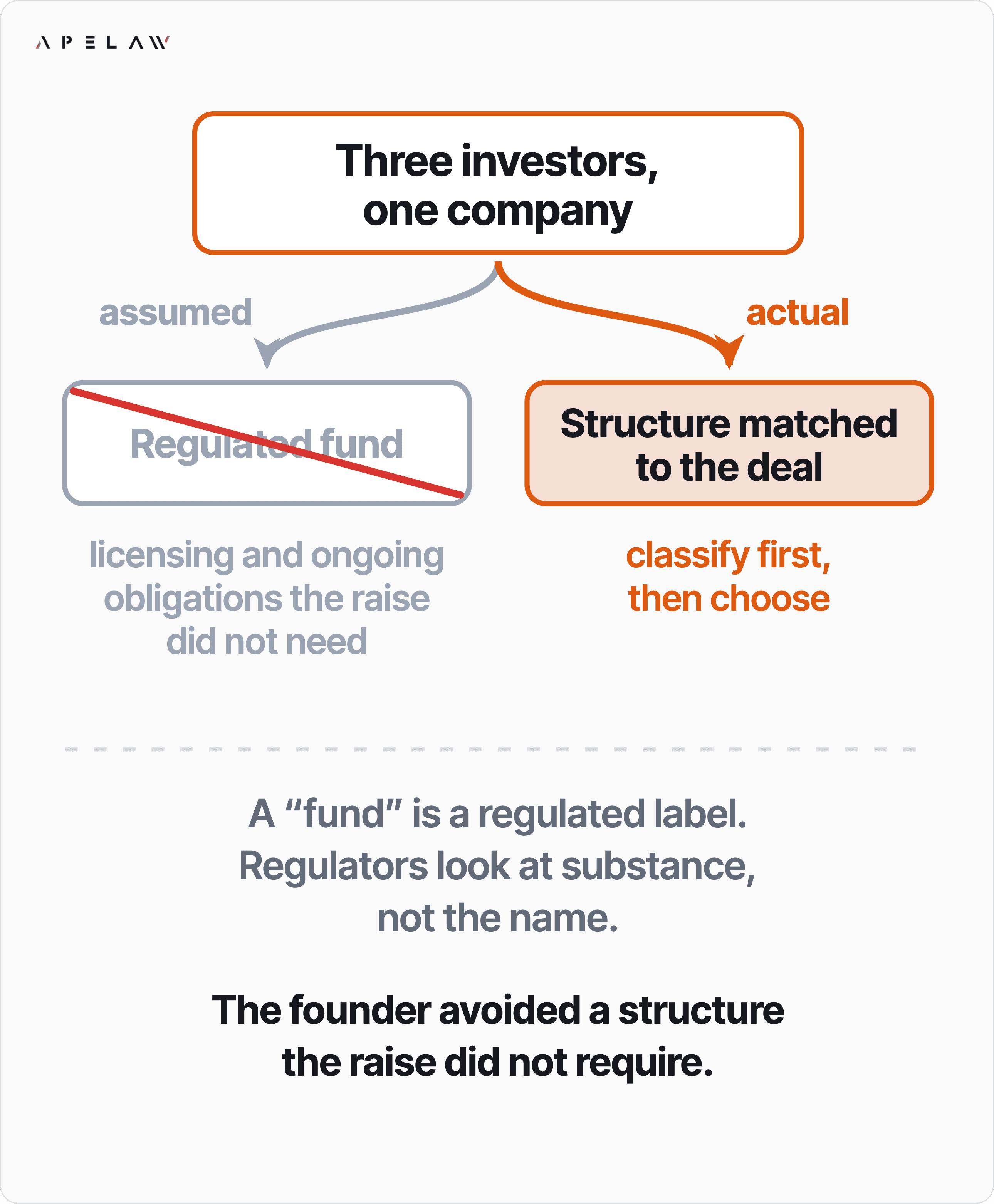
- Builds a fund because the raise “looks like” one
- Takes on a regulated structure he may not need
- Investor rights, control, fees and money flow create licensing exposure
- Expensive and slow to unwind once investor money is in
Case study
Three investors wanted to back one drone company. The founder assumed they needed a fund. The first job was to check what the investment arrangement actually required.
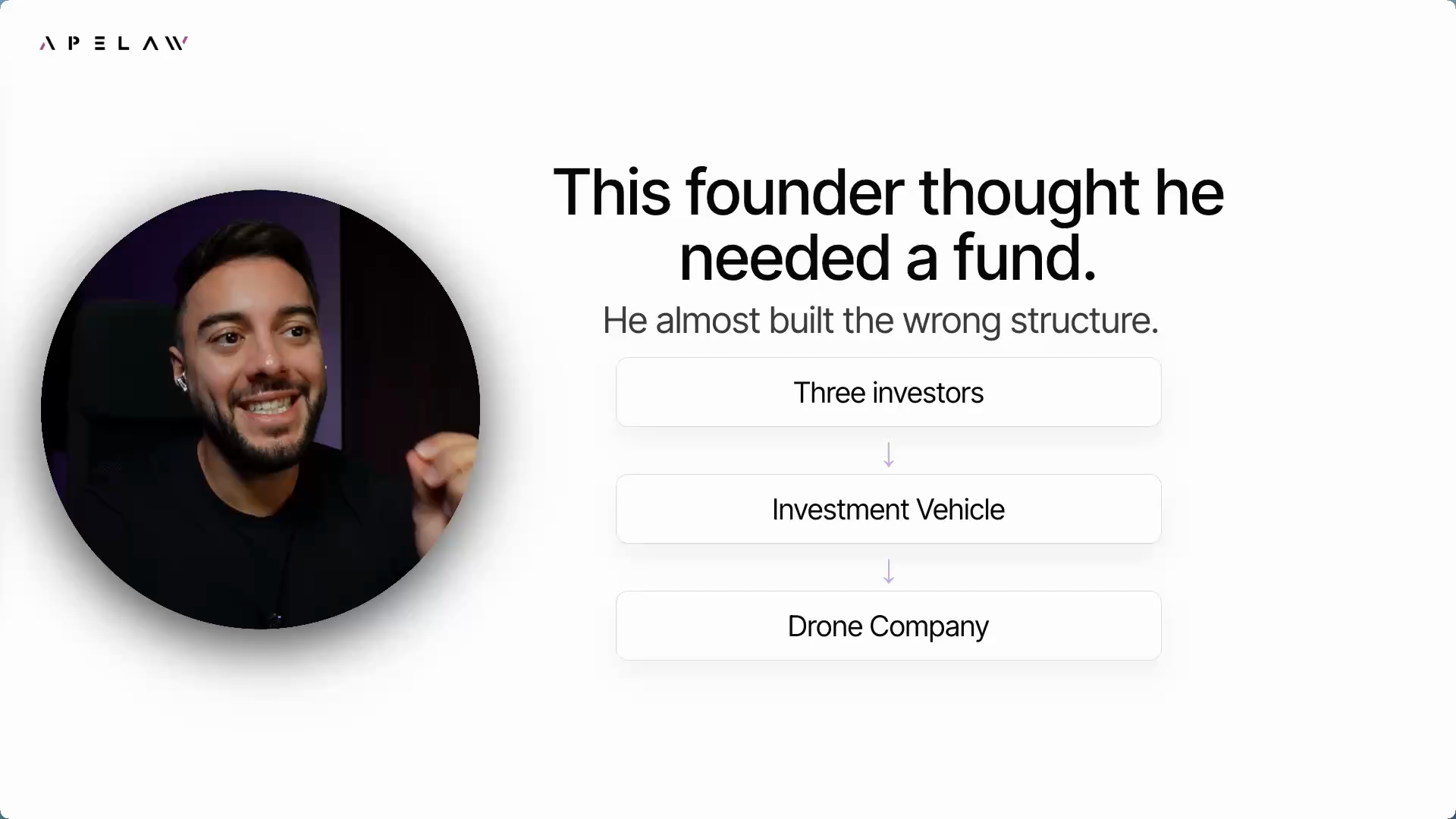 Watch the breakdown
Why Starting With a Fund Was the Wrong Approach | Ape Law3 min 10 sec · Uploaded
Watch on YouTubeAssumed the raise required a fund
Clear structure and roadmap
Based on a real Ape Law matter. Certain details have been anonymised.
Request A ReviewThe difference
Without the review
With the review
The review
Instead of starting with the entity, we started with the commercial reality and worked forward. Structure is the output of the analysis — not the first decision.
Could this actually become a regulated investment fund, or is it something simpler?
How should money, control and incentives really work between the founder and the investors?
Which entity and jurisdiction fit the commercial reality, not the assumption?
What has to happen first, and what should deliberately wait?
The founder lesson
The full story
A founder came to us with what sounded like a straightforward plan. He had three investors who wanted to invest in a drone technology company, and he needed a vehicle to bring their capital together. His first instinct was the obvious one: set up a fund.
It is an understandable assumption. Multiple investors contributing to a single investment can look and sound like a fund. But whether an arrangement is regulated does not depend on what it is called. It depends on how it actually works.
The important questions sit beneath the structure. Who controls the investors’ money? Who makes the investment decisions? How are fees or incentives earned? What rights do the investors have? And how does money move through the arrangement?
Those details can determine whether the structure falls within the regulatory perimeter. A founder can create unnecessary cost, delay and compliance obligations by building a regulated fund where one is not required. The opposite is equally risky: creating something that operates like a fund without recognising the regulatory consequences.
That is why we stopped asking which entity the founder should incorporate and started by understanding what he was actually trying to build.
Our Strategic Structure Review™ follows a deliberate sequence: understand the commercial model, analyse the regulatory position, design the right structure and only then prepare the documents.
Could the proposed arrangement be treated as a regulated investment fund?
How should control, investor rights and incentives work?
Which entity and jurisdiction best matched the commercial reality?
What needed to happen immediately, and what could wait?
Once those questions were answered, the appropriate legal pathway became much clearer.
The founder did not need to begin by building a fund. He needed to understand the commercial and regulatory reality of the arrangement first.
That distinction matters. It can prevent unnecessary licensing obligations, avoid expensive restructuring and give the founder a clearer roadmap before investor money is committed.
The lesson applies far beyond this particular investment: do not choose a structure before you understand the problem.
The result described here relates to this matter. Another project's facts, rules and outcome may differ.
Talk about your project
If you’re raising and wondering whether you need a fund, or what you actually need. A Strategic Structure Review maps the commercial reality and the regulatory position before you commit to any entity.
Get Expert Advice