
Without the review
- Focus only on the buyer, seller and commercial terms
- Assume the seller controls the digital assets
- Treat signing the agreement as completing the transaction
- Rely on protections designed for traditional assets
Case study
The buyer had an acquisition agreement. It still needed answers about wallet control, the seller's authority and how the crypto assets would actually change hands.
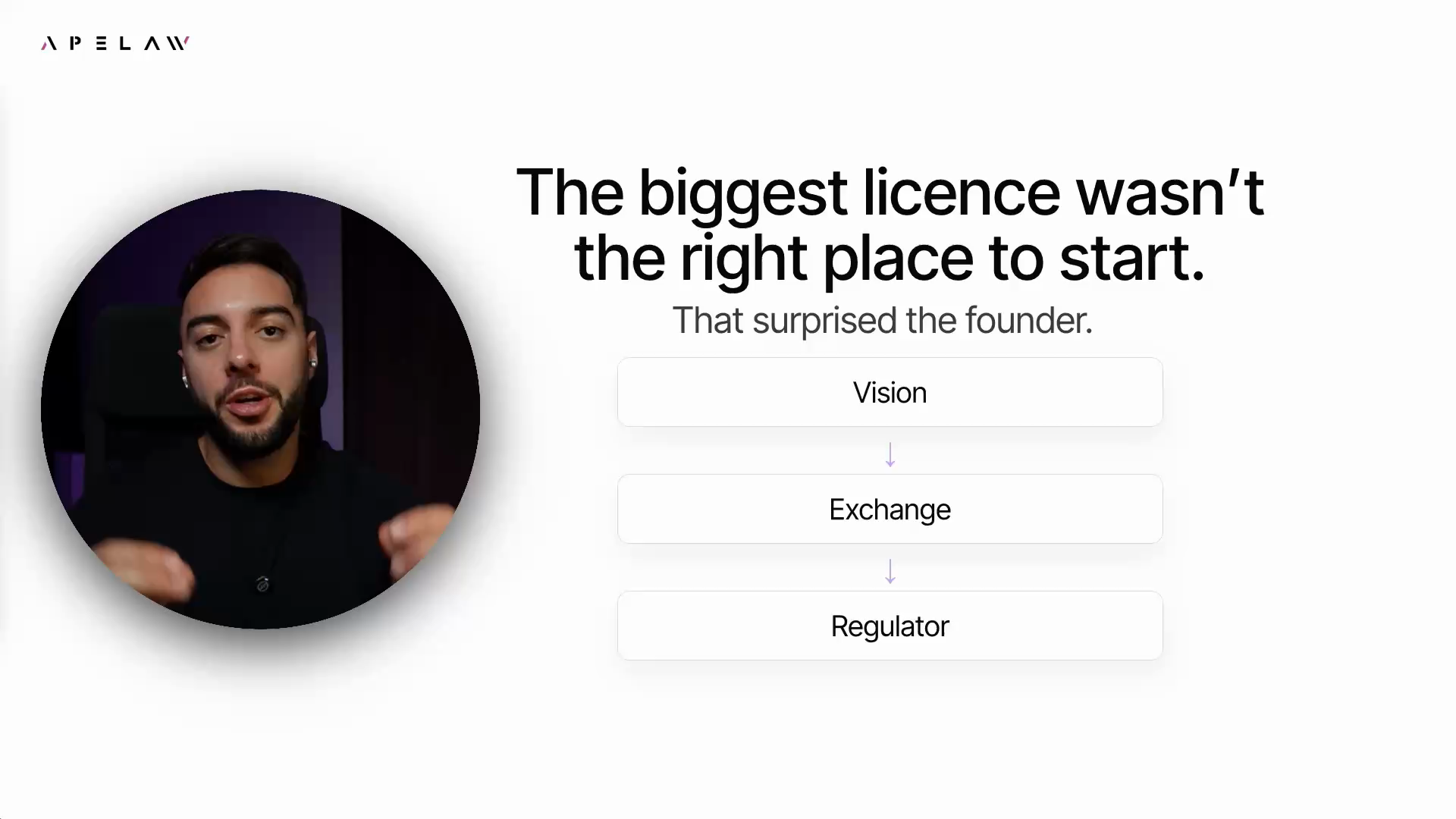 Watch the breakdown
Why This Crypto Acquisition Needed More Than a Contract | Ape Law2 min 8 sec · Uploaded
Watch on YouTubeThe agreement treated crypto like a normal asset
Protections built around the real transaction
Based on a real Ape Law matter. Certain details have been anonymised.
Get a Clear Path ForwardThe difference
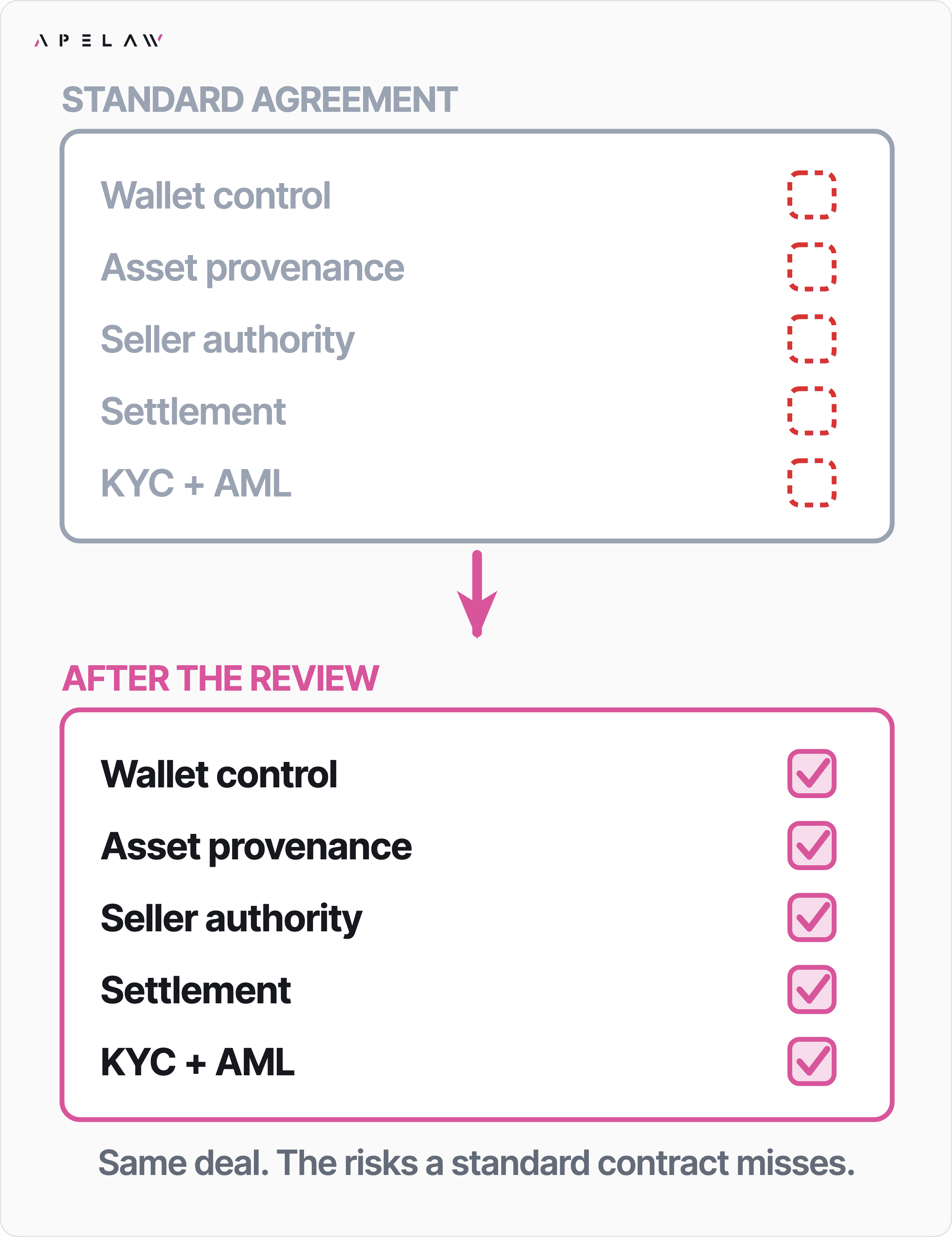
Without the review
With the review
The review
We reviewed how the acquisition would work in practice before strengthening the agreement around it. That meant looking at the technology, ownership, settlement mechanics, regulatory obligations and operational risks together.
Who controlled the wallet, and could that control be verified before completion?
Where did the digital assets come from, and was the seller authorised to transfer them?
How would payment and asset transfer happen, and what could prevent completion?
Which warranties, conditions and remedies were needed to address the crypto-specific risks?
The founder lesson
The full story
We worked with a company acquiring digital assets through a commercial agreement.
At first, the transaction looked familiar. There was a buyer, a seller, an asset and an agreement. The parties could negotiate the commercial terms, sign the contract and complete the deal.
But once we reviewed how the acquisition would actually work, it became clear that this was not a normal commercial transaction.
The original agreement focused on the commercial relationship between the buyer and seller.
It described the assets being acquired, the agreed price, the parties’ obligations and the process for completing the transaction. Those terms were important, but they did not address every risk created by the crypto assets.
The transaction could not be understood by reading the contract alone. We also needed to understand how the assets were held, controlled and transferred.
Digital assets introduce practical questions that traditional acquisition agreements may not answer.
Who controlled the wallet? Where did the assets come from? Could the seller prove ownership? Did the seller have the authority to transfer them? How would payment and asset transfer be coordinated? What happened if one side performed but the other did not?
There were also regulatory, KYC and AML questions. The parties needed to understand whether the transaction created additional obligations and whether the source of the assets had been properly reviewed.
These were not secondary details. They affected whether the buyer could complete the acquisition safely.
Instead of limiting the work to a contract review, we examined the complete transaction.
We reviewed the proposed transfer process, wallet control, digital asset ownership, settlement mechanics and the operational steps required for completion. We also considered the relevant regulatory obligations and the KYC and AML requirements affecting the parties.
This gave us a clearer picture of where the real risks sat and which protections the agreement needed.
We negotiated the agreement so that it reflected how the crypto transaction would actually work.
The protections around ownership and authority were strengthened. The agreement addressed the source and control of the digital assets. Settlement risk was considered alongside the legal completion mechanics. The regulatory, KYC and AML obligations were also reflected in the transaction process.
The result was not simply a stronger commercial contract. It was an agreement designed around the technology, operations and legal risks of the acquisition.
A crypto acquisition should not be reviewed like a normal contract.
The commercial terms are only one part of the transaction. Wallet control, asset provenance, seller authority, settlement mechanics and regulatory obligations can all determine whether the deal works as intended.
When the technology changes, the legal risks change too. The agreement needs to change with them.
The result described here relates to this matter. Another project's facts, rules and outcome may differ.
Talk about your project
If you are acquiring tokens, wallets, treasury assets or another digital asset position, Ape Law can help assess the ownership, settlement, regulatory and operational risks before the agreement is completed.
Get Expert Advice