
Without the review
- Treat the initial regulatory position as the final answer
- Assume the licence cannot permit token investments
- Abandon the digital asset strategy
- Stop the project before exploring another legitimate pathway
Case study
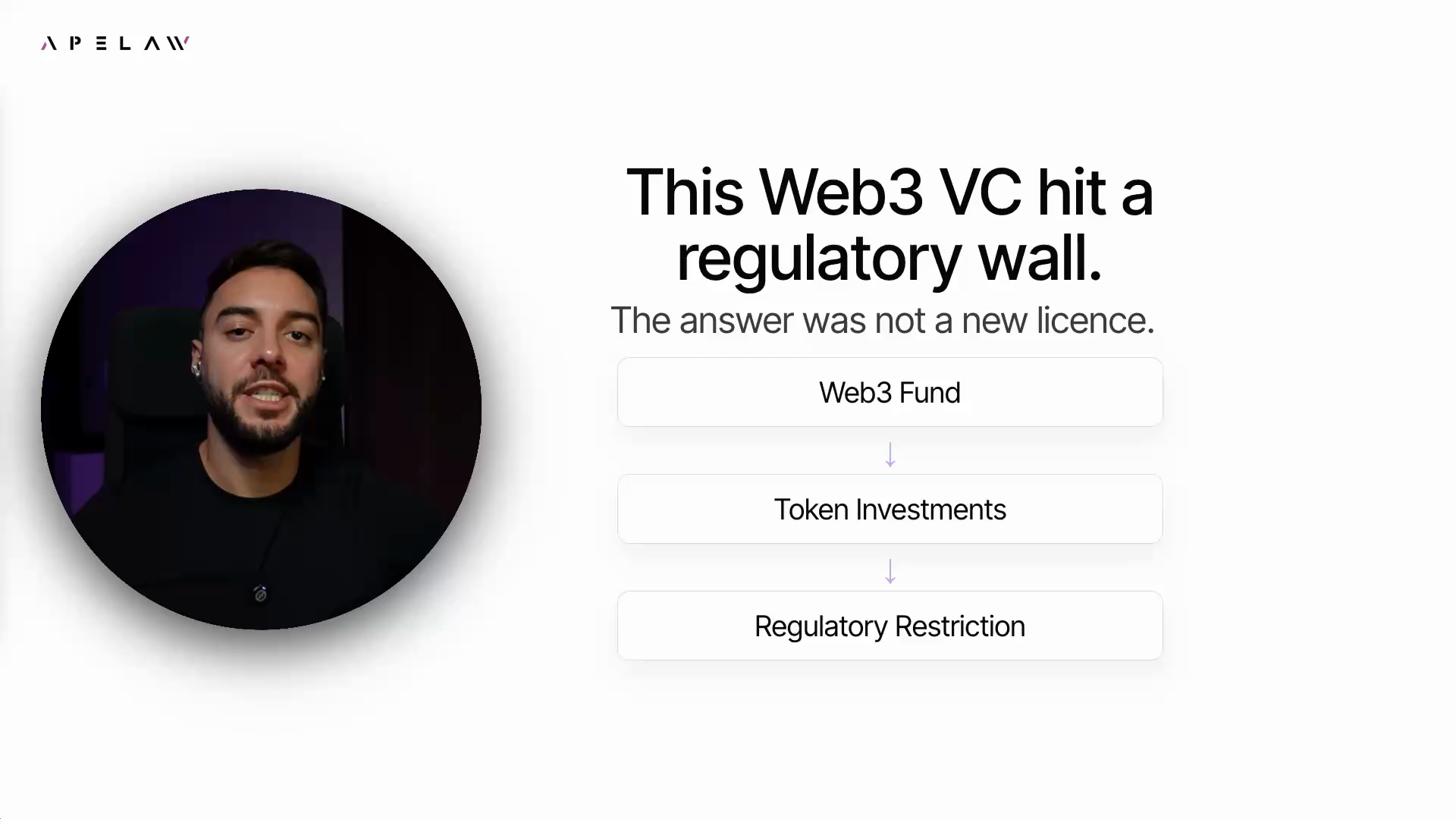
A Web3 fund wanted to invest in equity and tokens. Its existing ADGM position appeared to rule out token investments. Research and regulator discussions helped establish a route forward.
 Watch the breakdown
How We Created an ADGM Pathway for a Web3 VC | Ape Law2 min 35 sec · Uploaded
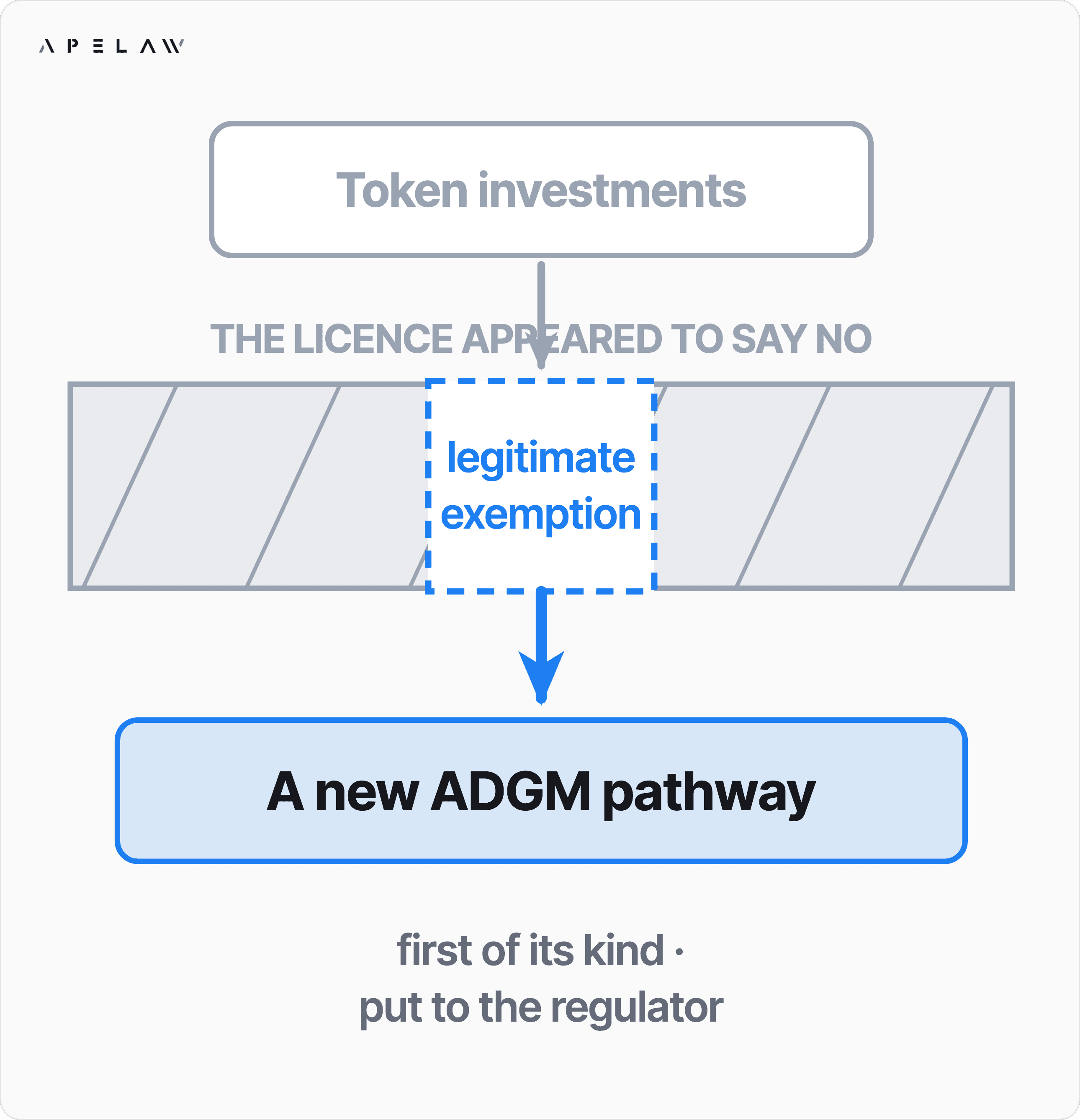
Watch on YouTubeThe licence appeared to rule out token investments
A new ADGM regulatory pathway created
Based on a real Ape Law matter. Certain details have been anonymised.
Request a ReviewThe difference
Without the review
With the review
The review
We did not begin with assumptions about what the regulator would accept. We started by understanding the regulatory objective, researching previous decisions and identifying a legitimate exemption pathway. We then built the strategy around that pathway and engaged directly with the regulator.
What was the regulation designed to control or protect against?
Had the regulator considered similar activities or alternative pathways before?
Could the proposed investment model operate through a legitimate exemption or different regulatory treatment?
How should the proposed pathway be presented and supported in direct discussions with the regulator?
The founder lesson
The full story
We worked with a Web3 venture capital firm that wanted to invest in early-stage digital asset businesses. The strategy included both traditional equity investments and investments involving Web3 tokens.
At first, the ADGM regulatory position appeared to prevent the token investment part of the strategy. The straightforward conclusion was that the licence would not allow it and the fund could not move forward as planned.
The team reviewed whether another route was available.
The existing regulatory framework did not appear to accommodate the proposed activity. Read narrowly, the position looked clear. The fund could invest in equity, but investing in Web3 tokens appeared to sit outside the permitted strategy.
That created a major problem. Removing token investments would have changed the commercial purpose of the fund. Moving forward without resolving the issue would have created unacceptable regulatory risk.
The project needed more than documents. It needed a regulatory strategy.
Instead of asking how the firm could work around the regulation, we asked whether another legitimate regulatory pathway could be created.
That distinction mattered. Working around a regulation suggests avoiding its purpose. A proper regulatory strategy starts by understanding why the rule exists, what risk the regulator is addressing and whether that objective can be met through a different structure or treatment.
We researched previous decisions, examined the available framework and considered how the proposed investment activity could be presented without undermining the regulator’s objectives.
Our research identified an exemption pathway that could support the proposed investment strategy.
We developed the legal and regulatory reasoning behind it. We mapped how the firm would operate, what it wanted to invest in and how the relevant risks would be managed. We then built the regulatory strategy around that analysis.
The pathway was not a shortcut around the rules. It was a structured way of showing how the proposed activity could operate within a regulator-approved framework.
We engaged directly with senior members of the regulator and presented the proposed pathway.
Those discussions allowed the regulatory questions to be addressed openly. The regulator could understand the investment model, the protections around it and the reasoning supporting the proposed treatment.
The work helped establish a regulatory pathway for the firm's proposed token investments. What initially appeared to be the end of the project became a viable route forward.
Regulation is not always a simple yes or no.
A rule may appear to prevent an activity when the real issue is that the proposed pathway has not yet been fully examined or clearly presented. Good regulatory strategy begins by understanding the regulator’s objective, researching the available options and asking a better question.
If an activity appears to fall outside a licence, check the available routes and their conditions before deciding how to proceed.
The result described here relates to this matter. Another project's facts, rules and outcome may differ.
Talk about your project
If your proposed activity appears to fall outside an existing licence or regulatory framework, a Strategic Structure Review can help examine the rules, assess legitimate pathways and prepare a strategy for regulator engagement.
Get Expert Advice