
Without the review
- Start with the most demanding licence application
- Try to build every part of the business at once
- Treat the final destination as the first milestone
- Commit resources before the model and operations are ready
Case study
An exchange wanted to apply for its final ADGM licence straight away. The review gave it a staged plan for the product, people and systems it needed first.
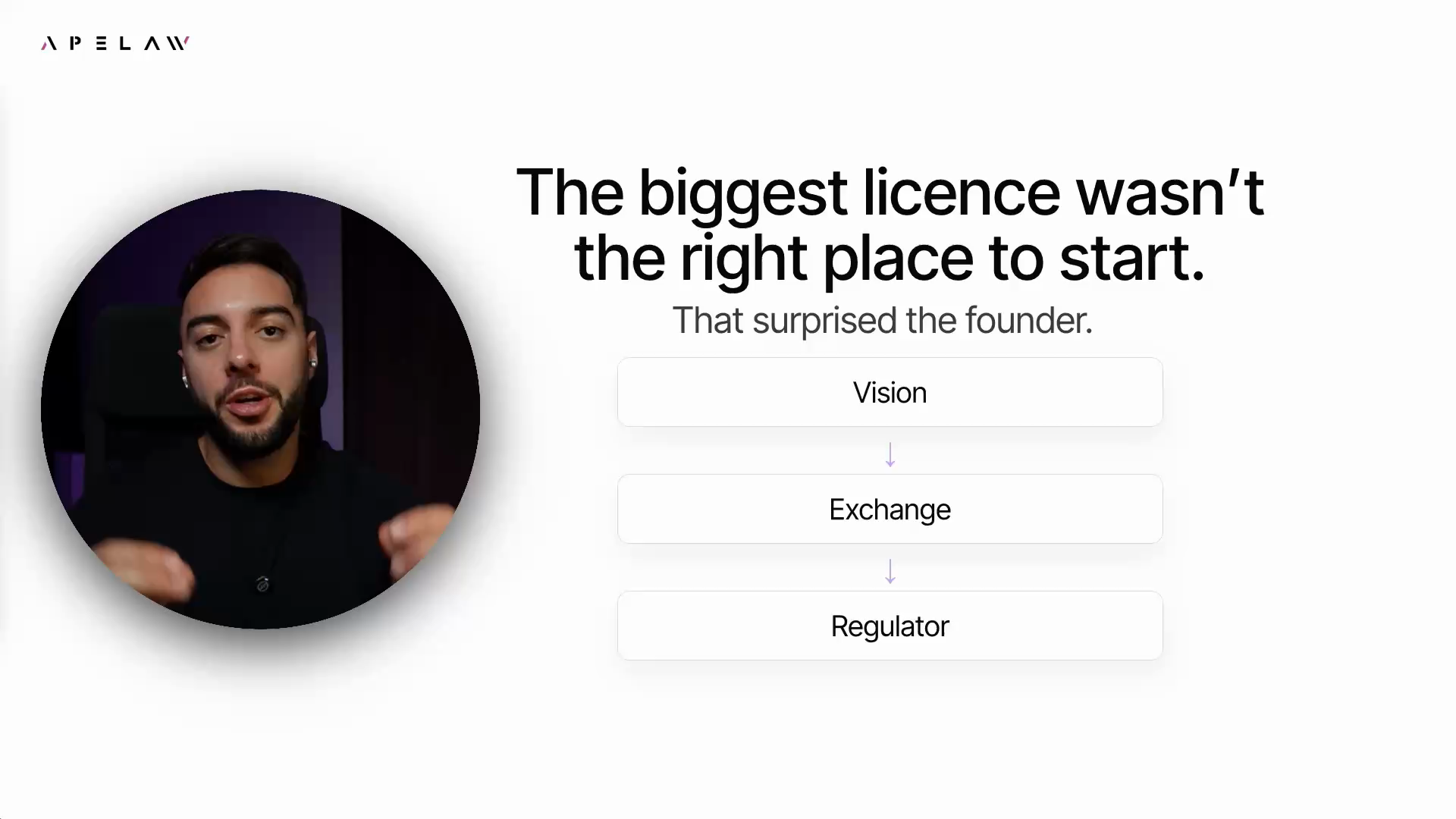 Watch the breakdown
Why This ADGM Exchange Needed a Phased Licence Strategy | Ape Law2 min 17 sec · Uploaded
Watch on YouTubeThe biggest licence looked like the right first step
A phased ADGM licensing roadmap
Based on a real Ape Law matter. Certain details have been anonymised.
Get a Clear Path ForwardThe difference
Without the review
With the review
The review
Instead of preparing one giant regulatory application, we designed a phased roadmap. Each stage focused on what the business needed to prove, build and operate before the next stage made sense.
What did the exchange need to prove commercially before pursuing the final licence?
Which products and activities belonged in the first stage of the business?
Which regulatory steps should come first, and what would each stage unlock?
What governance, compliance and operational foundations were required at every stage?
The founder lesson
The full story
We worked with a large digital asset exchange project that wanted to build one of the highest levels of regulated market infrastructure in ADGM.
The vision was ambitious. The founders wanted to pursue the most demanding licence and build the final version of the exchange immediately.
That instinct was understandable. It was also the wrong place to start.
The final licence represented where the founders wanted the business to go. It did not represent what the business was ready to build first.
A demanding regulatory pathway requires more than a strong application. The regulator needs to understand the product, business model, governance, compliance arrangements and operating capability behind it.
Those foundations could not be treated as details to complete after the application. They were part of what made the licensing strategy credible.
Before deciding which licence to pursue, we examined how the exchange would actually operate.
What would the first version of the product offer? Who would use it? Which regulated activities would the business perform? How would governance work? What compliance systems were needed? Could the operational team support the proposed scope?
The answers showed that the business needed to develop in stages. Trying to launch the final version immediately would have created unnecessary complexity before the underlying model had been proven.
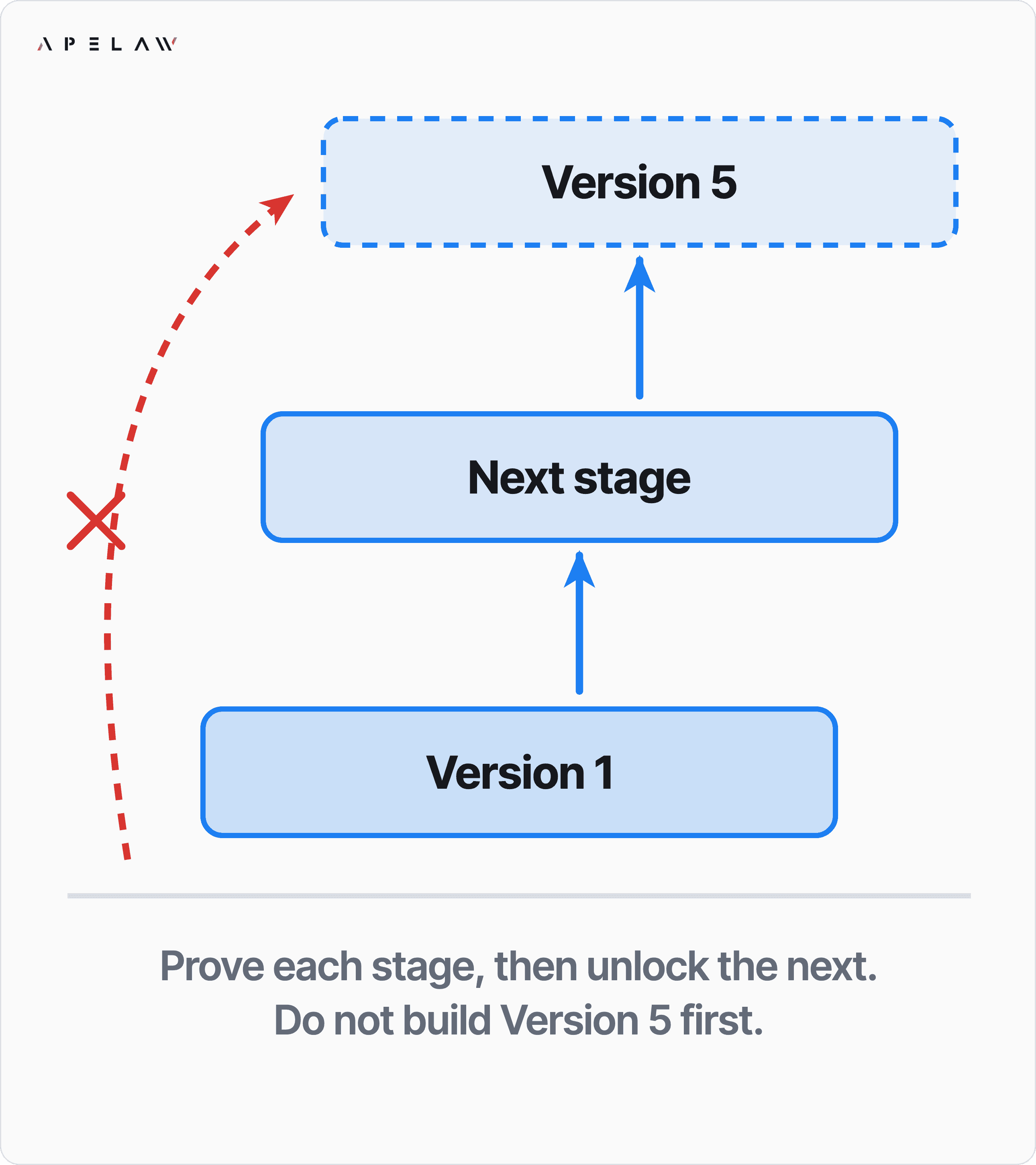
Instead of building one giant regulatory application, we designed a phased licensing roadmap.
The first stage focused on the business model and the product the founders could realistically build and operate. The next stage added the governance, compliance and operational capabilities required for broader activities. Each phase created the foundations for the one that followed.
The roadmap preserved the original ambition. It simply created a more realistic way to reach it.
We did more than prepare a legal opinion. We tested the business model against one of ADGM's most demanding regulatory pathways.
We mapped the licensing strategy, identified the readiness requirements for each stage and connected the legal analysis to the product and operating roadmap.
The legal opinion became a strategy the founders could execute. Instead of trying to build everything at once, they had a clear sequence of decisions, requirements and next steps.
A large ambition does not always require the largest licence on day one.
Great businesses are built in stages. The product, governance, compliance and operations develop together. A good regulatory strategy should work the same way.
Do not build Version 5 before Version 1 works. Start with the next step, prove it and use that foundation to unlock the stage that follows.
The result described here relates to this matter. Another project's facts, rules and outcome may differ.
Talk about your project
If you are planning a regulated digital asset exchange or another ambitious ADGM project, Ape Law can help assess the business model, define the licensing sequence and map a regulatory roadmap the team can execute.
Get Expert Advice